

These days, it seems everyone wants to be strong. But true power means more than defeating enemies. It means mastering yourself.
The world loves the kind of strength that makes the headlines. It reckons winners and losers by votes tallied, trophies lifted, and headlines that shout who beat whom. This kind of strength can be impressive, but it’s also fragile. The tighter our grip, the more it depends on someone else losing.
Power is Quiet Self-Mastery
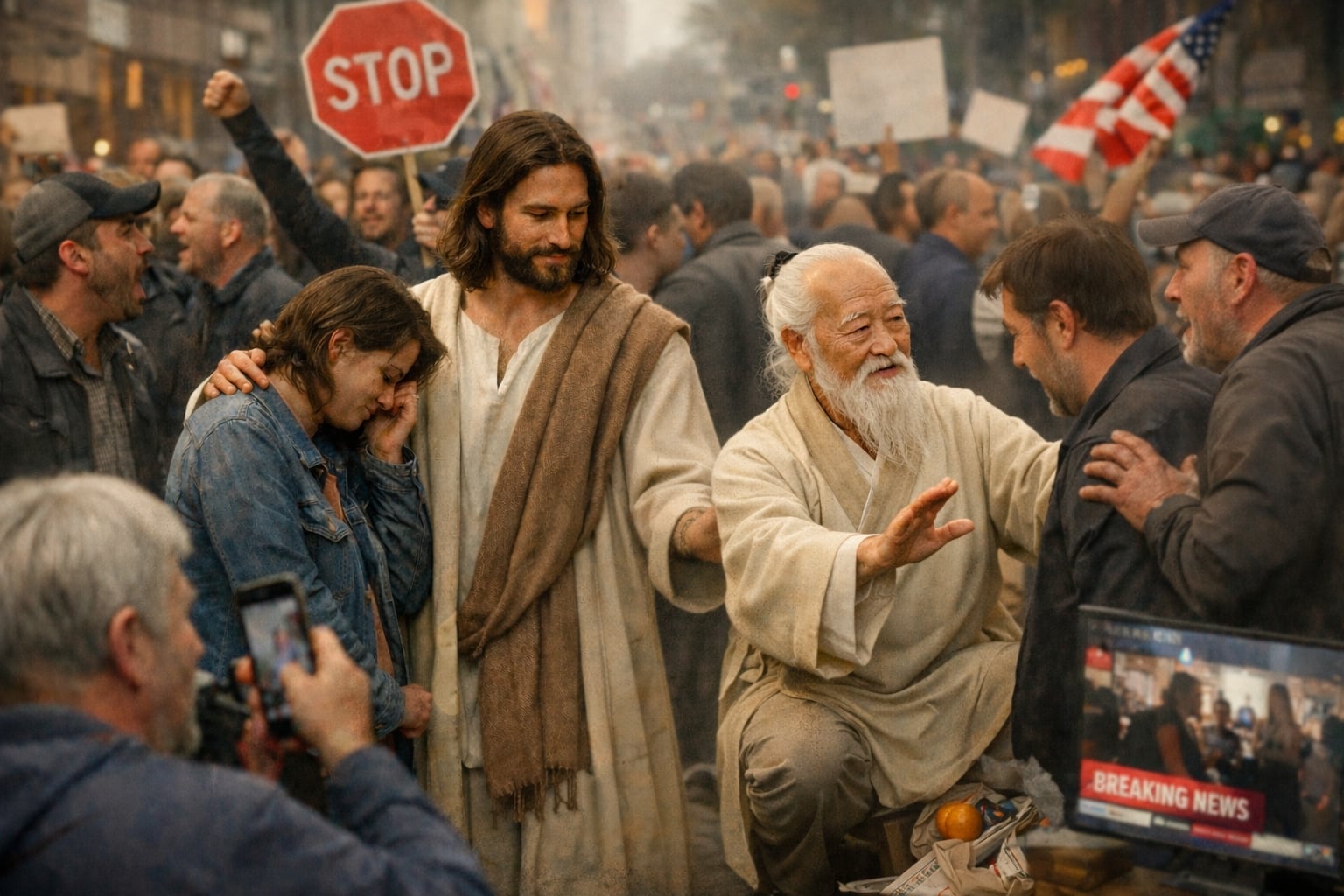
Power, according to the Chinese philosopher Lao Tzu’s famous Tao Te Ching, is quieter. True power doesn’t require an audience. It shows up as steadiness when no one is clapping, as the inner cohesion that lets a person choose the good without theatrics.
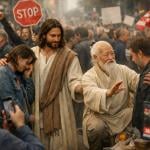
Jesus modeled this kind of power. He demonstrated a way of being that is about mastering oneself—desire, fear, and pride—rather than conquering others. He modeled this by washing feet instead of seizing thrones, by laying down his life instead of taking lives. Lao Tzu flows in the same stream, advocating wisdom over mere cleverness, sufficiency over accumulation, and constancy over striving. The Tao encourages us to think about the deeper power that truly liberates us before pursuing the strength the world has to offer.
Lao Tzu’s Tao Te Ching, Verse 33
J.H. McDonald Version
Verse thirty-three states the difference between knowing and mastering—and why the quiet kind of power endures.
Those who know others are intelligent;
those who know themselves are truly wise.
Those who master others are strong;
those who master themselves have true power.Those who know they have enough are truly wealthy.
Those who persist will reach their goal.
Those who keep their course have a strong will.
Those who embrace death will not perish,
but have life everlasting.
Greatness vs. Grasping
In verse thirty-three, Lao Tzu contrasts greatness with grasping. The first couplet contrasts intelligence with wisdom. Those who know others are intelligent, says the Tao Te Ching. We know this is true. All one needs to do is turn on the news and watch the political pundits analyzing politics as if it were a football game. They show their prowess and savvy, predicting the moves of candidates and weighing the outcomes. There’s no denying the intelligence of people at dinner parties who follow the news and can debate it with others who are politically aware. But Lao Tzu also gives a counterpoint:
“Those who know others are intelligent; [but] those who know themselves are truly wise.” In all of our striving to gain knowledge of the world and garner respect for our intelligence, how easy it is never to look inward and know ourselves. Self-knowledge is true wisdom, not an outward gaze upon the world’s turmoil.
Master Others or Master Yourself
Again, Lao Tzu presents another couplet. “Those who master others are strong; those who master themselves have true power.” The evening news highlights individuals who crush corporations in courts of law. Sports teams win by handing someone else a loss. Nations invade other nations, asserting their dominance over them. As remarkable as these feats of strength may be, there’s a difference between strength and power. Strength is exerted against an opposing force; power is inner governance. If you want to grow your power, you must master yourself.
Knowing You Have Enough
Next, the Tao Te Ching says, “Those who know they have enough are truly wealthy.” One day, a rich young ruler came to Jesus, asking if he could join the disciples. In response, Jesus told him to go and sell everything he had and give it to the poor. Then he could come and join Jesus’s followers. The gospels recount he went away unhappy because he had many possessions. Jesus and Lao Tzu knew true wealth is not about gaining more but about having enough. It’s about having what you need, not necessarily everything you want. A person of spiritual wealth may own their possessions, but their belongings don’t own them.
Staying Within Your Banks
The Tao Te Ching says, “Those who persist will reach their goal. Those who keep their course have a strong will.” Here, the sage evokes the image of the river once again. From its first drop at the headwaters until it reaches the ocean, the river persists. It stays within its banks. Keeps its course. Follows the watercourse laid out for it by the Tao. By simply continuing, it reaches the ocean.
So it is with those who follow the Way of Jesus. Paul urges his readers not to grow weary in doing what is right, trusting perseverance bears fruit. Likewise, Isaiah depicts endurance as a kind of renewed strength—exerting without failing or fainting. Faith calls us to perseverance that does not disappoint. Like water running to the ocean, by staying within the Tao’s course we will reach our destination.
Choosing Power over Strength
Imagine yourself three people back in a slow grocery line. The scanner beeps, the card reader freezes, and the attendant is already juggling two other lanes. You feel the surge in your own emotions—you want to fix it, push it, make the line move. You notice your jaw clenching. Instead of allowing the feeling to control you, you soften your shoulders, breathe, and decide to master what you own: your breath, tone, posture. “Take your time,” you say to the person ahead of you. You start bagging your own items while you wait. When the attendant rushes over, you keep your voice steady and say, “Looks like this terminal needs a reset.” They nod, tap in a code, and wave a second checker over. The line begins to flow.
You didn’t win the lane-game. You chose to stay human, to inhale patience and exhale peace that kept the room from boiling. Instead of seething, you selected your words carefully to keep yourself from making a scene. You could have mustered a show of strength to bend everyone to your timeline. Instead of demanding, you chose power that refrained, made space, and allowed the line to find its pace. That’s how the Tao works on a Tuesday—power manifested as controlling yourself instead of others.
The Power of Embracing Death
Finally, Lao Tzu ends the verse by saying, “Those who embrace death will not perish, but have life everlasting.” Jesus likewise claimed something bold—life that death cannot overcome, even while our bodies still die. However you understand that promise—literal resurrection, present spiritual awakening, or both—the invitation is the same: when we embrace the prospect of our own death and refuse to allow death to bully us, we begin to live more freely. This is when we truly live.
By living our own resurrections today, we remove death’s sting. By living the Way of Christ, we master ourselves. Or, rather, we allow the Way to master us. In so doing, we give up the striving and become truly free.
Pray…
Keeper of my soul, You are the Wisdom beyond knowledge, the Power above all strength, the “Enough” at the end of my striving. I confess I have placed too high a priority on acquisition of information, increasing my influence, and seizing a future of my own making. Teach me the value of simple constancy, the purpose in following the Course set before me. And you who are Life Everlasting, show me the blessing of dying in the Lord before my death—dying now to all that is fleeting, all that is perishable, and all that is not love—so I may be truly awake in this present eternity. Amen.











 Ad-Free & Subscriber Log-In