

There’s nothing wrong with bivocational ministry, but it does come with a few pitfalls. In my last article, I made the case for part-time ministry. What are they, and how can you avoid them?
To be fair, bivocational ministry has its own risks. I would do you a disservice if I presented the pros of a part-time pastorate without also discussing the dangers. But, in my mind, the benefits far outweigh the drawbacks. My last article listed twelve pros, but I could only think of three cons of bivocational ministry:
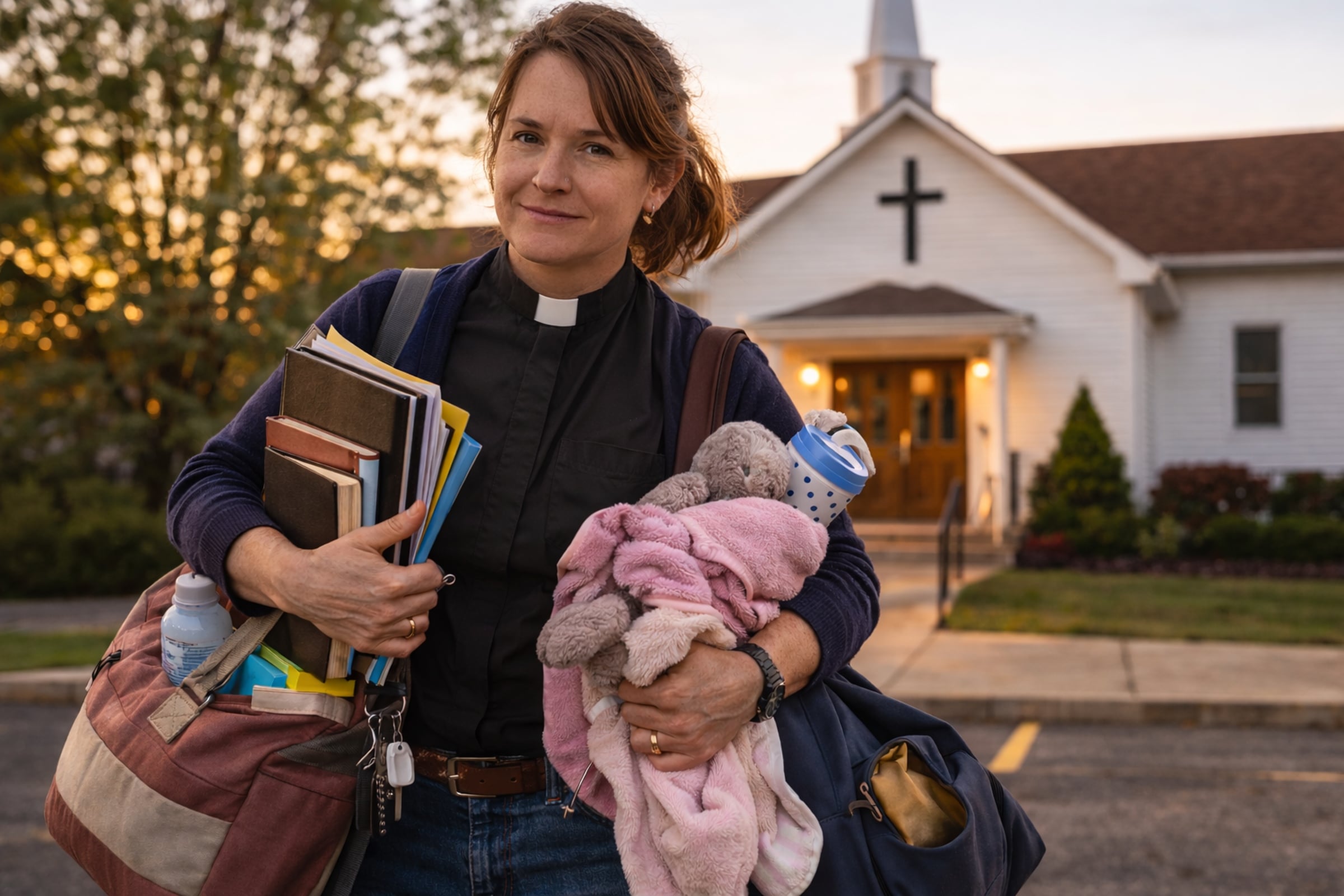
The Dangers of Bivocational Ministry
1. It can lead to exhaustion.
Some churches will still expect full-time output from someone who is only partially paid. My first church was that way. While they expected too much work, they talked about how little they paid me as a way of “keeping the pastor humble.” That is not noble. That is just overwork with a halo.
2. Your family could feel the pinch.
Anytime somebody works a full-time job and adds on a part-time
3. It can be financially risky.
I’ve already said that bivocational ministry can be financially freeing—but it can also be financially risky, depending on how you do it. It’s risky if you have two part-time jobs, one ministerial and the other secular. The problem with that (assuming each is 20 hours per week) is that part-time jobs pay small salaries and offer no benefits. That’s no good financial stewardship for you and your family. So, I do not suggest approaching ministry in a financially risky way.
What I am suggesting is that you work full-time in a secular job with good pay and benefits, and then church work becomes a side gig. This way, you avoid financial risk. If your church salary is “extra” money, it gives you the freedom to say what you feel called to say without needing to please people. It also gives you freedom to walk away, should you feel led to do that. In this way, you avoid financial risk.
Smaller, Humbler, and Less Polished
I still believe God calls people into ministry. I just no longer assume that calling should usually lead to full-time professional clergy. Maybe the healthier model is smaller, humbler, and less polished. Maybe the church does not need more executives with master’s degrees. Yes—I believe religious education is important, but why pay for a master’s degree for a side-gig of ten hours a week? The church needs more shepherds who still know what it feels like to live and work in the same world as the people they serve, not ministers who live in an academic ivory tower.
Quiet Quitting the Church
In my article, “Pastors are Quiet Quitting the Church,” I discussed the factors that lead to clergy burnout. As a result of that exhaustion, many full-time pastors continue in ministry because they are financially dependent on the paycheck. Their hearts are no longer in it, and they feel stuck—unable to either leave or fully engage.
Bivocational ministry keeps pastors financially free. It also gives them something else to focus on, so the church doesn’t become so all-consuming. This helps the ministry to remain a passion and a pastime rather than a prison. (Check out the above article’s sequel, “Pastors—Quit Quiet Quitting the Church,” for more ideas on how to survive ministry.)
A Bivocational Role Model
As I said in my last article, when I felt called to ministry, bivocational ministry was the last thing on my mind. Out of five churches I served in Virginia, only one was part-time, and that was when I was in seminary. I falsely believed that full-time was the best way to go and that bivocational ministry was second-best. I didn’t understand that it could be more balanced.
When I was a graduate student and newly ordained, I visited a particular church as a revival speaker. The old pastor (he had gray hair, so in my twenties, that meant he was old) was bivocational. He and his wife took such care of their congregation that I wondered how he could do it. He kept his passion by serving the church part-time. In his other profession, he was a butcher. By balancing two careers, he kept a foot in the real world, prevented his family from depending on church income, and remained humble and healthily marginal in the church he served. I didn’t see that at the time—all I saw was a man who “had to work two jobs,” rather than someone who “got to do ministry as a side calling.” While I felt great affection for the pastor, I must admit I didn’t fully appreciate his decision to remain part-time. Unfortunately, I didn’t allow him to be a bivocational role model. If I’d followed his example, I might have been better off.
Clergy and Church Both Have Callings
Do you feel called to be a pastor? Consider bivocational ministry. Yes, it has pitfalls. But in my view, the benefits far outweigh the risks. Part-time pastorates may be one of the best ways to keep pastors free, churches grounded, and ministry shared by the whole body rather than outsourced to a professional class.
If you’d like to support the work and join me around the campfire for extra practices and audio reflections, you can find my Patreon here: [https://www.patreon.com/cw/GregoryTSmith]
For related reading, check out my other articles:
- “Bed Bath and the Great Beyond: What Can Dying Churches Learn?”
- “Pastors Job Hunting in the Secular World”
- “Pastors Leaving Ministry: Crafting Winning Secular Résumés”














 Ad-Free & Subscriber Log-In