

For those who struggle to imagine God as a cosmic ruler, the Tao reveals the divine as a river of Love, nourishing all without control.
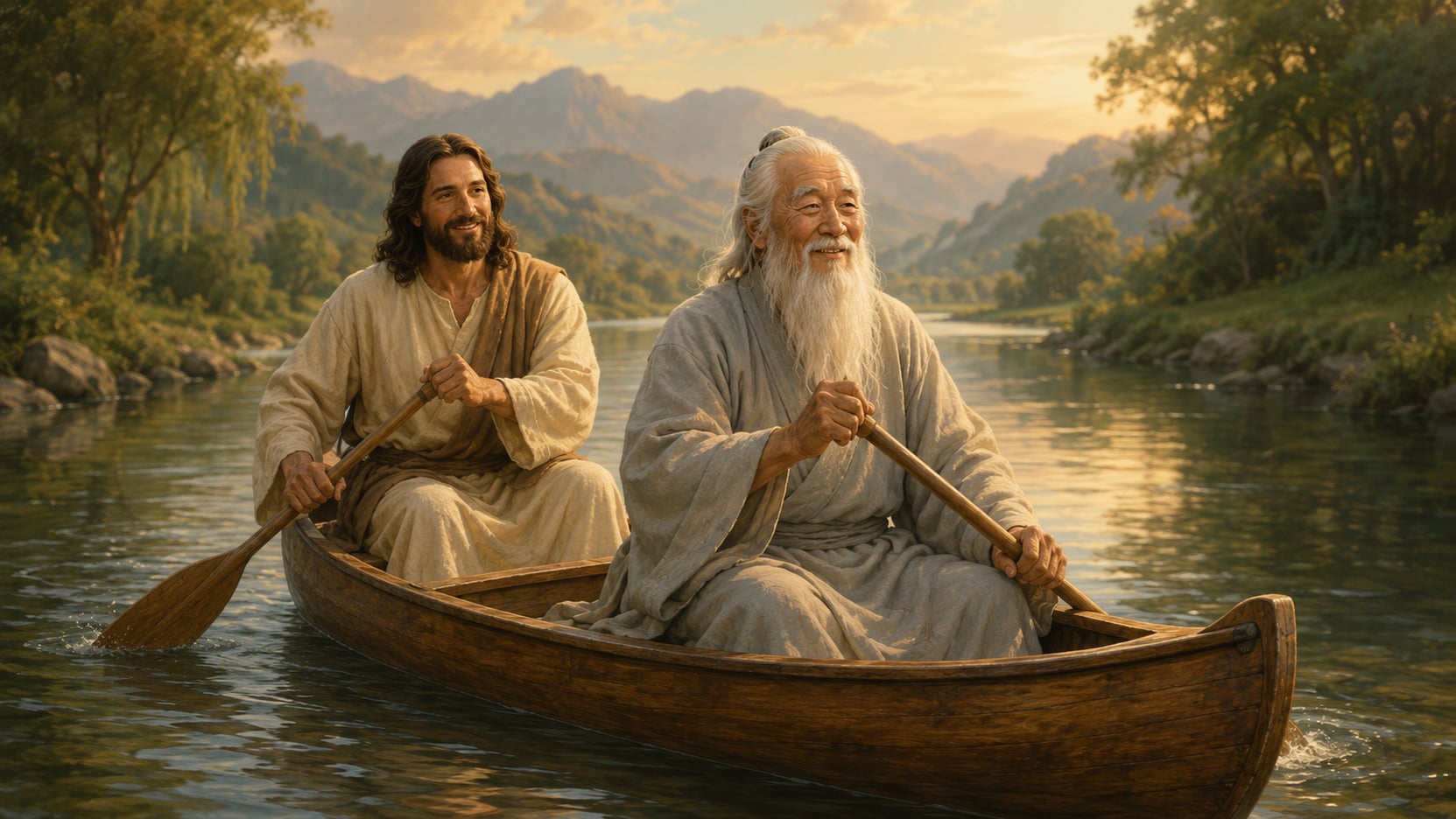
Throughout history, most people have understood God in anthropomorphic terms, that is, in human images. God is the Great King, the Judge, the Good Shepherd. When we want to foster a relationship with God, these anthropomorphic terms help us to draw close and feel a sense of connection with the Eternal One.
On the other hand, these same human qualities can often lead to misunderstanding God as unpredictable, controlling, and even cruel. While at times it may be helpful to view God as a divine person, the Bible also speaks of God in non-anthropomorphic terms. God is seen as Rushing Wind, and Living Water, and the Rock, and All-Consuming Fire. God is the One in whom we live and move and have our being, and the All in All. For this reason, the spiritual person is free to relate to God either as a divine person, or as the Ground of All Being. It is in this latter category that we understand God as Tao.
Lao Tzu’s Tao Te Ching, verse 34, McDonald Version
In verse thirty-four, Lao Tzu writes:
The great Tao flows unobstructed in every direction.
All things rely on it to conceive and be born,
and it does not deny even the smallest of creation.
When it has accomplished great wonders,
it does not claim them for itself.
It nourishes infinite worlds,
yet it doesn’t seek to master the smallest creature.
Since it is without wants and desires,
it can be considered humble.
All of creation seeks it for refuge
yet it does not seek to master or control.
Because it does not seek greatness;
it is able to accomplish truly great things.
Tao as a River
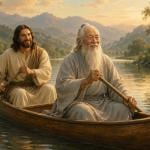
Lao Tzu employed the metaphor of a river to describe Tao: a watercourse flowing unobstructed in every direction, filling all things and giving life generously. This refers to the universal or omnipresent nature of Tao, which does not favor one place over another but inhabits all space and time.
Lao Tzu writes, “All things rely on it to conceive, and to be born, and it does not deny even the smallest of creation.” This reflects the living and life-giving qualities of Tao. As a river flows for the benefit of all (even those who know nothing about it), Tao gives life without prejudice. In speaking of Tao not denying even the smallest, the sage’s words remind Christian readers of the hymn, “All things bright and beautiful / all creatures great and small / all things wise and wonderful, the Lord God made them all.” From the smallest one-celled organism to the world’s largest living being, the honey fungus, Tao creates and feeds each one with heaven’s love.
Nourishing Without Controlling
Tao is the Way God nourishes without controlling. Tao is Love that works wonders. When we conceive of God as a divine person, we may assume God wants to be credited, praised, and worshiped for this life-giving flow. But of the Tao, Lao Tzu says, “When it has accomplished great wonders, it does not claim them for itself.” Tao is not prideful. It has no need to prove itself to anyone. It gives not because it is generous, but because it is Generosity itself. And it provides not because it is bountiful, but because it is Loving Bounty.
The Tao Does Not Desire, Demand, or Strategize
If we imagine God as a heavenly person, we become tempted to think of God’s will as a kind of cosmic micromanagement: mapping out our lives before we’re born or ruling the universe like a monarch. Lao Tzu offers a different lens. “Since it is without wants and desires, it can be considered humble,” he writes. The Tao does not desire, command, or strategize. It simply expresses the life-giving flow of Love. Instead of dictating outcomes, the Tao nourishes all things, like water spreading even to the lowest places.
Tao is for Everybody
Many Christians are taught to think of God as being especially present for those who believe, while Lao Tzu describes a Presence sought by all creation, a refuge that never dominates. A person does not need to “give their heart to Jesus” any more than a flower needs to decide to open itself to the morning sun. It isn’t an act of will so much as an act of nature. The entire universe gets its energy through the Tao’s love, without that Source demanding people become its followers.
God as an Enlarged Human Ego
This sets Tao apart from many theistic portraits of God across the world’s religions, including Christianity. My critique here isn’t of God, but of the way religions, including my own, often portray God as an enlarged human ego who is reactive, possessive, and hungry for loyalty. Though they claim cosmic scope, deity is often imagined as a super-person who governs through threat, favor, or leverage. To be fair, the world’s myths often celebrate divine courage, hospitality, and sacrificial help: noble virtues many cultures assign to their sacred figures. Still, whether the results are positive or negative, this “ego-shaped” way of picturing the divine easily turns spirituality into control, managing people through fear, reward, and belonging.
Unlike an ego-shaped deity, Tao does not look like us. It embodies a non-dominating Way of action, nourishing without claiming or controlling. While Tao reveals something of the divine, it is not a god in itself. Rather than acting as a deity, Tao gestures toward the One beyond all names: the mystery Scripture hints at with the name YHWH, an unpronounceable name bound up with the Exodus riddle, “I am who I am.” I’m not equating Tao with a theistic “Sky-Daddy,” but with the Nameless Source that both traditions refuse to reduce to a manageable personality.
Tao Does Not Seek Greatness
“Because it does not seek greatness,” Lao Tzu writes, “it is able to accomplish truly great things.” When we elevate Jesus to the place of greatness, we risk forgetting the purpose he declared for himself: to be humble and lowly of heart. We forget Jesus’s great deeds were not because he was mighty, but because he put himself last. When we make Jesus out to be the Lion, we risk forgetting he is the Lamb, whose victory flows from his meekness.
An Alternative to Anthropomorphizing God
The typical Christian tradition is to understand God as three Persons: Parent, Son, and Holy Spirit. While this relationship with the divine has worked for billions of church members for thousands of years, anthropomorphizing God has been problematic for many. Taoism offers an alternative for those challenged by the “Sky-Daddy” caricature. And, if we read the Bible carefully, we find it already making room for this. God can be both personal and impersonal, and it’s okay to relate to God in either way.
Ponder…
Sit quietly and breathe deeply, imagining Great Tao as a waterway flowing through and around you: a river that does not depend on your belief, does not require your attention, and yet nourishes the entire universe, including you. Ponder how often you picture God as a ruler, a judge, or a monarch, and notice how different it feels to sense God as an eternal current of limitless life, humble and desireless, yet nourishing all things without partiality.
What would it mean to cleanse yourself of the expectation that God will control, reward, or punish? How would your religion change if, instead, you allowed yourself to rest in a love that simply is, steady as a river, spacious as the sea? Can you let go of striving to please God, and instead allow yourself to be carried by the current of the One that is already sustaining you, silently, humbly, completely?
I’m building a Patreon community for readers who want to go a little deeper: brief reflections, spiritual practices, early thoughts, and honest conversation about faith beyond fear. Come join me there.
For related reading, check out my other articles:
- How Taoism Made Me a Better Christian
- Renaming God: If God Is Love, Then Is Love God?
- Renaming God: The Way, The Tao, & New Perspectives










 Ad-Free & Subscriber Log-In