

Faith and the Founding: What Media Gets Wrong

Religion has shaped America from the beginning — even when today’s commentary suggests otherwise.
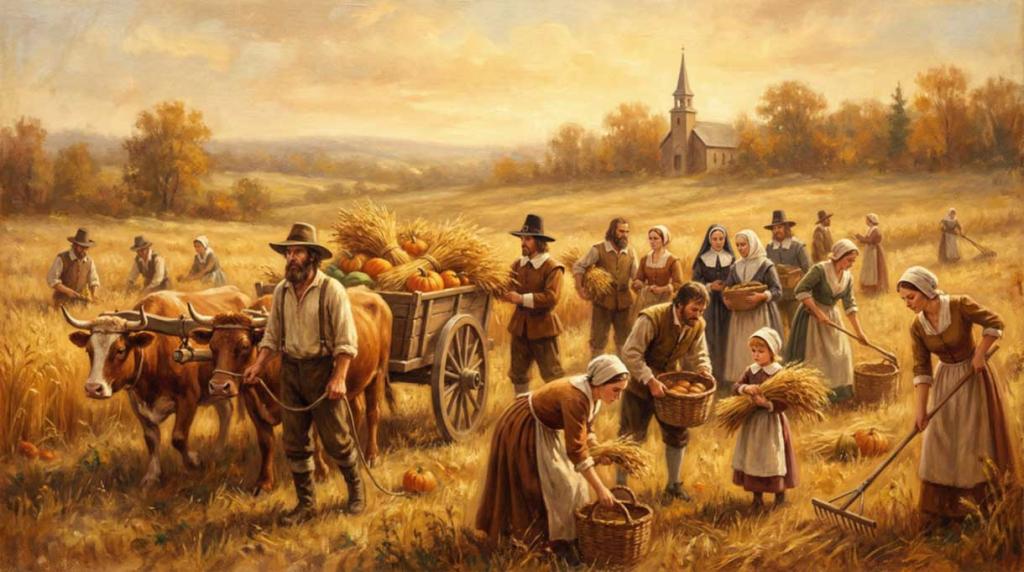
As we celebrate America’s 250th birthday, it is worth remembering that freedom of religion is not a side note in our founding — it is central to it. From the start, our Founders made a promise: people could practice their faith freely, without fear of government control or persecution.
Since the passage of the Bill of Rights in 1791, Americans have debated what “separation of church and state” should mean. Over time, the Supreme Court has worked to maintain the balance the Founders set in motion — protecting religious liberty while also protecting the rights of others in a diverse society.
This balance grew out of the struggles and beliefs of the men and women who first came to this country. In many ways, they weren’t so different than us.
An Early American Thread Woven Through Our Culture Today
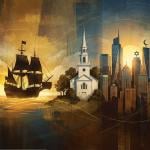
In the 1600s, the Pilgrims left England to worship freely. Jewish families fled persecution in Europe. My ancestors, Huguenots and Anabaptists,
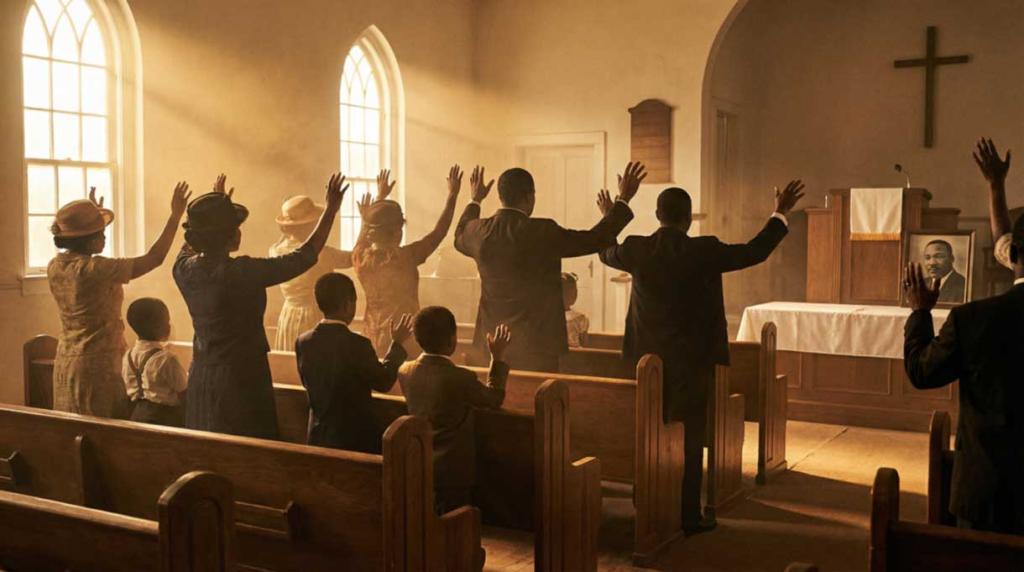
soon followed. Their beliefs shaped how they designed local government, laws, and schools. At the same time, the First Amendment ensured that no single faith could control public life.
For 250 years, religion has played a fundamental role in American politics. It has driven reform movements from abolition to prohibition and placed limits on power. But how the media covers religion today often shapes — and sometimes distorts — our perspective of religion’s influence.
Too often, faith is shown as a voting bloc or a culture-war weapon. What gets lost is the history and nuance that make the American experiment unique.
There is a clear thread connecting those first arrivals to today’s debates. Yet we often treat each controversy as if it were brand new, rather than a version of an older argument from a different time and means of communication.
The Power of TV, a Modern Turning Point
In the 1960s, Martin Luther King galvanized Black churches and civic leaders to fight for civil rights. Television news stations covered the conflict and the inspiration of marches with live national coverage of King’s “I have a dream” speech.
In the late 1970s, the rise of the Moral Majority, led by TV evangelist Dr. Jerry Falwell, mobilized thousands of churches and encouraged political participation. The movement reshaped parts of the Republican Party and helped usher in the Reagan era.
However, many participants of the New Right did not see themselves as trying to control the government. They believed they were responding to it — protecting the independence of church-affiliated institutions and long-standing religious practices.
Federal Funding and Religious Independence
One important example involved federal student aid and religious colleges. As federal higher education funding expanded, a key question emerged: If students at a private religious college receive federally backed grants or loans, does that place the entire institution under federal regulation?
The issue headed to the Supreme Court in 1984 in Grove City College v. Bell. The Court said that student loans and grants counted as federal aid. But it also said the rules, like Title IX, applied only to the part of the school that received the money. A few years later, in 1987, Congress passed a new law that expanded those rules.
Religion-affiliated academic institutions across the country, including Falwell’s Lynchburg Baptist College (later Liberty University), paid close attention to these changes. Some believed that if a school takes public money, it should follow public rules. Others believed that more government control could weaken religious freedom. The debate raised real questions about federal power and religious independence that continue today.
Other disputes, such as the case involving Bob Jones University, were framed by many as necessary civil rights enforcement. While some on the Religious Right viewed any action as a federal intrusion. Each side believed it was defending a core principle — equality on one hand, institutional autonomy on the other.
Service Before Politics
On the ground, faith continues to shape civic life in ways that do not fit neat national narratives. Local congregations run food banks, provide
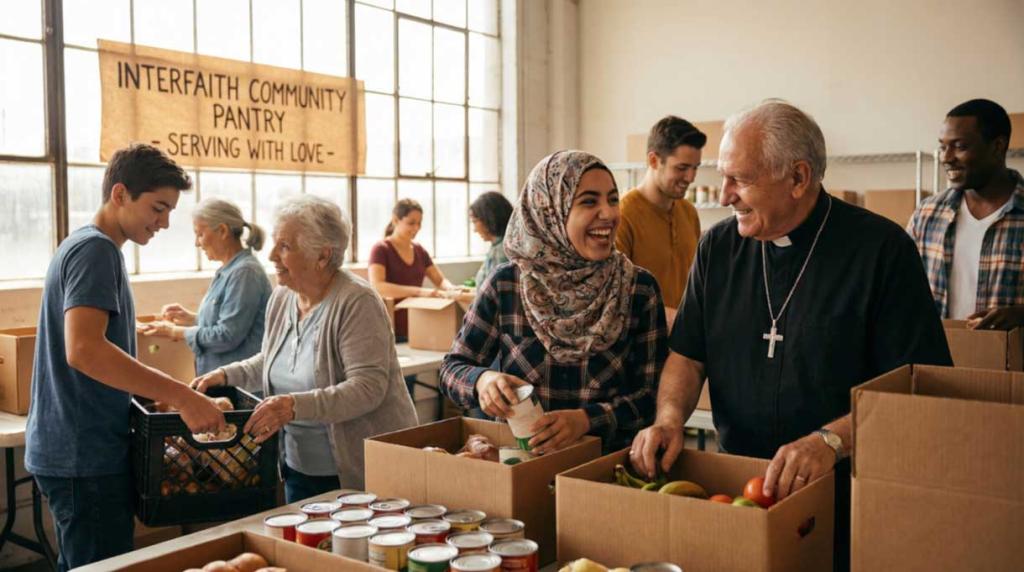
disaster relief, and mentor young people. Religious orders such as the Little Sisters of the Poor operate nursing homes and serve the elderly poor as part of their mission.
When the Sisters challenged the Affordable Care Act (ACA) requirements to provide contraceptive coverage to employees, they argued that compliance would violate their beliefs. ACA supporters emphasized women’s access to healthcare. Critics of the requirement, such as the Wall Street Journal editorial page, emphasized religious protections.
How Faith Communities Actually Engage
In my own experience in public policy and advocacy, faith communities are often thoughtful, practical, and evolving with the cultural landscape. Leaders asked careful questions: Who are our neighbors? How do we serve them while staying true to our beliefs? How do we work most effectively with government? How do we protect ourselves?
But often, there is a gap between how faith leaders speak inside their communities and how they are portrayed publicly. Internally, they debate the trade-offs and the changing norms of their followers. But, in social media and television, they may be reduced to negative sound bites.
Shifts in the 2026 Political Landscape
In the last presidential election cycle, debate raged over transgender policy and Diversity, Equity, and Inclusion (DEI). Some religious communities considered certain policies and national sentiments to conflict with their beliefs. Others were deeply concerned about rising hate crimes and threats to safety.
As we head into the 2026 congressional and gubernatorial elections, religion seems less central than in recent years. Instead, populism and immigration are driving many of the headlines. Antisemitism is on the rise, targeting Jewish communities in ways that go beyond religious debate.
These issues do not fall neatly along party lines. Strong personalities, sometimes more than party leaders, are shaping the conversation and influencing faith communities. The result is a political climate with blurred boundaries. Opinions are divided, and few issues fit into simple boxes.
What Better Coverage Could Look Like
As we enter another highly contested election cycle, journalists could improve coverage by adding context and a touch of history, highlighting local faith-based service alongside national political conflict. Exploring constitutional questions and moral arguments in a balanced manner could prompt conversation while showing the growing diversity and differing opinions within religious communities, rather than treating them as a single voice.
Religion in America has never been one-dimensional. It has inspired activism and restraint, reform and debate. When media coverage reflects that complexity, it strengthens public understanding — and the democratic balance our Founders worked to protect.







 Ad-Free & Subscriber Log-In