

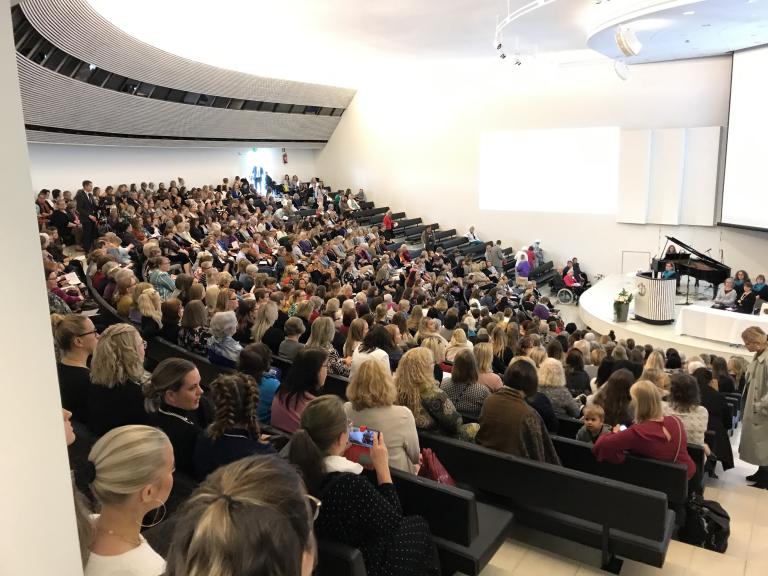
And, from the Deseret News, here’s a bit more in response to the upcoming Bravo miniseries Surviving Mormonism with Heather Gay: “‘Surviving Mormonism’ and it’s just … a church member showing up with cookies” One inevitably thinks of the dying words of Mr. Kurtz in Joseph Conrad’s 1902 novel Heart of Darkness: “The horror! The horror!”
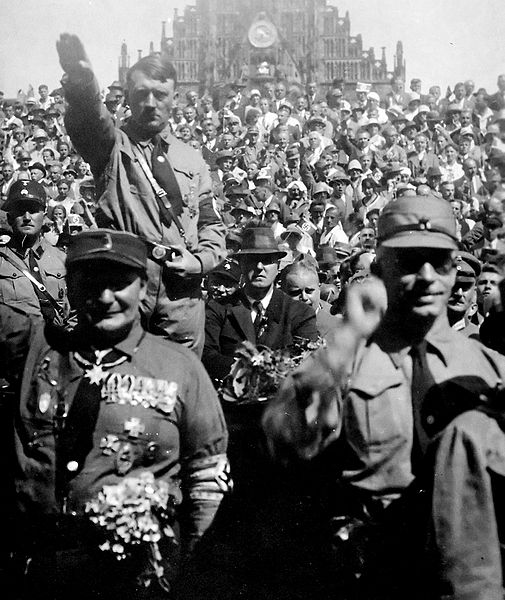
Perhaps you’ve recently seen, or soon will see, the film Truth and Treason. If so, this discussion will give you helpful background to the true account of Helmuth Hübener that is given in the movie. Even apart from his sad story, though, I think you’ll find this interesting. And it might be useful, too: Latter-day Saints have been attacked from just about every conceivable angle and, frankly, from some angles that might have seemed inconceivable until some creative critic experienced a new brainstorm. (See, for example, the sublime specimen that I reviewed here.) In this regard, we’ve been accused of being completely cozy with the Nazis and blissfully onboard with their racial ideology and with other aspects of their platform. Anyway, I’m happy to call this podcast to your attention: “Were Latter-day Saints Nazis? Secret Files Revealed | Informed Saints”
Did the Church “support” the Nazi regime—or were members just trying to survive? In this episode, Jasmin Rappleye, Neal Rappleye, and Stephen Smoot unpack Nazi secret police files, surveillance reports, banned books, arrests, and a high-level memo stating that Latter-day Saint doctrine is incompatible with National Socialism. We also add context to the infamous Heber J. Grant photo and highlight the story of Helmut Hübener. What you’ll learn • How minorities navigated “three doors”: resistance, collaboration, or neutrality • What Nazi reports say about Latter-day Saint beliefs and behavior • Why some local leaders tried to “play nice”—and why the regime still distrusted the Church • The reality behind viral claims and photos
And, speaking of the late German Führer and his Third Reich: When you read of young Republican leaders laughing about Hitler and jokingly identifying themselves with Nazis, or about that Democratic candidate for the Senate in Maine who sports a Nazi Totenkopf tattoo on his chest, please remember this story. Nazis are not cool. (I’ll admit, though, that they can be laughed at. See here for an example.)
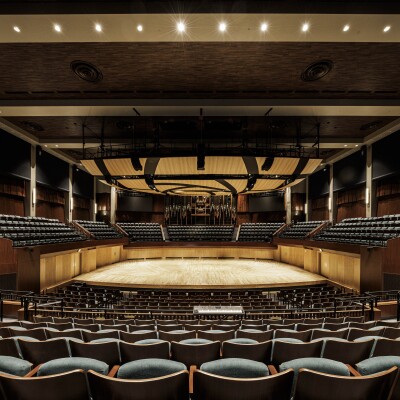
I’ve really enjoyed being associated with Brigham Young University for most of my life, as student, faculty member, and neighbor. There are always offerings of music, live theater, cinema, lectures, museum exhibits, and athletic events. Even now, merely living near campus confers great benefits. Last night, for example, my wife and I attended a Spanish-themed concert by “Pablo Sáinz-Villegas and Friends” — Pablo Sáinz-Villegas (Spain; guitar), Pedro da Silva (Portugal; guitar), Jonathan Richards (California; bass), and Diego Alvarez (Venezuela, Spain, and California; percussion). They started off with with three familiar pieces by Manuel de Falla, Isaac Albéniz, and, again, Manuel de Falla, then proceeded through a varied range of other pieces, including flamenco, Malagueña, and an extraordinarily complex piece by Pedro da Silva himself, which he had specially arranged for last night’s concert. They finally broke with their Spanish theme when, for their second encore, they turned to Brazil for Tico Tico no Fubá.
I recently finished Threshold: Terminal Lucidity and the Border of Life and Death, written by Alexander Batthyány. Some of what he reports about memory give me hope that such experiences as last night’s concert (and a million other things) won’t eventually fade altogether into permanent oblivion, but that they are preserved somewhere and will eventually be fully retrievable. The commonly reported “life review” that occurs in connection with near-death experiences (NDEs) certainly seems to support that hope. The following reminiscences from people who experienced NDEs are cited by Dr. Batthyáni:
I remembered all. Every day of my life, every conversation, and every word — every word! — of books I had read, and I had read a lot. . . I remembered poems I had not thought about for twenty or thirty years. When I later checked whether I had remembered them correctly, it turned out I had. There must be a second memory store somewhere in the universe, and I was accessing it without the slightest effort. . . . It was like a flash drive and my entire life and family were plugged into me and downloaded. (183)
My memory was vast. I remembered everything, each little detail of my class rooms (thirty years ago!), the faces and names of my school teachers, every word I had written on my student assignments, every book I had read, what I wore on which day. It was all there again. (189)
It’s important to note that in a number of cases, upon subsequent checking on the veracity of these memories, it turned out that these memories were true and not merely imagined or false memories. . . . I knew things I didn’t think I knew. Perhaps I had forgotten what I knew, but for example my memory was astounding. I later checked on a few of the episodes I remembered by going through my parents’ photo album and confirmed these memories. (190)








 Ad-Free & Subscriber Log-In