


I’m up in Heber, Utah, today, far removed from my normal routine and unable to devote my full attention or time to my usual activities. So, with regard to this blog, I think that I’ll return to some of my recent reading.
For a number of years now, I’ve been slightly troubled by accounts of distressing near-death experiences. They’re not many in number compared to the sea of relatively uniform and very positive NDEs reported by Raymond Moody in his 1975 book Life after Life and then by a large number of other experiencers, researchers, and authors in its wake, but, still, they pose a challenge. For one thing, they depart dramatically from the model or paradigm that Moody proposed, with its various elements (e.g., a life review, brilliant but soothing light, a tunnel, a being or beings of light, and so forth). Moreover, they seem to offer no comforting or positive message and, strikingly, there is no obvious correlation between such distressing experiences and the moral character or the religiosity of those who report them.
They’ve posed a particularly problematic challenge to me because they haven’t really been congruent with the fundamental point that I take away from accounts of near-death experiences overall and because, in particular, they seem inconsistent with my own religious worldview. I haven’t bothered a great deal with them because they’ve struck me as anomalous and odd, but I’ve certainly noticed them.
So I was pleased when I ran across a plausible proposed explanation for them from Dr. Sam Parnia’s book Lucid Dying: The New Science Revolutionizing How We Understand Life and Death. For it, he draws from two well-known major studies that he had led. If he is correct, my problem with them is resolved:
In fact, soon after Moody’s work was popularized, some people had arbitrarily claimed that there were distressing, negative, or hellish near-death experiences, too. But the evidence from AWARE-I (and later AWARE-II as well) showed these claims represented nothing more than frightening memories formed by people afterward when they had been disorientated and not fully awake. For instance, if doctors or nurses had been holding them down, they had mistakenly thought they were being attacked by “frightening creatures.” If they had undergone a painful medical procedure, they had mistakenly thought the pain was because they were “burning in hell.” These were not at all like the experiences that Moody had identified. In the medical literature these experiences had been categorized as intensive care unit (ICU) delirium. But some people had arbitrarily decided to label these as frightening or hellish near-death experiences without any scientific rigor. (79)
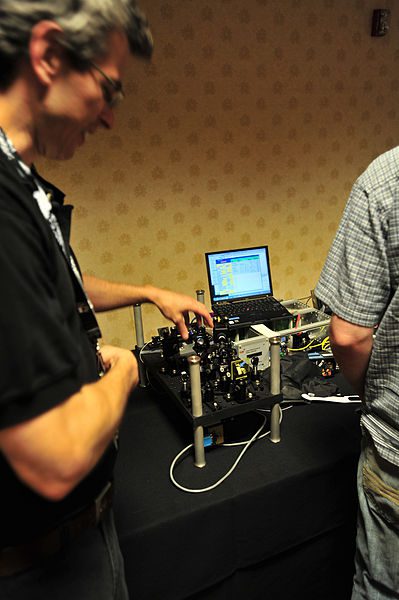
(Photo by Nate Grigg, Salt Lake City)
I also want to share with you some passages that I marked recently while reading Vasileios Basios, “The Coherence Enigma: Detecting Non-Local Consciousness Correlates via Random Events Generators (REGs) at Life’s Final Edge,” in Michael Nahm, Marjorie Woollacott, and Natasha Tassell-Matamua, eds., On the Banks of the River Styx: New Perspectives on Terminal Lucidity and other Near-Death Phenomena:
The predominant theory in mainstream neuroscience is that consciousness emerges exclusively from cerebral activity. However, an increasing amount of research suggests an even more intriguing idea: that consciousness could extend beyond the physical boundaries of the skull. This would give rise to “non-local” effects, which have the capacity to influence the physical world in small, subtle yet measurable ways. This investigation into consciousness extends beyond theoretical speculation. Various experiments using REGs have demonstrated the possibility that mental activity, especially intention, attention or emotion, can influence physical systems. . . .
Our team’s research focuses on random event generators (REGs), which use quantum mechanics to generate random numbers. Unlike computer-generated pseudo-random numbers, these originate from electronic (Zener) diodes. These systems are well shielded and protected against external disturbances. (180)
Vasileios Basios, who studied with (among others) the 1977 Nobel Chemistry laureate Ilya Prigogine, is a senior researcher in the Department of Physics of Complex Systems at the University of Brussels, in Belgium. According to Dr. Basios, his team’s research “answered this profound question: does the transition from life to death create detectible changes in the quantum realm? The answer is in the affirmative” (181). “The findings of this investigation are both unprecedented and statistically robust” (183).
What happened, apparently, was that Dr. Basios’s team
detected measurable deviations from pure chance in the temporal vicinity of the transition from life to death of human consciousness. The present study suggests that the dying process may create detectible ripples in the fabric of randomness itself in a form of non-local consciousness correlates. This finding challenges our understanding of consciousness, death and even the very nature of reality” (180).
“The observed effect,” he says,
was of such potency that the overall probability of these results occurring by chance was less than 5% — thus meeting the “gold standard” for statistical significance in scientific research.
Perhaps most intriguingly, it was discovered that approximately 25% for the ICU [Intensive Care Unit], and 28% of the hospice death cases produced what is classified as “highly unlikely” statistical patterns — results with false positive probabilities ranging from 0.0001 to 0.01. From a scientific perspective, the likelihood of such patterns emerging by chance is negligible, with a probability ranging from less than one in 100 to less than one in 10,000 under typical circumstances. Notably, these patterns manifest exclusively around the reported time of death!
The rank-based analysis yielded even more striking results. Upon examination of individual cases, researchers identified a concurrence between REG activity and recorded death events, with some of the highest daily peaks in REG activity almost coinciding with the occurrence of death. In the dataset, four of the seven highest daily peaks on a key statistical channel occurred on days when patients died. The probability calculations for these extreme events were found to be remarkably low, with some reaching probabilities of less than one in a million! . . .
The most significant anomalies were observed within approximately six-minute periods surrounding the time of death. (183-184)
It’s important to mention that, according to Dr. Basios, “the dying process remained undisturbed” during his team’s research. “The REG devices operated in a passive manner, with no contact with patients or interference with medical care. All data were anonymised.” (186)
Our findings carry profound implications for our understanding of both consciousness and the dying process. These findings represent a substantial challenge to the prevailing view that the domains of mind and matter are entirely separate. Instead, they propose a more integrated understanding, suggesting that consciousness might be a fundamental feature of reality rather than merely an emergent property of complex brain activity. (184)
I’m puzzled by the results that Dr. Basios reports. Nothing in my worldview has led me to expect them, and nothing in my worldview would be adversely affected if they were to be found in error. On the other hand, if they turn out to be well-founded, they seem rather significant to me. Why, in a purely “physicalist” world, would anything not physically connected with a biological organism be affected when that organism ceases to function?
Posted from Heber, Utah











 Ad-Free & Subscriber Log-In