

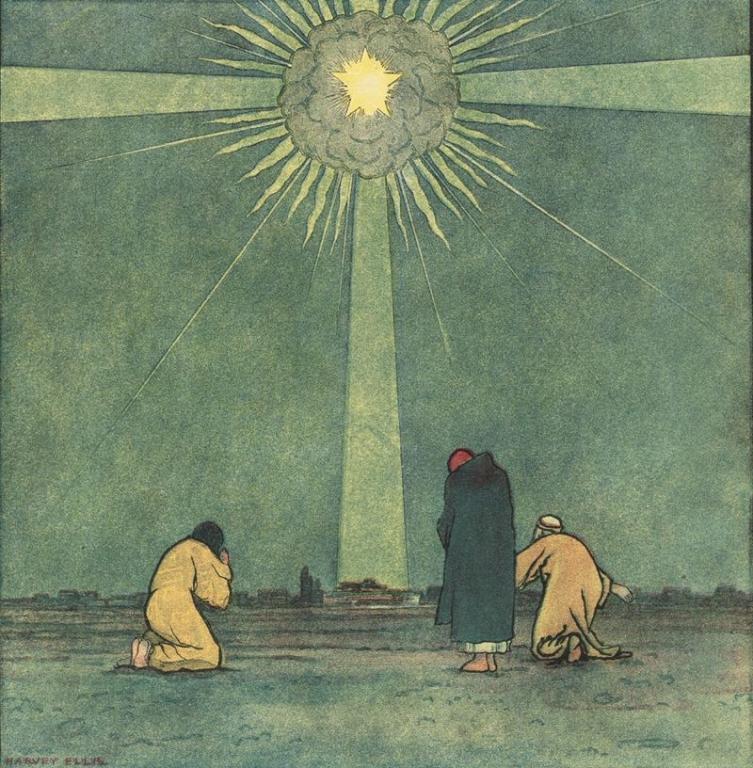
(Wikimedia Commons public domain image)
Here’s a thought from President Russell M. Nelson that I think especially appropriate for the Christmas season:
In a coming day, you will present yourself before the Savior. You will be overwhelmed to the point of tears to be in His holy presence. You will struggle to find words to thank Him for paying for your sins, for forgiving you of any unkindness toward others, for healing you from the injuries and injustices of this life.You will thank Him for strengthening you to do the impossible, for turning your weaknesses into strengths, and for making it possible for you to live with Him and your family forever. His identity, His Atonement, and His attributes will become personal and real to you.But you don’t have to wait until then. Choose to be one of His true disciples now. Be one who truly loves Him, who truly wants to serve and lead as He did.

I share with you now an exquisitely beautiful choral version of the Christmas hymn that I’ve chosen for today: https://www.youtube.com/watch?v=DsVnvN3EVxY
This is a Christian folk hymn from the American South. It was first published at Lynchburg, Virginia, in 1811, and has been called a “white spiritual.” That aspect is clearly brought out in these two quite different videos:
And here’s a very simple version, accompanied by curiously touching photographs: https://www.youtube.com/watch?v=_48iI1RBtnc
1. What wondrous love is this,
O my soul, O my soul!
What wondrous love is this, O my soul!
What wondrous love is this
that caused the Lord of bliss
To bear the dreadful curse
for my soul, for my soul,
To bear the dreadful curse for my soul.2. When I was sinking down,
sinking down, sinking down,
When I was sinking down, sinking down,
When I was sinking down
beneath God’s righteous frown,
Christ laid aside His crown
for my soul, for my soul,
Christ laid aside His crown for my soul.3. To God and to the Lamb,
I will sing, I will sing;
To God and to the Lamb I will sing.
To God and to the Lamb
Who is the great “I AM”;
While millions join the theme,
I will sing, I will sing;
While millions join the theme, I will sing.4. And when from death I’m free,
I’ll sing on, I’ll sing on;
And when from death I’m free, I’ll sing on.
And when from death I’m free,
I’ll sing and joyful be,
And through eternity
I’ll sing on, I’ll sing on,
And through eternity I’ll sing on.
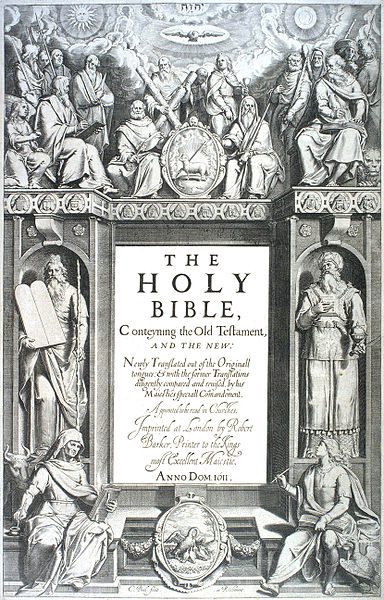
I’ve never felt bound — not even, quite, while teaching or speaking in church — to confine myself in English to the King James Version of the Bible, nor to any particular foreign-language version. But I’m really happy to see the openness to other translations in this new official statement from the Church of Jesus Christ of Latter-day Saints: “New Guidance on Bible Translations for Latter-day Saints: The handbook notes that some “may benefit from translations that are doctrinally clear and also easier to understand”
Having said this, I believe that the King James Version will (and should) continue to occupy a special place in the English-speaking congregations of the Church. One major reason is that the language of the King James translators has clearly been a formative influence on the language and style of the English Book of Mormon, the Doctrine and Covenants, the Pearl of Great Price, and many of the other central discourses and ordinances of the Church. Moreover, the language of the King James Bible –which is exceptionally powerful and rich — has exercised an enormous influence upon English-speaking civilization, and I don’t want us to lose that. It can be a kind of literary education in itself; it is, of course, closely related to the language of Shakespeare and Milton, very arguably our greatest writers. (I was once told of an unfortunate African tribe that supposedly lacked English-language books. All they had for reading were the King James Bible and John Bunyan’s Pilgrim’s Progress. I envied them. With an English tyle formed on the basis of those two books alone, without the polluting noise of other, lesser, prose, I could easily see several Nobel literature prizes coming from them.)
(Wikimedia Commons public domain image)
And these items are also relevant and of interest:
- Deseret News: “Pew report: Why people leave, and stick with, religion: ‘This latest study is important because it’s the first time we’ve asked people why they identify with their current religion,’ a senior researcher says”
- Pew Research Center, Religious Landscape Study: “Why Do Some Americans Leave Their Religion While Others Stay? Study shows most Americans who leave their childhood religion do so by age 30”
(Wikimedia Commons public domain image)
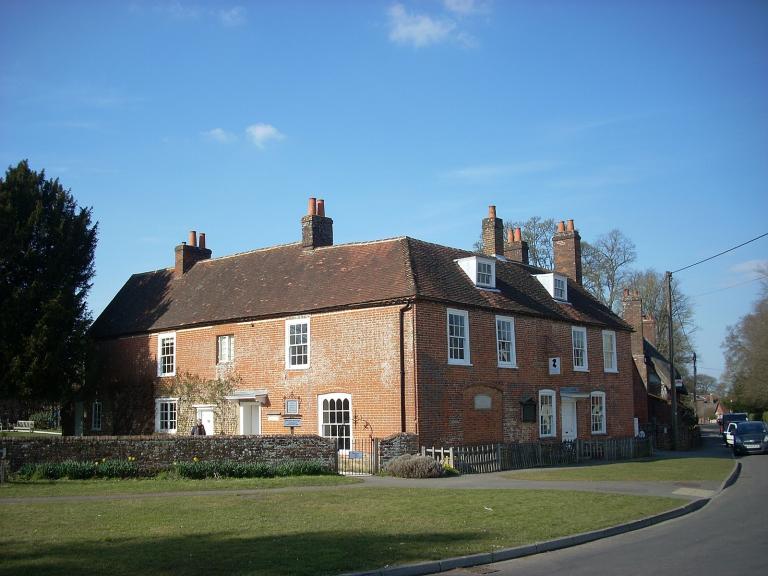
Tomorrow — Wednesday, 17 December 2025 — will be the 250th anniversary of the birth of Jane Austen. My wife and I have, on several occasions, visited houses where Jane and her family lived. We’ve visited her burial place in Winchester Cathedral. We’ve read the books and seen the movies. We are unabashed Austenphiles or Janeites, and for that as well as for a specific family reason, we are very likely to do something tomorrow to commemorate her birth.
- “Why Jane Austen still matters: 250 years after her birth, the Regency-era British author is capturing legions of new readers”
- “Whether you’re a Jane Austen novice or aficionado, here are 5 ways to celebrate her 250th birthday: The beloved author of ‘Pride and Prejudice’ was born on Dec. 16, 1775. Here are some ways to join in the festivities”

As I often do, I close with some appalling discoveries from the Christopher Hitchens Memorial “How Religion Poisons Everything” File™:
- “Historic Jewish–Latter-day Saint Humanitarian Mission Brings Hope: Rabbi-led delegation completes first-ever interfaith Birthright Volunteer experience”
- From the estimable Meagan Kohler, in the Deseret News: “Perspective: Why Latter-day Saint women are everywhere: How life in the Church of Jesus Christ sets women up for success”














 Ad-Free & Subscriber Log-In