

Published today in Interpreter: A Journal of Latter-day Saint Faith and Scholarship: ““Inspired by a Better Cause”: The Function of Alma 43:44–45 in Mormon’s Account of the Monarchic Wars against the Nephites,” which was written by Matthew L. Bowen:
Abstract: In Alma 43:44–45, as part of the narration of the war between Amalekite- (Amlicite-) and Zoramite-led Lamanites and the Nephites, Mormon juxtaposes the cause of the Amlicite/Amalekite-motivated “fighting for monarchy” with the Nephites’ “better cause” of fighting for wives, children, and religious freedom. In using this terminology, Mormon gives the conflict an onomastic framing: kingship or “monarchy” and Amlicites/Amalekites deriving from the Semitic root mlk versus Nephi/Nephites deriving from Egyptian nfr, “good,” “goodly,” etc. Mormon’s wordplay illuminates the shift from ethnically defined identity to identity based on our response to the invitation of the true King, Jesus Christ, to become his followers.
Also up today: “Interpreting Interpreter: Kings vs. The Good,” which was written by Kyler Rasmussen:
This post is a summary of the article ““Inspired by a Better Cause”: The Function of Alma 43:44–45 in Mormon’s Account of the Monarchic Wars against the Nephites” by Matthew L. Bowen in Volume 68 of Interpreter: A Journal of Latter-day Saint Faith and Scholarship. All of the Interpreting Interpreter articles may be seen at https://interpreterfoundation.org/category/summaries/. An introduction to the Interpreting Interpreter series is available at https:/interpreterfoundation.org/interpreting-interpreter-on-abstracting-thought/.
A video introduction to this Interpreter article is now available on all of our social media channels, including on YouTube at https://youtube.com/shorts/V-_os4GDrzk.
The Takeaway: Bowen focuses on potential wordplay within Alma 43:44-45, where Mormon juxtaposes the monarchical ambitions of the Amlicites and Amalekites (both based on the Hebrew root for “king”; mlk) with the “better” (i.e., good) cause of the covenant-aligned Nephites (likely based on the Egyptian word for “good”; nfr), contrasting the lust for control and political power with the cause of liberty, family, and freedom of religion.
Meanwhile, Episode 3 of Becoming Brigham will join Episode 1 and Episode 2 this coming Monday. I hope that you’ll enjoy all of these last dying gasps from the long-dead Interpreter Foundation.
Last week ended rather nostalgically. With some mutual friends, we had a good Middle Eastern dinner a week ago today at the home of a former BYU colleague — all of us being exiles from the old pre-coup Maxwell Institute.
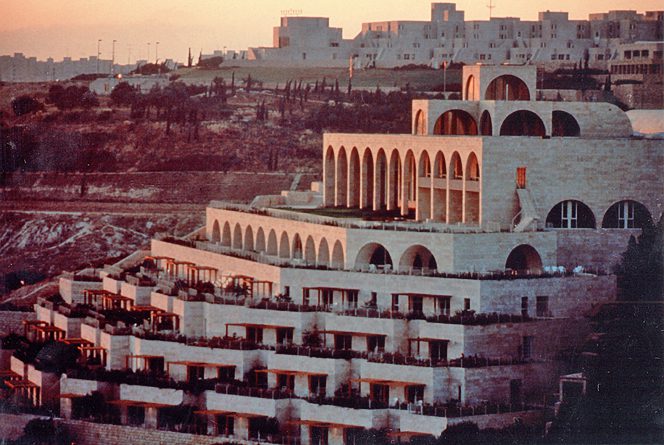
Then, on Saturday, we had lunch (again, Middle Eastern food) at the home of a former BYU Arabist colleague with other friends with links to the Middle East (among them my former department and Middle Eastern Studies colleagues). One of them had served as the president of the Cairo Branch while we lived there, and one was the widow of another former branch president of ours there. One of them had served as director of Brigham Young University’s Jerusalem Center for Near Eastern Studies, where the widow’s husband had also served as the director. One is a retired Army general who has served tours in both Iraq and Afghanistan. (We’ve known him since he was a child there in Egypt.) Another served as a mission president in Italy and then, again, later in Türkiye — double jeopardy! — and is a former president of the Rome Italy Temple.
Also there was the BYU economics professor who, since 1989 [!], has been the person in Provo responsible (not only to the BYU administration, but directly to the First Presidency) for the Jerusalem Center. Likewise, Matt Tueller was there. My wife and I first met him and his wife when we were all members of the small Cairo LDS branch and he and I were students in the intensive program of the Center for Arabic Studies Abroad. His wife and mine had their first babies within a month of each other there in Egypt, and we all went through that experience pretty much together. Until his still relatively-recent retirement, Matt had a distinguished career with the State Department. In his culminating roles, he served as the Ambassador of the United States to Yemen, and then to Kuwait, and finally to Iraq.
Collectively, my wife accurately observed afterward, the people at these two meals have played really important roles at important times in our lives, and they continue to be among our best friends and favorite people. Friendships are one of the greatest blessings of this mortal life, and the testimony of the Restored Gospel is that they will continue to be so in the world to come:
When the Savior shall appear we shall see him as he is. We shall see that he is a man like ourselves.
And that same sociality which exists among us here will exist among us there, only it will be coupled with eternal glory, which glory we do not now enjoy. (Doctrine and Covenants 130:1-2)

Finally, there’s this: “Trump asked for Dulles Airport, Penn Station to be named after him in exchange for Gateway money to be released: Trump has named several landmarks and initiatives after himself since returning to office.”
I’m really excited about the beginning of the Winter Olympics in northern Italy. I hope that they’ll distract me from the burning question of whether depicting the Obamas as apes was racist or merely incredibly tone deaf, ignorant, and clueless. Now, happily, there are other intriguing questions: How many gold medals will the United States team win? Will Mr. Donald J. Trump bring home all of them, or only most of them? There is one absolute certainty: He’ll accept no silver or bronze medals, which are for losers. But the gold medals will look really attractive when displayed alongside his recent Nobel Peace Prize.
Posted from Trump Orem, in Trump Utah













 Ad-Free & Subscriber Log-In