


I’m pleased to call your attention to “Shorthand & Bloodstains, Part One: Becoming Brigham, Episode 2,” which went up online earlier today. I really like this one. And, of course, Episode 1 is still up — and will remain so. I hope that you’ll hit the “Subscribe” button for Becoming Brigham. There is some really interesting material coming your way and it would be a shame if you were to miss it.
And I’m a bit delinquent — sorry! I’ve been very busy over the past few days — in calling your attention to yet another new feature that has now been launched by the allegedly dormant Interpreter Foundation: Conversations with Interpreter: Episode 1: Jesus: King of Jews, Prophet of Muslims, with Dennis Newton
In this, the inaugural episode of Conversations with Interpreter, our hosts, Avram and Thora Shannon, speak with Dennis Newton about his article, “The Islamic Jesus” in Volume 66 of Interpreter: A Journal of Latter-day Saint Faith and Scholarship. The article is a review of the book by Mustafa Akyol, The Islamic Jesus: How the King of the Jews Became a Prophet of the Muslims. Dennis is a long-time student of world religions and a past contributor to The Interpreter Foundation. He discusses how Jesus is understood within Islam, and what these perspectives can teach us about faith, respect, and shared truth.

I was happy to see the following news item this morning: “Portrait of Joseph Smith Unveiled at Morehouse College: The painting sits alongside others who advocated for humanitarian concern and fundamental human rights for all”
Joseph’s presidential platform contained a very good and practical idea for peacefully ending American slavery. Unfortunately, it was never implemented — partly because he was murdered before the presidential election. (He was, interestingly, the first American presidential candidate to be assassinated.) And then the American Civil War occurred, costing approximately 750,000 lives and fracturing the nation for generations to come.

Brigham Young’s legacy on racial matters is, obviously, rather more complex. But much of what is “known” about him in this regard is simply wrong. This morning, for instance, I read yet again a breezy online statement — blithely unaware of the actual historical facts — that Brigham endorsed the legalization of slavery in Utah Territory, which he absolutely did not.
It seems, rather, that he too was looking for a peaceful way to put an end to slavery, at least among the Latter-day Saints. I spoke to this topic at the August 2025 FAIR conference. Unfortunately (and somewhat to my surprise), neither the video nor a transcript of the talk seems to have been posted yet. But here is the abstract:
We cannot hide the fact that Brigham Young said some things about race that make us wince in the twenty-first century. In fact, to make matters worse, as territorial governor of Deseret he presided in 1852 over the enactment of a law that actually legalized slavery.
Or did he? Very recent scholarship has carefully examined that law and has overturned much of what I, at least, had assumed about it. (Part of our modern problem is our simplistic and uninformed understanding of how labor and employment were categorized in antebellum America.)
I propose to share some of the results of this recent scholarship that, I believe, greatly reduce (if they do not altogether eliminate) the challenges posed to contemporary Latter-day Saints by Brigham Young’s racial attitudes—and that have furnished weapons to critics of the Church.
The scholarship to which I refer wasn’t created with apologetic intent, but I will turn it in that direction. I will cite not only the conclusions of the scholars, with whom I believe my own conclusions will be consistent, but statements of Brigham Young and others who were directly involved in the discussions of race, slavery, and servitude that threatened to divide the Church and its settlements in the Great Basin West prior to Abraham Lincoln’s Emancipation Proclamation, which rendered some of the relevant issues moot.
For me, this new scholarship has been deeply helpful, and I think that some of its results need to reach a general audience.
Here, though, is an article that I published in Meridian Magazine that offers a partial summary of what I said at FAIR: “Brigham Young, Race, and Slavery: Reexamining Utah’s 1852 Service Act” (26 August 2025)
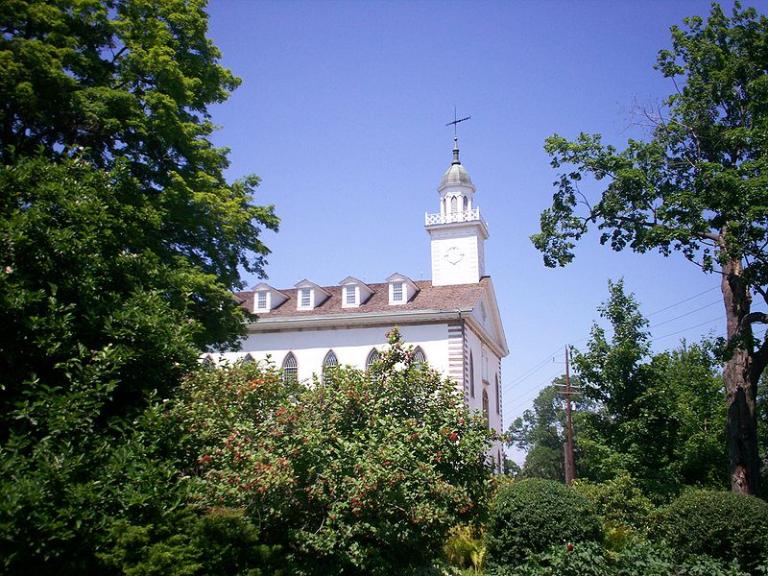
I’m being accused by The Usual Suspects, yet again, of having taken perverse pleasure in the pain that many members of the Community of Christ (formerly the Reorganized Church of Jesus Christ of Latter Day Saints) felt and expressed when they found themselves compelled to sell the Kirtland Temple and other properties and artifacts in order to raise necessary funds. Apparently owing to their church’s financial difficulties, those properties and artifacts were sold to the Church of Jesus Christ of Latter-day Saints, headquartered in Salt Lake City, Utah. And, yes, I freely acknowledge that I believe the Utah-based church to be the legitimate heir to the group that built the Kirtland Temple in the first place.
So that you will be in a position to gauge the degree, if any, of my gleeful Schadenfreude at the sorrows of the Community of Christ in this regard, I share the links of the four blog entries that I posted on the day of the acquisition of the Kirtland Temple, etc., and during the period immediately following. The second of them is probably the more significant, in this regard, while the fourth is the least directly relevant:
- “This Is A Banner Day!” (5 March 2024)
- “A Few More Thoughts On The Kirtland Temple Deal” (7 March 2024)
- “A Clear Rebuke In The House Of The Lord At Kirtland” (7 March 2024)
- ““Oh Say, What Is Truth?”” (10 March 2024)












 Ad-Free & Subscriber Log-In