


I’ve seen some astonishing misrepresentations of the devotional address that President Dallin H. Oaks delivered at Brigham Young University on 10 February 2026, almost a week ago. It was his first public address since assuming the presidency of the Church of Jesus Christ of Latter-day Saints — and it addressed an audience well beyond BYU’s campus — and so, not surprisingly, it’s drawn fire from Church critics. (Moreover, President Oaks has always been something of a bête noire for them anyway.)
I liked what he had to say — yes, I’m that kind of a guy — and I think that people ought to watch it, hear it, and/or read it for themselves. So here it is: “Coming Closer to Jesus Christ.” And this article is also relevant:“‘The Great University of the Lord’: President Oaks’ Vision Enshrined at BYU”
By the way, my wife and I drove up late last night — or, more accurately, extremely early this morning — to pick up a Second Generation Unit who had just landed at the airport in Salt Lake City. (Incidentally, for those who are tracking these things, no Interpreter Foundation funds were used to pay for either our gas or his airfare.) En route, we listened to a speech given by Jeffrey R. Holland at the beginning of BYU’s academic year in 1987 while he was serving as the University’s president: ““Who We Are and What God Expects Us to Do””
It was very, very, very good, and I recommend it to you. (With President Holland’s recent death, we suffered a grievous and irreparable loss. We will miss him.) His remarks express quite beautifully some of the feelings that I myself have always had for Brigham Young University, why BYU was the school for which I had always wanted to teach, and why I enthusiastically endorsed Elder Clark Gilbert’s efforts to ensure the University’s continued faithful alignment with the principles and values of the Church.
Earlier Sunday evening, and without the slightest financial support from either the Interpreter Foundation or Redbrick Filmworks, we had driven to and from Draper, for the baptism of the daughter of one of our nieces, who lives in the American Southeast. For various reasons, they chose to do the ordinance here in Utah. I was powerfully struck by the passing on of the family’s covenant commitments, the transmission of faith and faithfulness from generation to generation. My wife and I attended the weddings in the temple of the little girl’s grandparents, and of her parents, and now we were present for yet another important passage in the cycle of our extended family’s spiritual life. I wish that my wife’s father, the little girl’s great grandfather, could have been there, but he died just over a year ago in his ninety-ninth year. Of course, perhaps he was there.

In company with its three predecessors, the fourth installment of the Interpreter Foundation’s Becoming Brigham series is now available online at becomingbrigham.com: “Why Brigham Young? An Introduction, Part One.” It features Matt Grow, who serves as Managing Director of the Church History Department in Salt Lake City. The discussion with Dr. Grow was filmed in the Church History Museum, directly west of Temple Square.
This was beyond exciting for me. It has recently been revealed by certain anonymous critics that Becoming Brigham exists largely if not solely for the purpose of funding my lavish lifestyle, paying for my exotic travels and picking up the bills for my dining out. I can no longer deny it.
I had always dreamed of seeing Salt Lake City, and our conversation with Matt Grow finally made that possible for me. Moreover, when my co-hosts and the film crew took a lunch break from our interviews and walked over to The Garden Restaurant in the Joseph Smith Memorial Building, I went with them — and, by so doing, I was privileged to fulfill one of my other life-long ambitions: I ate half of a French Dip sandwich and washed it down with cold water that had been poured over genuine ice made from the chemical compound H2O. And that half-sandwich and glass of ice water were entirely paid for by Redbrick Filmworks.
But my luxurious adventures don’t end there: I’m thrilled to announce that a trip to Fillmore may be in my near future, as well! I’ve heard for years about the Grands Boulevards de Fillmore, the sidewalk cafes of Millard County, the strolling street musicians, the romantic gardens and vistas très charmantes, to say nothing of Fillmore’s internationally celebrated haute cuisine, and it seems that a visit there may now finally be within my reach. I’ve always wanted to visit the taverna in which Edith Piaf first sang La Vie en Rose. It’s not yet clear whether we’ll need to spend a night in Fillmore, but I hope so. I would very much like to be able to enjoy one of its quaint but elegant auberges.
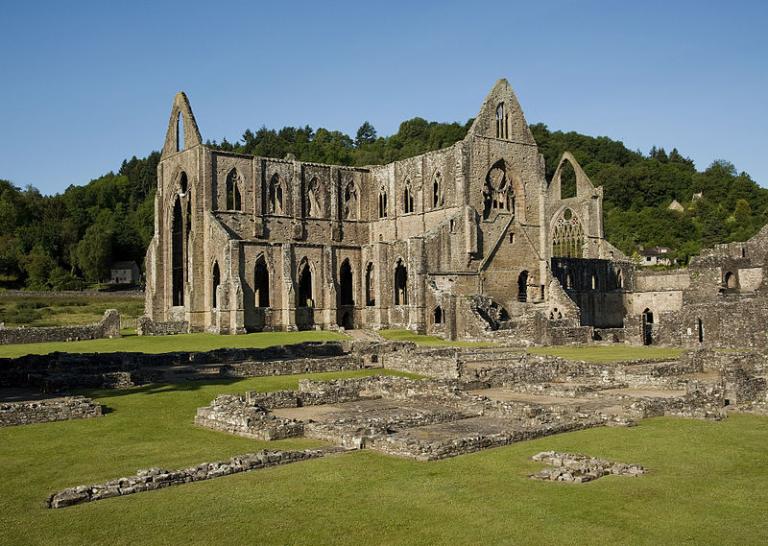
I like this article: “Opinion: SB268 helps Utah students learn the vital role of religion in U.S. history: As we celebrate the nation’s 250th anniversary, students should learn the meaning underlying the declaration that all are ‘created equal.’” More importantly, at least in principle, I support the proposed legislation. To neglect the fundamentally important role of religion and religious belief in American and world history is to fundamentally misunderstand both.
I’ve lately been reading God is an Englishman: Christianity and the Creation of England, by Bijan Omrani. It’s not only a learned and very readable account of the role played by Christianity, Christian ideas, and the Christian church in the emergence of the distinctive culture of England — instrumental in the creation and development of the English nation as such, as also of its codes of law and morality, its structures of government and kingship, vastly important not only in architecture and literature but in the structure of everyday English life and the English language.
Unsurprisingly, with that in mind, the book is also a summons to retain Christianity — not only for its comforting insights into the eternal questions but for its essential role in Englishness and its importance to what is good, true, and beautiful in England still today.
As is well known and widely recognized, however, Christianity in England is in steep decline. Congregations are dwindling and fewer and fewer young people attend or believe.
Omrani argues that we who care about England or whose own cultural heritage comes from England shouldn’t merely shrug our shoulders and accept this decline as inevitable, and perhaps even healthy. Rather, his contention is that something very important is being lost. It is, he says, the most momentous change ever to occur in English history.
I’m enjoying the book. (It can easily be found at various venues online, as well as, obviously, in the Christopher Hitchens Memorial “How Religion Poison Everything” File™.) And I’m looking forward to returning to England on our tour in May — for which neither the Interpreter Foundation nor Redbrick Filmworks will pay me a single penny.














 Ad-Free & Subscriber Log-In