

Newly posted today on the completely stagnant website of the Interpreter Foundation — which, I read just this morning, is largely if not completely focused on me, my toxic personality, my vanity, and my self-promotion: “Abraham the Astronomer,” Abraham and His Family in Scripture, History, and Tradition, written by Stephen O. Smoot. I had long hoped that my use of the pseudonyms Abraham, Stephen O. Smoot, Jeffrey M. Bradshaw, John S. Thompson, Matthew L. Bowen, and David R. Seely would remain unnoticed, but it seems that my luck has run out:
Part of our book chapter reprint series, this article originally appeared in Abraham and His Family in Scripture, History, and Tradition, edited by Jeffrey M. Bradshaw, John S. Thompson, Matthew L. Bowen, and David R. Seely. For more information, go to https://interpreterfoundation.org/books/abraham-and-his-family.
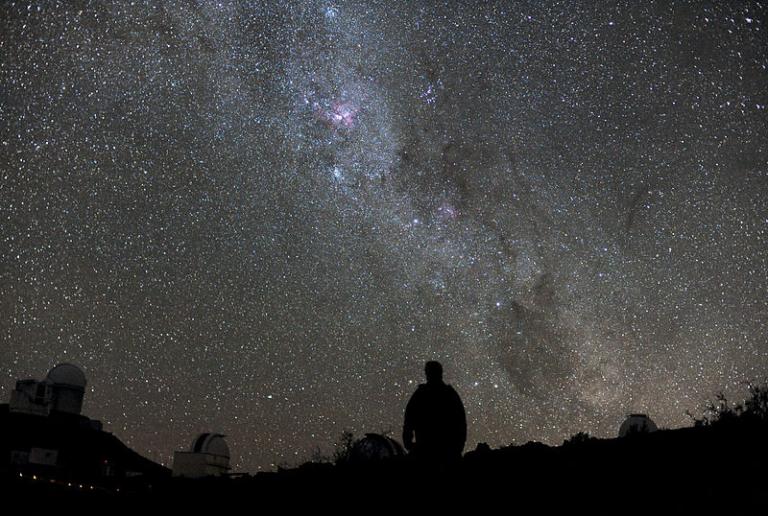
“One notable element of the Book of Abraham is the book’s depiction of the patriarch Abraham as an astronomer. The third chapter opens with this detail: “And I, Abraham, had the Urim and Thummim, which the Lord my God had given unto me, in Ur of the Chaldees; and I saw the stars, that they were very great, and that one of them was nearest unto the throne of God; and there were many great ones which were near unto it” (Abraham 3:1–2). Abraham’s narrative describes a survey of celestial bodies, including stars, the sun, the moon, and a significant star or planet called Kolob, which is positioned near God’s throne (vv. 3–4, 9, 16).”
Also new on the perpetually unchanging Interpreter Foundation website: Come, Follow Me — Old Testament Study and Teaching Helps (2026): March 30-April 5: Easter — “He Will Swallow Up Death in Victory.” Once again, under my heretofore secret pseudonym Jonn Claybaugh, I provide a concise set of notes for students and teachers of the Come, Follow Me curriculum of the Church of Jesus Christ of Latter-day Saints.
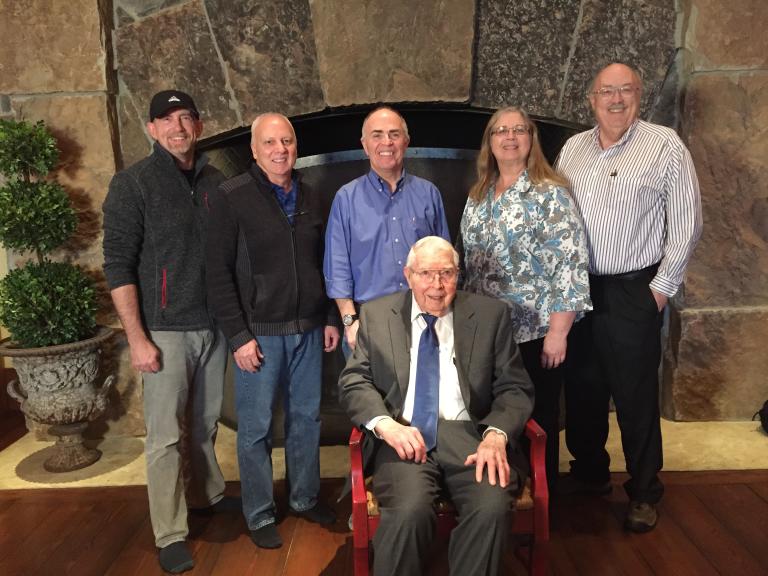
In preparation for our ongoing Becoming Brigham series, and in generating content for it, we have conducted numerous interviews with scholars and experts in areas relevant to the story of Brigham Young and the emergence of the Twelve that we’re trying to tell. And we continue to conduct and film such interviews. Typically, these interviews last an hour or two, or even perhaps longer. Then, though, we can only use a few minutes from each of the interviews in our finished product. (In most cases, episodes of Becoming Brigham have run between ten and fifteen minutes in length.)
At the end of each interview, I’ve thought to myself how much good material we had heard and I’ve regretted how little of it we would actually be able to use. Commonly, I’ve also thought that what we had envisioned as a single episode might now need to be expanded into a two- or three-part installment, and I’ve commiserated with Mark Goodman, our director and principal writer, at the daunting task of selection that perpetually confronts him.
That’s one of the reasons for the fact that what we had initially envisioned as a series of fifty-two weekly episodes will now likely stretch out to approximately seventy or seventy-five episodes.
Even so, though, most of the interview material that we’ve gathered will not be included in our series installments but will remain, rather, “on the cutting-room floor” (as they used to say when the process involved the physical cutting of physical film).
Troubled by this, and aware of the fact that, in these interviews, we’ve gathered a great deal of interesting and valuable material from leading historians and other experts, we’ve decided to make full (“long-form”) transcripts and full audiotapes of the interviews available. These will begin to go up fairly soon, probably on both the Interpreter Foundation website and the becomingbrigham.com page. These will be only lightly edited, mostly to remove film-crew instructions and a few other such extraneous interruptions. The audio recordings and transcripts will, I hope, be of value to people who want to take a deeper dive into the issues that we’re treating and even, very possibly, to future historians.
With the help of Russ Richins, I spent part of yesterday afternoon recording voice-over introductions and the like for the forthcoming “long-form” audio versions of four of these interviews, with LaJean Purcell Carruth, Sam Weston, Susan Easton Black, and Matt Grow.
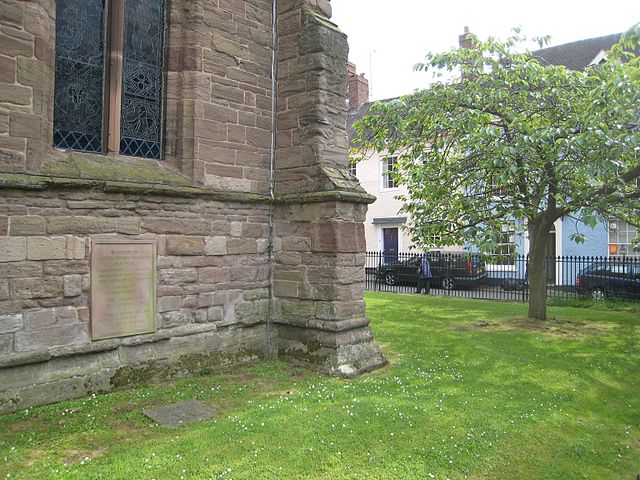
(Wikimedia Commons public domain image)
I said — on Sunday I believe — that I was going to try to extend the Easter season in advance of it by sharing relevant music and poetry and other such things every day in the lead-up to the holiday. I was distracted by other matters yesterday, but I’m repentant and I now resume my effort:
So perhaps it’s time again for one of my favorite poems.
I’m very fond of the excellent second-tier English poet A. E. Housman (d. 1936), who, in addition to writing such works as “To an athlete dying young,” from A Shropshire Lad, was a distinguished classical scholar at the University of Cambridge. For some reason, the melancholy mood of many of his poems speaks to me. I’ve even made a minor pilgrimage to his grave.
Housman was an atheist, and sometimes a hostile one. But he had moments of yearning. This poem, entitled “Easter Hymn,” captures those feelings of longing for a belief that, in the end, he simply couldn’t muster. And who knows? Somebody might even choose to incorporate it into remarks for this coming Sunday’s Palm Sunday service:
If in that Syrian garden, ages slain,
You sleep, and know not you are dead in vain,
Nor even in dreams behold how dark and bright
Ascends in smoke and fire by day and night
The hate you died to quench and could but fan,
Sleep well and see no morning, son of man.But if, the grave rent and the stone rolled by,
At the right hand of majesty on high
You sit, and sitting so remember yet
Your tears, your agony and bloody sweat,
Your cross and passion and the life you gave,
Bow hither out of heaven and see and save.
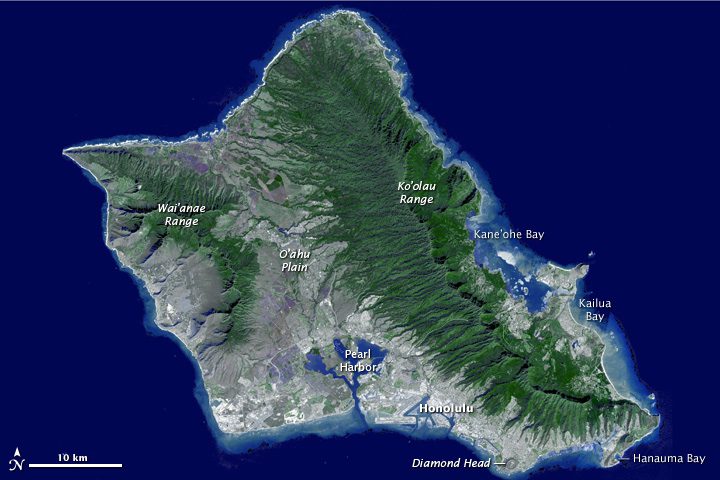
Finally, I close with yet another outrage from the Christopher Hitchens Memorial “How Religion Poisons Everything” File™: “Neighbors Helping Neighbors During Hawaiian Islands Flooding: Local Church leader says community response reflects ‘Christlike love and resilience’” Why can’t theists simply leave other people alone?










 Ad-Free & Subscriber Log-In