


So far as I’m aware, I’ve met Brent Ward, but just once. It was decades ago, and I’m sure that he wouldn’t remember meeting me at all. His parents served as special representatives of the Church of Jesus Christ of Latter-day Saints in Cairo, Egypt, while I was studying there. If I’m not mistaken, he visited Cairo while they were serving. Now, he has just published an article in the Deseret News with which I whole-heartedly agree: “Opinion: Wanted — a just Utah: ICE’s ambition to incarcerate 7,000-10,000 detainees in an 833,000-square-foot warehouse deserves careful consideration”
I will be writing today to my representatives in Utah state government, in the House of Representatives, and in the Senate of the United States. For me, this isn’t a partisan political issue. It’s a matter of simple human rights and of upholding our divinely-inspired Constitution.
In 1854, Charles W. Penrose, a future counselor in the First Presidency of the Church of Jesus Christ of Latter-day Saints, was still serving as a missionary in his native England. He wanted to emigrate, but continual calls to Church service had prevented his leaving. So he wrote a poem that expressed his yearning and that has since become one of our beloved hymns:
1. O ye mountains high, where the clear blue sky
Arches over the vales of the free,
Where the pure breezes blow and the clear streamlets flow,
How I’ve longed to your bosom to flee!
O Zion! dear Zion! land of the free,
Now my own mountain home, unto thee I have come;
All my fond hopes are centered in thee.2. Though the great and the wise all thy beauties despise,
To the humble and pure thou art dear;
Tho the haughty may smile and the wicked revile,
Yet we love thy glad tidings to hear.
O Zion! dear Zion! home of the free,
Though thou wert forced to fly to thy chambers on high,
Yet we’ll share joy and sorrow with thee.3. In thy mountain retreat, God will strengthen thy feet;
Without fear of thy foes thou shalt tread;
And their silver and gold, as the prophets have told,
Shall be brought to adorn thy fair head.
O Zion! dear Zion! home of the free,
Soon thy towers shall shine with a splendor divine,
And eternal thy glory shall be.4. Here our voices we’ll raise, and we’ll sing to thy praise,
Sacred home of the prophets of God.
Thy deliv’rance is nigh; thy oppressors shall die;
And thy land shall be freedom’s abode.
O Zion! dear Zion! land of the free,
In thy temples we’ll bend; all thy rights we’ll defend;
And our home shall be ever with thee.
Even growing up in California, that description of Utah as the “sacred home of the prophets of God” resonated powerfully with me. I still feel it, tattered though the reality of Utah can often be with the ordinariness of trade and politics and pollution and the realities of mortal limitations and flaws, to say nothing of media-trumpeted “secret lives” and “real housewives.” I am, I suppose, a kind of “Mormon Zionist.” And, on this specific issue, I intend to take a stand in defense of that ideal.

Nearly a year ago, reports circulated in the news media that the Trump administration was considering formal suspension of the right of habeas corpus, at least for some. See, for example,
- “Trump administration considers suspending habeas corpus”
- “Stephen Miller says Trump administration ‘looking at’ suspending habeas corpus”
- “Trump Administration Officials Have Been Threatening to Suspend a Core Principle of Our Democracy. Can They?”
And this Wall Street Journal opinion piece by William A. Galston (in whose company, for what little it may be worth, I once spent a week at a small seminar in Málaga, in the south of Spain, under the auspices of the Institute for American Values) is very much worth reading: “Trump’s Habeas Corpus Threat: No president, even Lincoln, has ever suspended the writ without Congress”
Of course, the Trump administration is such a constantly swirling vortex of news and controversy — and the war in Iran is so front and center at the moment — that the matter of habeas corpus has long since disappeared from the headlines and the front pages since then. New controversies have largely replaced it. But, so far as I’m aware, there is no reason to believe that the idea of formally suspending one of the most venerable of constitutional rights has been dropped at 1600 Pennsylvania Avenue.
So I thought that I would mention a couple of items here that some readers of this blog might find of interest.
First, it’s noteworthy that the late Justices Ruth Bader Ginsburg and Antonin Scalia — the left/right polar opposites on the Supreme Court of the United States during their still-recent tenures — agreed that everybody within the borders of the United States of America, even non-citizens (and every citizen of the United States of America abroad), enjoys the protection of guaranteed constitutional rights, including the right to due process: “Extreme Opposites Agree.”

Second, I cite (and I enthusiastically recommend) an interesting and even entertaining talk that was given by then-Elder Dallin H. Oaks of the Quorum of the Twelve Apostles — some may recall the relevant fact that, before he was sustained as a prophet, seer, and revelator, he was a professor of law at the University of Chicago and, thereafter, a member of the Utah Supreme Court — on Monday, 23 September 2013, at the Historic Nauvoo Visitors’ Center in Nauvoo, Illinois. His remarks were delivered as part of a multi-day event that was co-sponsored by the Abraham Lincoln Presidential Library and Museum and the Illinois Supreme Court Historic Preservation Commission. On the following day, Tuesday 24 September 2012, a reenactment of Joseph Smith’s habeas corpus hearings was performed, followed by a panel discussion. A similar reenactment and a similar panel discussion occurred on the campus of the University of Chicago about three weeks later. (See “Apostle Speaks on Joseph Smith at Illinois Law Event.”)
Here is an excerpt from Elder Oaks’s remarks on that occasion:
It is within the context of Joseph Smith’s love of the Constitution that his understanding and use of the writ of habeas corpus must be examined. In a recent article in BYU Studies Quarterly, Jeffrey Walker, who has been so helpful to me in the research and writing of this talk, summarized Joseph’s use of habeas corpus:
During Joseph Smith’s life he invoked the habeas corpus laws on several occasions: From seeking review of his incarceration in Liberty Jail to seeking approval for the charter for the City of Nauvoo (which included the right of the municipal court to hear writs of habeas corpus) to seeking review of his arrests during the various extradition efforts to return him to Missouri, Smith developed a keen understanding of the protections that habeas corpus afforded, and he needed that understanding. Joseph Smith believed, and accurately so, that if he were to be jailed in Illinois as he had been in Missouri, he would not survive his incarceration. It was in fact his jailing in Illinois that ended in his murder.
His passionate belief in habeas corpus can be heard in a speech he gave to thousands assembled at the grove just below the temple here in Nauvoo. After arriving to have a petition for habeas corpus heard the following morning by the Nauvoo Municipal Court over Missouri’s third effort to have him extradited, he said:
The Constitution of the United States declares that the privilege of the writ of Habeas Corpus shall not be denied. Deny me the right of Habeas Corpus, and I will fight with gun, sword, cannon, whirlwind, and thunder, until they are used up like the Kilkenny cats . . . the benefits of the Constitution & laws are for all alike; & the great Eloheim has given me the privilege of having the benefits of the Constitution & the writ of Habeas Corpus.
Joseph Smith’s intellectual understanding of the protections afforded by the writ of habeas corpus justifies admiration by any student of the law. Daniel H. Wells, then a non-Mormon justice of the peace in Hancock County and a personal friend of Joseph, said, “I have been around lawmen all of my life. Joseph Smith was the best lawyer that I have ever known in my life.”
[For the full text of Elder Oaks’s 2013 speech, see “Behind the Extraditions: Joseph Smith, the Man and the Prophet, By Elder Dallin H. Oaks of the Quorum of the Twelve Apostles”]
Given President Oaks’s position at the time of the cited remarks and his current position as the president of the Church of Jesus Christ of Latter-day Saints, is it too political on my part to hope that my fellow members of the Church will take seriously his view of habeas corpus — to say nothing of the view on the matter of the Prophet Joseph Smith himself?
The Constitution of the United States is, after all, expressly mentioned (and approved) in our canonical scriptures:
According to the laws and constitution of the people, which I have suffered to be established, and should be maintained for the rights and protection of all flesh, according to just and holy principles;
That every man may act in doctrine and principle pertaining to futurity, according to the moral agency which I have given unto him, that every man may be accountable for his own sins in the day of judgment.
Therefore, it is not right that any man should be in bondage one to another.
And for this purpose have I established the Constitution of this land, by the hands of wise men whom I raised up unto this very purpose, and redeemed the land by the shedding of blood. (Doctrine and Covenants 101:77-80)
And please note that the Constitution is to be “maintained for the rights and protection of all flesh” (emphasis mine).
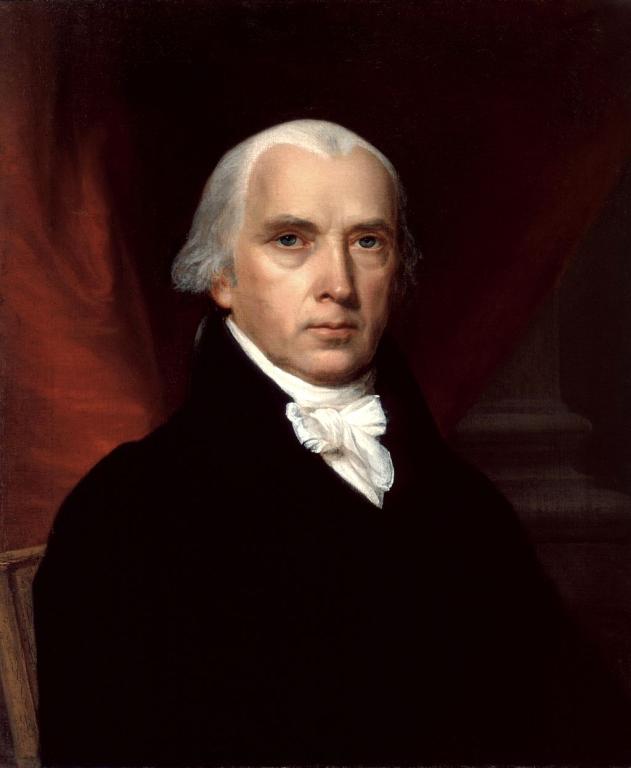
(Wikimedia Commons pubic domain image)
I close by linking to another recent Deseret News article, this one by Judge Thomas B. Griffith (like Brent Ward, a life-long Republican), that I think deserves careful consideration by thoughtful Americans, and especially by Latter-day Saints: “Opinion: Is the Republic in the midst of a constitutional crisis? ‘The most important purposes of the Constitution (are) to protect our rights and to create a structure of government that would do so as well’”













 Ad-Free & Subscriber Log-In