

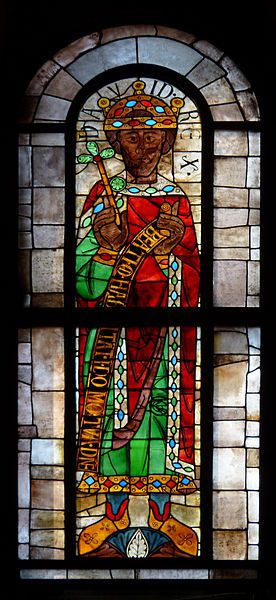
(Wikimedia Commons public domain image)
“Come, Follow Me — Old Testament Study and Teaching Helps (2026): June 8-14: 1 Samuel 8-10; 13; 15-16 — “The Lord Looketh on the Heart,”“ written by Jonn Claybaugh
Once again, Brother Claybaugh generously contributes a concise and helpful set of notes for students and teachers of the Sunday School curriculum of the Church of Jesus Christ of Latter-day Saints.
In today’s edition of the Deseret News: “Faithful Answers for Difficult Conversations: Why more Latter-day Saints are turning to FAIR for help navigating hard questions about Church history and doctrine”
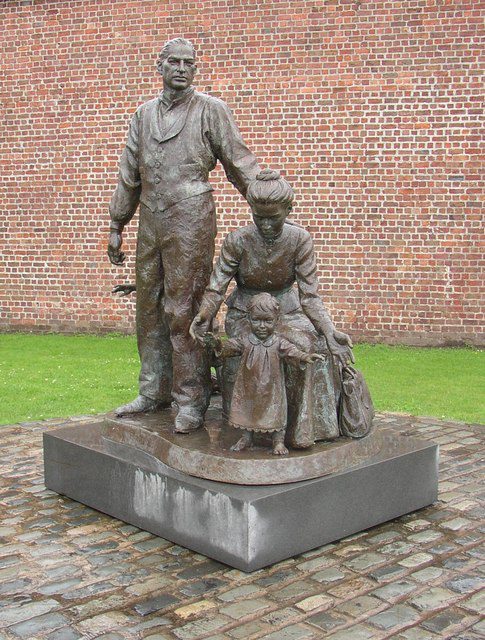
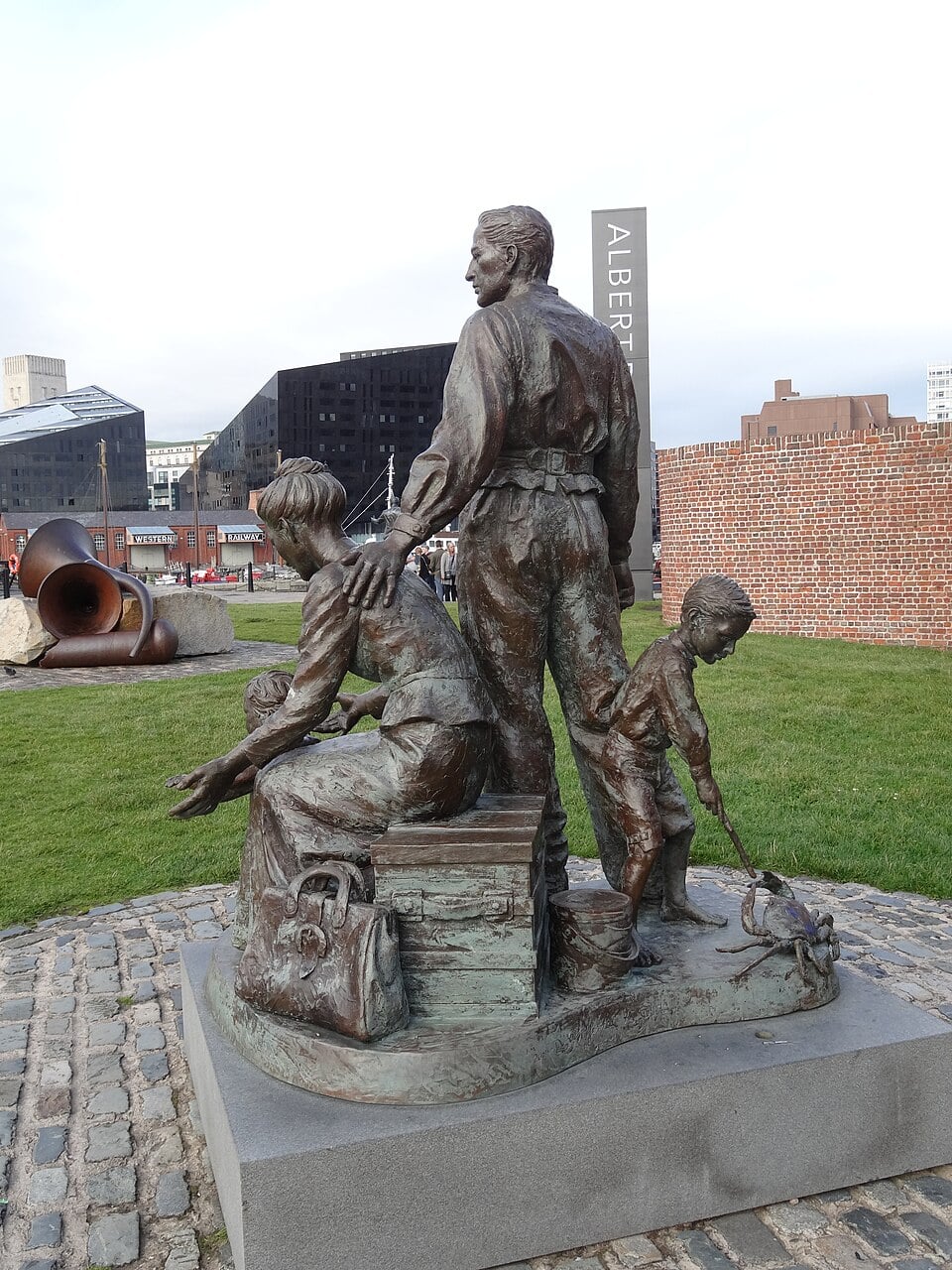
On the first full day of our recently concluded tour of England, we drove by the former location of the dockyards where Charles Dickens went to observe a group of Latter-day Saint converts preparing to depart across the Atlantic Ocean for Zion. I meant to repost the following in connection with that, but, under the press of jet lag and other matters, I didn’t. I’ve always loved the story and what with taking a Third-Generation Unit to the swimming pool more than once (where I play a remarkably inept monster who is continually thwarted by the ever-multiplying but amazingly timely superpowers of the 3GU) I’m running out of time available for blogging (and other necessary things) today. So I share again something that I first posted here back in 2019:
In June 1863, the passenger ship Amazon set sail from London for America with nearly 900 Latter-day Saint emigrants aboard. However, just before she weighed anchor, many Londoners—including both government officials and clergymen—came to take a look at the Mormons, up close and at first hand, as well as at their traveling arrangements. One of these visitors Charles Dickens, the famous author of such works, by that time, as The Pickwick Papers (1837), Oliver Twist (1839), Nicholas Nickleby (1839), The Old Curiosity Shop(1841), Barnaby Rudge (1841), A Christmas Carol (1849), Martin Chuzzlewit (1844), Dombey and Son (1848), David Copperfield (1850), Bleak House (1853), Hard Times (1854), Little Dorrit (1857), A Tale of Two Cities (1859), and Great Expectations (1861). He is generally regarded as the greatest novelist of Victorian England.
Dickens spent several hours on board the Amazon, quietly observing the Saints on the ship and interviewing George Q. Cannon, a member of the Twelve who was serving at the time as the president of the British Mission. (Elder Cannon would go on to serve as a counselor in the First Presidency to Brigham Young, John Taylor, Wilford Woodruff, and Lorenzo Snow.)
A month or so after his visit to the Amazon, Dickens published an account of it in an essay for the periodical All the Year Round (4 July 1863), titled “The Uncommercial Traveller.” In his essay, he remarked that virtually all of the emigrating Latter-day Saints were tradesmen and craftsmen and their families, people of the working class. He was worried about what these British converts to Mormonism might encounter when they actually arrived in Utah. (He was surely familiar with the horror stories going around England at the time – which would continue for the next several generations — about the theocratic “Mormon kingdom” in the remote North American west.) But he was deeply impressed by what he had actually seen. The emigration was thoroughly well-organized, calm, orderly.
“I went on board their ship,” he wrote, “to bear testimony against them if they deserved it, as I fully believed they would; to my great astonishment they did not deserve it; and my predispositions and tendencies must not affect me as an honest witness. I went over the Amazon’s side feeling it impossible to deny that, so far, some remarkable influence had produced a remarkable result, which better known influences have often missed.” Of the Saints themselves, Dickens confessed that, had he not known they were Mormons, he would have described them as, “in their degree, the pick and flower of England.”
The story has been told a number of times in many places. The proximate source for my entry above was an article in the March 1980 issue of the Ensign by Richard L. Jensen and Gordon Irving, entitled “The Voyage of the Amazon: A Close View of One Immigrant Company.”
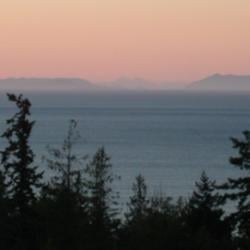
Cooking on a gas grill out on a patio while looking through the pine trees down upon a small fjord of Puget Sound not far below. Can mortality ever be much better than this? Unfortunately, though, it’s not always like this. Not for most of us, most of the time. (For too many, it’s not at all like this. Ever.) But I think this evening of Gerard Manley Hopkins:
The world is charged with the grandeur of God.It will flame out, like shining from shook foil;It gathers to a greatness, like the ooze of oilCrushed. Why do men then now not reck his rod?Generations have trod, have trod, have trod;And all is seared with trade; bleared, smeared with toil;And wears man’s smudge and shares man’s smell: the soilIs bare now, nor can foot feel, being shod.
And for all this, nature is never spent;There lives the dearest freshness deep down things;And though the last lights off the black West wentOh, morning, at the brown brink eastward, springs —Because the Holy Ghost over the bentWorld broods with warm breast and with ah! bright wings.
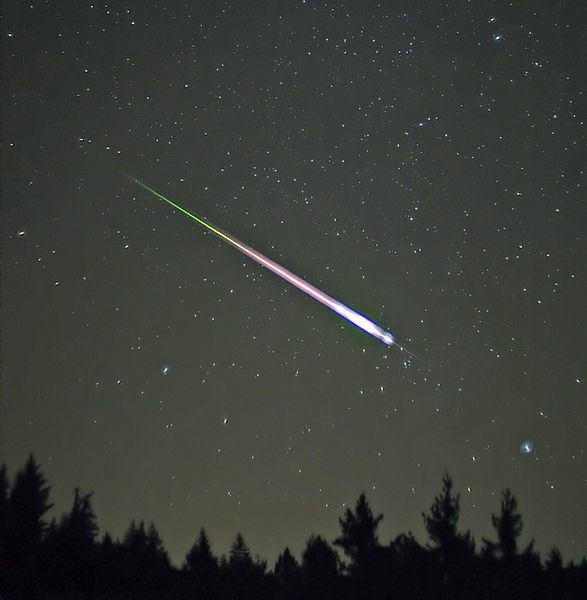
I guess that I’m in a poetic mood. Sorry! In any case, I came across a poem earlier today that was written by the deeply Roman Catholic English poet Elizabeth Jennings (1926-2001). From page 161 of her New Collected Poems, it’s titled “Clarify,” for a reason that immediately becomes apparent. I was especially struck by its first three lines:
Clarify me, please,God of the galaxies,Make me a meteor,Or else a metaphor
So lively that it growsBeyond its likeness andStands on its own, a landThat nobody can lose.
God, give me libertyBut not so much that ISee you on Calvary,Nailed to the wood by me.
Posted from Discovery Bay, Washington








 Ad-Free & Subscriber Log-In