

A planned side trip a few weeks ago found me again at Adam-ondi-Ahman, a most holy place for me. Adam-ondi-Ahman is one of my soul’s very favorite places to be. I’d never been there during wintertime. I had a couple of hours to wander the snowy trails through the timber and took full advantage of the opportunity.

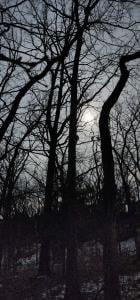
The frozen river made Wight’s Ferry on the Grand River memorable.

The overlooks looked incredible under the cold, winter sun.
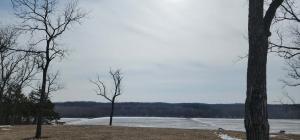

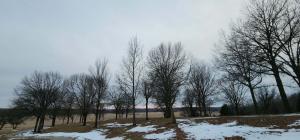
As I wandered through the old Diahman town sites, I imagined the bustling community.
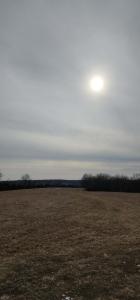
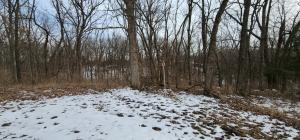
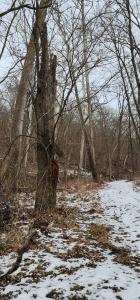
I sat in stillness and stared at the sky.

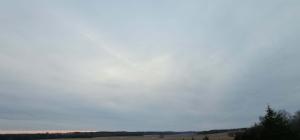
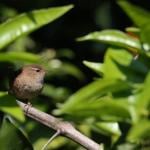
I feel connected to God and my ancestors in this place. Only the bird’s calls shattered the stillness as I meandered along familiar trails.
In that sacred stillness, I pondered the God I worship and my relationship to Him. I believe in God the Eternal Father and in His Son, Jesus Christ, and in the Holy Ghost. Believing in a divine plan of salvation, that we lived with God before this life, and His greatest purpose is for us to live with Him again, guides my daily walk.
Walking through sacred space sanctifies my faith and imprints a certainty of God’s reality and purpose on my mind and heart.
Courage at Adam-ondi-Ahman
I also think about my people who gathered there.
“This beautiful country with its flattering prospects drew in floods of emigrants. I had not less than thirty comers and goers through the day during the three summer months.” By October, Wight recorded that “upwards of two hundred houses” had been built in Adam-ondi-Ahman with “forty families living in their wagons.”
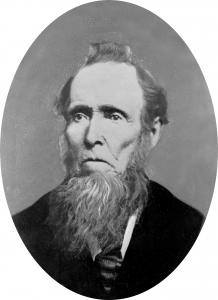
One of the families settling Adam-ondi-Ahman was the family of my 4th great-grandparents, Lucius and Lury Snow Scovil. After being commanded to gather in Missouri, Lucius and Lucy’s uncle, Oliver Snow, found a lot at Diahman and worked steadily to prepare before the approaching winter.
Mob violence flared during this time, driving many Saints from their homes in Diahman. Many of them moved to Far West. But the mobs followed the Saints to Far West and continued to persecute the Saints there, too, by burning their homes and destroying other property.
Finally, round-the-clock guards were posted around the area, and every man was required to serve on guard duty. One day, Lucius and Noah Rogers did picket guard duty several miles from town. Elmina, a daughter of Lucius, recorded the harrowing incident.
They had been riding through the timber most of the time but had left it some time before. They were about a mile and a half from it when they suddenly found themselves confronted by a large mob which had seen them leave the timber and had ridden into a gully to hide until the two men approached. Mr. Scovil and Mr. Rogers were almost upon them when they rode into view and told them to halt.
Instead of doing as they ordered, they turned their mounts and rode hard for the timberline. Two members of the mob had much faster horses than the others and had drawn steadily away and were rapidly overtaking the two men, who were riding for their lives, because it was known by them that if they allowed themselves to be caught, the mob might shoot them down in cold blood.
All of them were heavily armed and it was the practice of the mobs to fire upon the Saints whenever the opportunity arose.
And now, as they were about to ride into the timber, which meant safety, they were confronted by a deep ravine with perpendicular walls. This ravine was fully sixteen feet wide and the horses were running with such speed that stopping was almost out of the question.
But it was not left for them to decide. The horses kept straight on, and, making a tremendous leap, spanned the ravine, landing safely on the other side.
Members of the mob who were close behind them at once started to fire upon them. None of the shots took effect but were so close they could be heard whistling by their heads. One shot, just before they rode out of range, grazed Lucius’ ear, which caused a slight deafness he was to suffer all his life.
They were soon in the timber, out of range and for the present, safe. After winding their way through the heavily wooded country, in order to lose anyone that might be following, they, at last, arrived back in town, thankful to have escaped the assassins who would have taken their lives for no other reason than that they believed in a different faith.
As I wander the trails, I spy ravines and imagine Grandfather Lucius’ horse jumping that span to find safety in the timber. The whistling bullets sound in my mind.
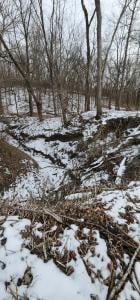
He was a man of great faith and courage, and as I walk that land, I quietly gain strength from him and other ancestors who consecrated their whole lives to their God.
A Most Holy Place
I think of a statement by Elder Alvin R. Dyer in General Conference:
I have been privileged to feel the nearness of President McKay’s spirit. I have felt the majesty of his soul as we stood in the valley of Adam-ondi-Ahman, observing in the short distance a place there known as Spring Hill, referred to in Section 116 of the Doctrine and Covenants as the place where Adam, Michael, or the “Ancient of Days,” in accordance with the prophecy of Daniel, shall in the due time of the Lord visit the earth for an important reason, and while there hearing President McKay utter quietly, “This is a most holy place.” (Conference Report, October 1967, p.41)
And I’m drawn to Adam-ondi-Ahman again and again, consecrating my presence on those timbered trails and rolling hills as an act of worship to the Most High God.








 Ad-Free & Subscriber Log-In