


Hate crimes against religious institutions have increased over the past decade, with a particularly sharp rise since about 2021. Attacks against Jewish institutions far outpace those against other faiths. Both the October 7 attack on Israel (and its response) and the subsequent Middle East conflicts are strongly linked to increases in hate incidents and threats in the United States. Let’s take a look.
Hate Crimes On The Rise
When U.S. authorities and major watchdog groups talk about hate crimes against religious institutions, they are not referring to one religion. Hate crimes impact many faiths and belief systems. This is spelled out in the FBI’s hate‑crime reporting standards and echoed by groups such as the DOJ (Department of Justice), ADL (Anti-Defamation League), and the Bureau of Justice Statistics. The FBI Hate Crime Statistics Program lists the following religion‑based bias categories, which are used nationwide by law enforcement agencies:
- Jewish – Anti‑Jewish (by far the most frequently targeted religious group in reported data).
- Muslim – Anti‑Islamic / Anti‑Muslim
- Christian – tracked by denomination and general category.
- Anti‑Catholic
- Anti‑Protestant
- Anti‑Mormon
- Anti‑Eastern Orthodox (Greek, Russian, etc.)
- Anti‑Other Christian
- Anti‑Jehovah’s Witness
- Sikh – Anti‑Sikh
- Hindu – Anti‑Hindu
- Buddhist – Anti‑Buddhist
Hate crimes motivated by religion consistently account for about 18–25% of all reported hate crimes each year. However, most are vandalism, threats, or harassment, not physical violence. Of religion‑based hate crimes (U.S. data):
- Jewish targets make up the majority (typically 55–60%+)
- Muslim targets are next
- Christian targets are a smaller share
These figures refer to crimes motivated by religion, not necessarily crimes against clergy or religious leaders, and they include many non‑violent incidents.
Extremist Killings
Across all extremist‑related murders in the U.S.:
Religious targets (institutions or people) account for approximately 10–15% of extremist‑related killings in most years.
The majority of extremist killings target:
- Law enforcement
- Racial/ethnic groups
- Political figures
- Random civilians
There is no national dataset that tracks crimes targeted against clergy, pastors, rabbis, or imams. Some of the more heinous crimes against religious leaders and/or institutions over the past 10 years:
- Emanuel African Methodist Episcopal Church — Charleston, South Carolina (2015) – A gunman opened fire during a Bible study at a historic Black church, killing 9 people.
- First Baptist Church — Sutherland Springs, Texas (2017) – A mass shooting during Sunday services killed 26 people.
- Tree of Life Synagogue — Pittsburgh, Pennsylvania (2018) – A gunman opened fire during Sabbath services and killed 11 people.
- Saint Stephen’s Episcopal Church — Vestavia Hills, Alabama (2022) – A gunman attacked a church potluck gathering and killed 3 people.
- Masjid Muhammad Mosque — Newark, New Jersey (2024) – An imam, Hassan Sharif, was shot and killed outside the mosque. It was never clear if this was an actual hate crime.
- Annunciation Catholic Church & School — Minneapolis, Minnesota (2025) – A former student opened fire during Mass, killing 2 children and wounding many others.
- Church of Jesus Christ of Latter‑day Saints — Grand Blanc Township, Michigan (2025) – An attacker rammed his vehicle into the church, opened fire, and then set the building on fire, killing 4 people.
In April 2025, a California man executed an Arizona pastor and confessed, “I intended it to be heinous.” The pastor was found with his arms outstretched and his hands pinned to a wall, in a position “similar to a crucifixion.” Adam Sheafe’s (the assailant) method of killing fits into a broader, recent pattern of ideologically motivated, “lone‑actor” violence connected to extremist religious or anti‑religious beliefs.
The Impact of October 7 and the Middle East Conflicts
Both October 7 and the subsequent Middle East conflicts (including the war involving Iran) are strongly linked to increases in hate incidents and threats in the United States. Anti-semitic incidents surged after the October 7 Hamas attack on Israel:
- The Anti‑Defamation League (ADL) recorded a 360%–361% increase in antisemitic incidents in the three months immediately following October 7 compared with the same period a year earlier. Israel was the victim of the October 7 attack, so such a large increase in antisemitic attacks is extremely disturbing.
- ADL data shows thousands of incidents (harassment, vandalism, assaults, bomb threats) with about two‑thirds directly linked to the Israel–Hamas war.
- Jewish institutions (synagogues, schools, community centers) were frequently identified as explicit targets, including coordinated bomb threats and protests.
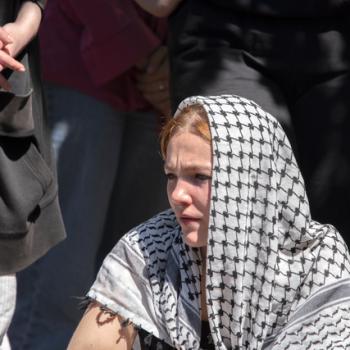
- The attack spawned many antisemitic protests, mainly on college and university campuses, that resulted in harassment and, in some instances, violence against Jewish students.
The Israel–Iran war and the U.S.-Iran war have exacerbated already high regional tensions:
- The Department of Homeland Security (DHS) explicitly warned that the Israel–Iran conflict increases the likelihood of U.S.‑based individuals plotting attacks, particularly against:
- Jewish or perceived “pro‑Israel” targets
- U.S. government or military‑linked sites
- DHS notes that foreign terrorist propaganda and calls for violence tied to the conflict can inspire domestic actors.
Impact Outside of the Jewish Community
Muslim Communities:
- News reports and advocacy groups have documented rising anti‑Muslim hostility during the Iran conflict, including threats and harassment during religious observances such as Ramadan.
- Federal data shows anti‑Muslim incidents fluctuating year‑to‑year, but experts caution that under‑reporting is common.
Christian and Other Religious Institutions
- While incidents involving churches also increased, most are not directly tied to the Middle East conflicts and often involve:
- Vandalism
- Political protest
- Anti‑LGBTQ extremism
- Mental‑health‑driven incidents
- These are usually not categorized as geopolitically motivated hate crimes.
The Catholic View

As disciples, we are taught to accept each other for who we are and not to judge one another. Unfortunately, extremism exists amongst all faiths, and too often, their actions make the headlines. That being said, there is a growing tension between society and religion, especially organized religion, but it’s more than simple hostility. Pew Research Center reports that Americans’ trust in institutions has been weakening for years, alongside a broader decline in social trust.
This is less about beliefs and more about trust in general. In some cases, that lack of trust is justified, and faith leaders must do more to earn it back. A prime example is that the Catholic Church has not recovered trust from its actions in the sex scandals.
In John 14:6, Jesus says, “I am the way, the truth, and the life.” That’s a self‑definition, not a command to force others to compliance. Jesus invites; He never forces. He did not “require” Gentiles to become Jews first. When later Christians used force, law, or violence in the name of faith, they were acting contrary to Jesus’ own methods, even when claiming his authority. Many theologians—across Catholic, Orthodox, and Protestant traditions explicitly acknowledge this.
Our Charge
As Catholic Christians, we need to be true disciples and live as Jesus did, loving and caring for one another. Attacking others based on their faith and/or beliefs is unacceptable. We must be the example for others. There is nothing wrong with calling out all extremism and standing up to it, but we must never accept it. Please pray that softer hearts prevail and that we can see more “coexistence” and less judgment.
Please share your thoughts about this article in the “Comments” section.
Peace
If you like this article, you might also enjoy:
The Christian Genocide in Nigeria the World Ignores
The Battle Over The Ten Commandments
AI: Analyzing The Risks For Today’s Youth












 Ad-Free & Subscriber Log-In