

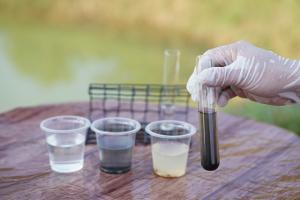
If you are not familiar with the acronym PFAS, you need to be. PFAS ( Per‑ and Polyfluoroalkyl Substances) form a large family of man‑made chemicals—nicknamed ‘forever chemicals’—that resist breaking down, accumulate in the body, and cause multiple health risks. These risks result from companies contaminating the drinking water with these chemicals. Let’s take a look at the cases.
What Are The PFAS Settlements?
3M’s settlement was finalized on March 29, 2024, for at least $10.3 billion (up to $12.5B), payable over 13 years. DuPont’s settlement (including Chemours and Corteva) was finalized in February 2024 for $1.18 billion. The settlements cover:
- All U.S. public water suppliers that:
- Have detected any PFAS at any level, or
- May detect PFAS in the future.
- Funding PFAS remediation, including:
- Treatment systems
- Monitoring
- Infrastructure upgrades
- Compliance with new Environmental Protection Agency (EPA) limits
Both settlements were structured to provide money for cleanup without requiring the companies to accept legal liability. Included in the settlements:
- No admission of liability.
- No admission of wrongdoing.
- No admission that PFAS caused harm.
Courts don’t agree to “no responsibility” clauses because they think the companies are innocent. They agree to them because that’s how mass‑tort settlements work in the United States. If judges demanded admissions of fault, the companies would walk away, and the water systems would get nothing. The national settlements with 3M and DuPont do NOT shield them from all future lawsuits. They only resolve one category of claims: Public water‑system contamination.
While these are national settlements, some areas are more impacted than others. Long Island is one of those areas.
Long Island Water Contamination Case
Both companies agreed to large national PFAS (“forever chemicals”) settlements, and Long Island water providers—including Suffolk County Water Authority (SCWA) and multiple Nassau districts—are receiving substantial payouts from these agreements. 3M manufactured PFAS used in firefighting foam, industrial coatings, and consumer products that contaminated Long Island’s sole‑source aquifer. DuPont and its chemical subsidiaries produced PFAS compounds that migrated into groundwater.
These districts are confirmed recipients or participants in the settlements:
- Suffolk County Water Authority (SCWA)
- Town of Hempstead
- Franklin Square Water District
- Locust Valley Water District
- Oyster Bay Water District
- Water Authority of Western Nassau County
- South Farmingdale Water District
The most recent Environmental Working Group (EWG) interactive map (updated Feb 2026) shows 9,728 PFAS‑contaminated sites across all fifty states. Since the settlements were national, there was very little local reporting on the situation. The settlements are real, and Long Island districts are receiving money, but the story hasn’t been packaged as a headline event. Instead, the media has covered the symptoms (contamination, cleanup projects) rather than the legal mechanism for paying for the fixes.
Cancer on Long Island

Long Island’s cancer rates are higher than the U.S. average:
- Suffolk County: 516.6 cases per 100,000 people
- Nassau County: 499.8 cases per 100,000 people
- U.S. average: 448.6 cases per 100,000 people
Suffolk and Nassau both sit well above the national rate, placing Long Island among the higher‑incidence regions in the country. So, we have unusually high cancer rates, we have documented PFAS contamination—so why won’t anyone say, flat‑out, “this dumping caused these cancers”?
What we do know:
- PFAS exposure is linked to increased cancer risk: Large epidemiologic studies now show associations between PFAS in drinking water and higher rates of multiple cancers (kidney, testicular, some digestive, endocrine, and others).
- PFAS are in Long Island’s water and environment: Long Island has widespread PFAS detections in public water systems and even in local farm produce, with PFAS linked to cancer risk.
- The EPA now explicitly links PFAS in drinking water to deadly cancers and other serious health harms.
What we do not know:
We do not yet have a study that says, in precise legal language: “PFAS dumping on Long Island caused X% of the excess cancer cases here.” Why don’t we have that yet?
- Cancer has many causes (genetics, smoking, other pollutants, lifestyle, chance).
- Long Island has multiple contaminants in its aquifer, not just PFAS.
- To prove a definitive local causal link, researchers need:
- Individual exposure histories
- Long‑term follow‑up
- Control groups
- Strong statistical power
Those studies are only now emerging at the national level and haven’t yet pinned down a Long Island-specific cause-and-effect.
The Catholic View
This situation is wrong on many levels. To begin with, dumping chemicals into the ground where people get their drinking water is a serious moral issue. When companies dump chemicals into the ground that supply a community’s drinking water, they violate more than regulations. They violate trust, stewardship, and the dignity of the people who depend on that water to live. They may not have known the seriousness of the issue. Still, companies dumped PFAS‑laden waste into the ground, unlined pits, industrial lagoons, and soil above drinking‑water aquifers for decades before lawsuits began. For decades, there was no proactive testing, no transparent communication, and no meaningful public warning that these chemicals were entering the ground and moving toward the drinking‑water supply. That alone is unconscionable.
To compound the situation, the companies to date have refused to take accountability for their actions. They poisoned the water, made people sick, and not one stepped up to acknowledge their accountability. Jesus in Matthew 23 consistently confronts those who refuse to acknowledge wrongdoing, especially when their actions harm others:
- Hiding sin instead of confessing it.
- Projecting righteousness while causing harm.
- Refusing to acknowledge the burdens they place on others.
- Covering up injustice.
Jesus consistently draws our attention to the fact that harm never falls evenly, and when systems break, the poor, the vulnerable, and the overlooked bear the heaviest weight. Those who cannot afford purified water and must rely on tap water are disproportionately harmed in this situation.
What’s Next?
Please check your area to see the impact. With 9,728 PFAS‑contaminated sites across all fifty states, do not take a chance and assume that your area is safe. I would encourage people to reach out to their elected officials and demand that they maintain a constant focus and communication on this situation. Communications were poor at best early on here. We cannot allow that to continue.
Please share your thoughts about this article in the “Comments” section.
Peace
If you like this article, you might enjoy:
Triduum: The Heart Of The Liturgical Year
Church and State: Protecting Religious Freedom
What Every Parent Needs to Know About Roblox’s Hidden Threat














 Ad-Free & Subscriber Log-In