


This Sunday, September 28, is the Twenty-Sixth Sunday in Ordinary Time. The theme of the readings is to “store your treasures in Heaven.” The parable of the rich man and Lazarus shows that God records and stores our earthly actions for judgment. Let’s take a look.
Gospel Text Luke 16:19-31
Jesus said to the Pharisees:
“There was a rich man who dressed in purple garments and fine linen and dined sumptuously each day. And lying at his door was a poor man named Lazarus, covered with sores, who would gladly have eaten his fill of the scraps that fell from the rich man’s table. Dogs even used to come and lick his sores.
When the poor man died, he was carried away by angels to the bosom of Abraham. The rich man also died and was buried, and from the netherworld, where he was in torment, he raised his eyes and saw Abraham far off and Lazarus at his side. And he cried out, ‘Father Abraham, have pity on me. Send Lazarus to dip the tip of his finger in water and cool my tongue, for I am suffering torment in these flames.’
Abraham replied, ‘My child, remember that you received what was good during your lifetime, while Lazarus likewise received what was bad; but now he is comforted here, whereas you are tormented. Moreover, between us and you, a great chasm is established to prevent anyone from crossing who might wish to go from our side to yours or from your side to ours.’ He said, ‘Then I beg you, father, send him to my father’s house, for I have five brothers, so that he may warn them, lest they too come to this place of torment.’ But Abraham replied, ‘They have Moses and the prophets. Let them listen to them.’
He said, ‘Oh no, father Abraham, but if someone from the dead goes to them, they will repent.’ Then Abraham said, ‘If they will not listen to Moses and the prophets, neither will they be persuaded if someone should rise from the dead.'”
1st Reading – Amos 6:1a,4-7
Amos’s warnings are for the elite of the northern kingdom of Israel. He warns them that the Assyrians will defeat them and send their leaders, scholars, and elite into exile. His words challenge those who are complacent in the northern kingdom. They live their lives strictly for themselves. There was no thought about others, including God. These men sought earthly pleasures, not heavenly ones. They lost everything upon their exile.
2nd Reading – 1 Timothy 6:11-16
In this reading, Paul implores Timothy to provide a godly example for the people around him. Paul uses the term “man of God ” to link Timothy and the importance of his work to that of the prophets in the Old Testament. He also links Timothy to Jesus’ public witness before Pilate. This serves as a reminder that Jesus is our model for all things. Paul tells Timothy to remain “without stain or reproach.” This message is also for us, so others will see Jesus in our words and deeds. The call from this reading is the exact opposite of the first one. This is a call to pursue faith, love, and righteousness by looking at Jesus first, and then tending to others.
3rd Reading – Luke 16:19-31

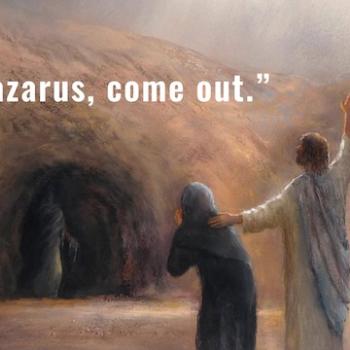
This reading is a message to those who do not live the life that Jesus asks of us, but to those who live only for themselves. The rich man does nothing to help Lazarus, who is suffering. Much like those in the first reading, he was focused so much on himself that he ignored the needs of Lazarus and others. Interestingly, the parable names Lazarus but leaves the rich man unnamed. This means the rich man can be any one of us.
Lazarus dies and goes to Heaven, while the rich man goes to the netherworld. His conversation with Abraham makes the rich man realize he squandered his opportunity to address Lazarus and others’ sufferings while on earth. He asks Abraham to send someone to his brothers so they will not suffer the same fate. This is a warning that those who reject the Gospel after the Resurrection may suffer the same fate.
Please let me know your thoughts about this article in the “Comments” section.
Peace
If you like this article, you might enjoy:
Faith in Times of Media Bias and Crisis
Political Tensions Surge After Charlie Kirk’s Death
Christianity’s Role in American History Explained













 Ad-Free & Subscriber Log-In