

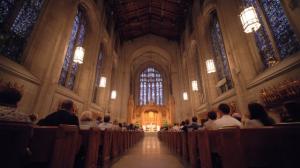
The Triduum is the single, three‑day liturgy that begins on the evening of Holy Thursday and ends on the evening of Easter Sunday. It is the summit of the entire liturgical year, unfolding the unity of Christ’s Passion, Death, and Resurrection. Although it spans three calendar days, the Church treats it as one great liturgical action. Let’s take a look at the meaning behind these services.
Holy Thursday – Mass of the Lord’s Supper John 13:1-15
This mass has significant meaning in the life of Jesus and for us as Catholic Christians. During supper, Jesus rose from the table, took off His outer garments, wrapped a towel around His waist, and began to wash the disciples’ feet. In Jesus’ time, washing someone’s feet was one of the lowest, most menial tasks in the ancient world — normally done by slaves, children, or the very lowest-status servant. That’s what makes Jesus’ action in John 13 so shocking: He deliberately takes the role no rabbi, master, or dignified host would ever take. Jesus did this to set an example for all disciples, including us today, that greatness in the Kingdom of God is measured by service and not status.
“He rose from supper and took off his outer garments. He took a towel and tied it around his waist. Then he poured water into a basin and began to wash the disciples’ feet and dry them with the towel around his waist.”
The Institution of the Eucharist
The Church receives her greatest treasure — the sacrament in which Christ remains with His people until the end of time. The Eucharist is not a symbol; it is Christ’s real presence in the bread and wine. Matthew 26:26-28 states:
“While they were eating, Jesus took bread, said the blessing, broke it, and giving it to his disciples said, “Take and eat; this is my body.”
“Then he took a cup, gave thanks, and gave it to them, saying, ‘Drink from it, all of you, for this is my blood of the covenant, which will be shed on behalf of many for the forgiveness of sins.”
Jesus is commissioning the Apostles to consecrate the Eucharist. They become the first priests of the Church.
Good Friday – John 18:1—19:42
This sounds like a contradiction, doesn’t it — calling the day of betrayal, torture, and crucifixion “Good”. But the name only makes sense when you see the day not just from the viewpoint of what humans did, but from the viewpoint of what God accomplished. Good Friday is the ultimate example of God turning the worst evil into the greatest good. Humanity commits the greatest sin: killing the Son of God. God uses that very act to bring salvation to the world. The Cross is both the darkest moment in history and the moment the light breaks through. The gospel tells us:
After this, aware that everything was now finished, in order that the Scripture might be fulfilled,
Jesus said, “I thirst.”
There was a vessel filled with common wine. So they put a sponge soaked in wine on a sprig of hyssop and put it up to his mouth.
When Jesus had taken the wine, he said,
“It is finished.”
And bowing his head, he handed over the spirit.
Good Friday is “good” because through the worst act in human history, God accomplished the greatest act of love in human history. The Church never celebrates Good Friday as a funeral. It is solemn, yes — but not hopeless. The liturgy ends in silence, not despair. Hope is on the horizon.
Easter Vigil/Easter Sunday – John 20:1-9
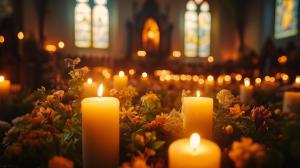
The Easter Vigil and Easter Sunday are the two liturgical moments that stand at the very heart of the Christian faith. They are distinct, but they form one movement: from darkness into light, from death into life, from promise into fulfillment. The Easter Vigil is the high point of the entire liturgical year because it is the moment the Church keeps watch at the tomb and witnesses the first burst of Resurrection light. The vigil begins in darkness and silence, but soon gives way to the light of the Resurrection. The Easter Vigil is the Church’s Passover night — the dramatic moment when Christ’s Resurrection breaks into the world, and the new creation begins.
Easter Sunday
If the Vigil is the dramatic breakthrough, Easter Sunday is the radiant unfolding. Easter Sunday is the radiant proclamation of that victory, the day the Church announces to the world that Christ is risen and everything has changed.
“On the first day of the week, Mary of Magdala came to the tomb early in the morning, while it was still dark, and saw the stone removed from the tomb. So, she ran and went to Simon Peter and to the other disciple whom Jesus loved, and told them,
“They have taken the Lord from the tomb, and we don’t know where they put him.”
So, Peter and the other disciple went out and came to the tomb. They both ran, but the other disciple ran faster than Peter and arrived at the tomb first; he bent down and saw the burial cloths there, but did not go in.
When Simon Peter arrived after him, he went into the tomb and saw the burial cloths there, and the cloth that had covered his head, not with the burial cloths but rolled up in a separate place.
Then the other disciple also went in, the one who had arrived at the tomb first, and he saw and believed. For they did not yet understand the Scripture that he had to rise from the dead.”
Holy Week
As we enter Holy Week with the Passion, Death, and Resurrection of Jesus, this is an excellent time to build on the practices we had during Lent and make them part of our everyday lives. What better way to celebrate this joyful season? Alleluia!
Please share your thoughts about this article in the “Comments” section.
Peace
If you like this article, you might enjoy:
Meta Verdict Put Social Media Companies On Notice
Church and State: Protecting Religious Freedom
What Every Parent Needs to Know About Roblox’s Hidden Threat











 Ad-Free & Subscriber Log-In