

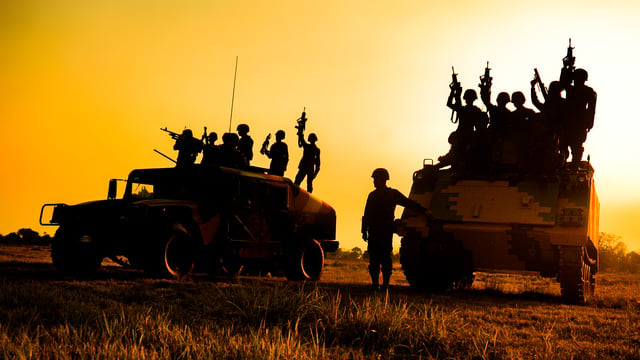
Genocide is occurring in Nigeria. Radical Islamist groups have systematically targeted Christians for over a decade, and the situation continues to get worse every day. The Nigerian government denies that genocide is occurring, but all evidence overwhelmingly points in that direction. Let’s take a look.
The Situation In Nigeria
The violence that many human‑rights groups describe as genocidal has been unfolding in Nigeria for well over a decade, with its clearest modern phase beginning around 2009 and continuing through 2026. The most widely recognized beginning of the genocidal pattern is 2009, when Boko Haram launched its full insurgency in northeastern Nigeria. This period marks the start of a 15‑plus‑year campaign involving mass killings, abductions, and village destruction. Analysts note that Boko Haram’s campaign has included explicit threats to eliminate Christian communities in the northeast.
Between 2010 and 2015, Boko Haram and aligned militants carried out repeated attacks on churches, Christian towns, and schools. This period includes the Christmas bombings, church massacres, and the Chibok schoolgirl abductions. Churches “bore the brunt” of attacks during these years.
Between 2016 and 2021, violence spread beyond Boko Haram into the Middle Belt, involving militant factions and bandit groups. The Middle Belt functions as a transitional zone between the predominantly Muslim north and the predominantly Christian south. Its deep ethnic and linguistic diversity makes it one of Nigeria’s most complex regions. This same region also suffers some of the country’s worst violence, and attackers concentrate many of their assaults on Christian communities here. By 2022, attacks on both Christian and Muslim worshippers increased, but Christian communities in Plateau, Benue, Kaduna, and Borno remained disproportionately targeted. By 2025–2026, international attention grew sharply as killings and abductions surged.
The Nigerian Government Denies Genocide
The government repeatedly denies that Christians are being specifically targeted, even when churches, Christian villages, and group worship gatherings are attacked. Locals often describe downplayed casualty figures and sanitized official accounts that don’t match what survivors saw. Many Nigerian Christians, bishops, and advocacy groups speak of complicity because the government knows the pattern, fails to stop it, and refuses to name it truthfully. Based on publicly available information, Nigeria’s current top national leaders are Muslims.
Reporting On Christian Deaths
There are metrics for Christian deaths in Nigeria over the last five years, but the numbers vary sharply depending on the organization. The most credible data show thousands of Christians killed each year, with Nigeria consistently ranking as the deadliest country in the world for Christians. Data provided by factually.co reports the following:
Available credible reports disagree sharply on annual counts of Christians killed in Nigeria. Open Doors’ World Watch List cites 3,100 Christian deaths in 2024; Intersociety/ACLED-linked figures and some advocacy groups report much higher multi-year and 2024 totals — e.g., “not less than 5,000” or tens of thousands across multiple years. Independent analysts and data projects warn that attribution (killed “because of Christianity”) is contested and that datasets use different definitions and methods.
While the actual numbers may vary, there is consensus across all sources:
- The Middle Belt and Northeast are the hardest‑hit regions.
- Nigeria is the deadliest country in the world for Christians.
- Thousands of Christians are killed every year.
There are metrics for rapes, abductions, and other violent crimes in Nigeria, but they are fragmented across different monitoring systems. No single national database captures everything, yet several credible sources provide partial but important data.
The Catholic View
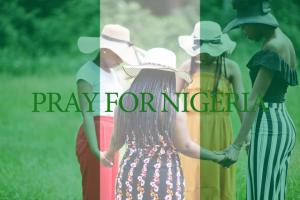
The Gospels give us a very clear picture of how we view the situation:
Jesus always begins with the person. He sees every life as precious, every child as beloved, every community as worthy of protection. He teaches that not even a sparrow falls without the Father knowing. So when entire communities fall under violence, Jesus does not see numbers; He sees His children. He grieves with them. He stands beside them.
As Christians, we must condemn the shedding of innocent blood. We are peacemakers. Matthew 25:40 tells us:
“And the king will say to them in reply, ‘Amen, I say to you, whatever you did for one of these least brothers of mine, you did for me.’”
We never suffer or grieve alone. Jesus is always with us.
We need Catholic leaders to be more forceful in speaking out against the situation in Nigeria. Pope Leo XIV has publicly spoken out against the violence in Nigeria on multiple occasions, especially in early 2026. He did not visit Nigeria during his April 2026 Africa trip because of security risks, diplomatic constraints, and competing priorities that drove Vatican decision‑making. This would have sent a very strong message in support of Christians in Nigeria. Unfortunately, this could not happen. The Pope’s not visiting Nigeria for security-related concerns, amongst other reasons, highlights the dire situation for Christians who live there.
Please share your thoughts about this article in the “Comments” section.
Peace
If you like this article, you might also enjoy:
The Good Shepherd
The Battle Over The Ten Commandments
AI: Analyzing The Risks For Today’s Youth











 Ad-Free & Subscriber Log-In