

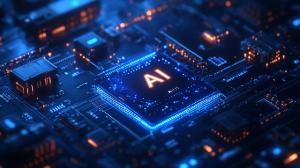
On May 25, 2026, Pope Leo XIV presented his first encyclical, Magnifica Humanitas (“Magnificent Humanity”), at the Synod Hall, addressing a diverse audience that included cardinals, diplomats, theologians, and leaders from the artificial intelligence (AI) sector. This document marks a significant moment in Catholic social teaching, as it directly engages with artificial intelligence not merely as a technical innovation but as a transformative global force. Pope Leo framed AI as a challenge comparable to the Industrial Revolution, emphasizing that it reshapes labor, society, and even the meaning of being human. Let’s take a look at what the Pope presented.
Highlights of Pope Leo’s Presentation
Pope Leo’s presentation of Magnifica Humanitas emphasized dialogue, responsibility, and global cooperation. He chose to attend the unveiling in person, signaling the urgency of the topic. The encyclical reflects a perspective rooted in the Vatican but aimed at the entire world. Pope Leo presented the text after consulting voices across continents—scientists, policymakers, educators, and families—illustrating the global scope of the issue. The Pope issued a call not only to Catholics but to governments, corporations, and individuals worldwide: technology must remain subordinate to human dignity and the common good.
A central highlight was his insistence that AI must serve the “common good” rather than narrow economic or political interests. He warned that without oversight, AI could deepen inequality, concentrate wealth, and undermine democratic systems. This is a key message that we all must keep in mind and share our voices in the conversation. The Pope also drew a historical parallel to Pope Leo XIII’s 1891 encyclical Rerum Novarum, which addressed the social upheavals of industrialization. By invoking this legacy, he positioned AI as the defining social question of the 21st century.
During the presentation, Pope Leo emphasized that technology itself is not inherently harmful. Instead, its ethical value depends on how humanity designs, governs, and uses it. This was a critical point the Pope made. He argued for “prudence” and, when necessary, a slower pace of technological adoption to protect human dignity.
Key Risks
Another major theme was the risks posed by AI in warfare and governance. The Pope warned against entrusting critical decisions—especially those involving life and death—to algorithms, stressing that machines cannot replace human moral judgment.
Geographically, the encyclical connects global concerns: from technology innovation to international policy, from developing nations vulnerable to data exploitation to major powers engaged in technological competition. This wide lens positions the Vatican as a moral voice in an increasingly interconnected world.
Pope Leo’s Call to “Disarm”
One of the strongest messages of Pope Leo’s encyclical is his call to “disarm” artificial intelligence. This deliberately strong phrase encapsulates his concern about the global trajectory of technological development. The Pope clarified that disarming AI does not mean rejecting the technology. Instead, it requires freeing AI from systems of domination, competition, and exploitation. He warned that a global race for more powerful algorithms driven by geopolitical rivalry and commercial ambition risks turning AI into an instrument of inequality and conflict.
“Disarming” AI also carries a literal dimension. Pope Leo strongly criticized the development of autonomous weapons systems and argued that delegating lethal decisions to machines is morally unacceptable. We are reminded of the Soviets’ claim to have a “Dead Hand” system (now called Perimeter) that would automatically launch nuclear weapons even if the Soviet leadership had been eliminated. The goal of that system is “Mutual Assured Destruction.” This highlights how dangerous AI can be, as this system was developed back in 1985. AI handles much more complex issues, but like all computer systems, it will fail. Any computerized system that uses its logic to launch attacks cannot be allowed in any form.
In addition to warfare, the concept extends into economics and culture. The Pope challenged the concentration of technological power in a few corporations, urging systems that remain accessible, transparent, and aligned with human needs. He further explained that disarmament involves rejecting the assumption that technical capability alone grants authority. Instead, humanity must reassert moral responsibility over technological systems. It is important to remember that those who design and code these systems may be including bias into the algorithms, whether intentionally or not.
The Catholic View

At its core, Magnifica Humanitas reflects a deeply Christian vision of humanity grounded in the teachings of Jesus. The encyclical consistently emphasizes dignity, compassion, justice, and the intrinsic value of every person—principles central to the Gospel.
Pope Leo’s call to prioritize the common good echoes Jesus’ emphasis on loving one’s neighbor and caring for the marginalized. By warning against systems that marginalize or exploit, the document aligns with Jesus’ concern for the poor and vulnerable. The encyclical also highlights the importance of relationships, community, and moral responsibility—elements that Jesus placed at the heart of his ministry. The Pope cautions that technology must never replace authentic human connection or reduce individuals to data points within systems.
Furthermore, the call to “disarm” AI parallels the broader Christian vision of peace. By opposing the use of technology for violence or domination, Pope Leo reinforces the message that true peace arises from justice, solidarity, and mutual respect.
Conclusion
Ultimately, the encyclical offers a hopeful path forward. It invites humanity to shape the future of technology in ways that reflect love, truth, and shared responsibility. In doing so, it connects the digital age to our spiritual values, ensuring that progress remains aligned with the deeper purpose of human life.
Please share your thoughts or any questions about this article in the “Comments” section below.
Stay updated on the latest articles and insights from the column. Subscribe to my newsletter to ensure you receive every new post. Click here to subscribe to the newsletter.
Peace
If you like this article, you might also enjoy:
Are Christians Pro-Life or Pro-Birth? A Closer Look
Pentecost Meaning: A Global Reflection on the Holy Spirit
Memorial Day: Origins, Meaning & Traditions in the U.S.









 Ad-Free & Subscriber Log-In