

I saw Jesse Jackson twice before the day I met him.
On Dec. 29, 1984, he spoke to the 63rd Grand Conclave of his college fraternity, Omega Psi Phi.
It was held in my hometown of Louisville, Ky. and his appearance was promoted in the newspaper.
So at 17 years-old I drove from where I was staying at my grandmother’s in Crescent Hill to the Galt House Hotel downtown.
The newspaper didn’t mention that Jackson was the keynote speaker after dinner. I was a white, high school senior from Gloucester, Va., standing in the back of a large banquet room filled with hundreds of formally-dressed Black leaders finishing dessert.
Fresh off his presidential campaign, Jackson attacked President Ronald Reagan as “Pharaoh serpent sent to Washington” ignoring the needs and rights of the poor.
Jackson was always a champion of the underprivileged, just as our faith as Christians demands.
At the end of his speech that cold, winter evening, Jackson asked his fraternity family for financial help. He talked about his campaign debt and ushers took up a collection, in some cases literally passing hats overflowing with cash.
Jackson returned to Louisville to deliver the sermon at Muhammad Ali’s funeral in June, 2016.
I saw Jackson during his next presidential campaign, on Feb. 29, 1988, in Williamsburg, Va.
He’d already collected some convention delegates and was looking strong going into Super Tuesday.
In the years after his first campaign, crowds would great Jackson with chants of “run, Jesse, run,” demanding another presidential run.
On Feb. 29 he and other contenders for the Democratic presidential nomination gathered for another in a long series of debates.
Entering the building before the event, Jackson lingered too long greeting well wishers and supporters.
Suddenly, he started sprinting toward the door and the crowd spontaneously began chanting, “run, Jesse, run! Run, Jesse, run!”
He laughed and enjoyed the chanting as he ran inside, the college quarterback’s athletic build on display.
I finally spoke with Jackson in the fall of 1991 and this is where my memories get hazy, which to this point have been refreshed by the world wide web.
Here’s what happened:
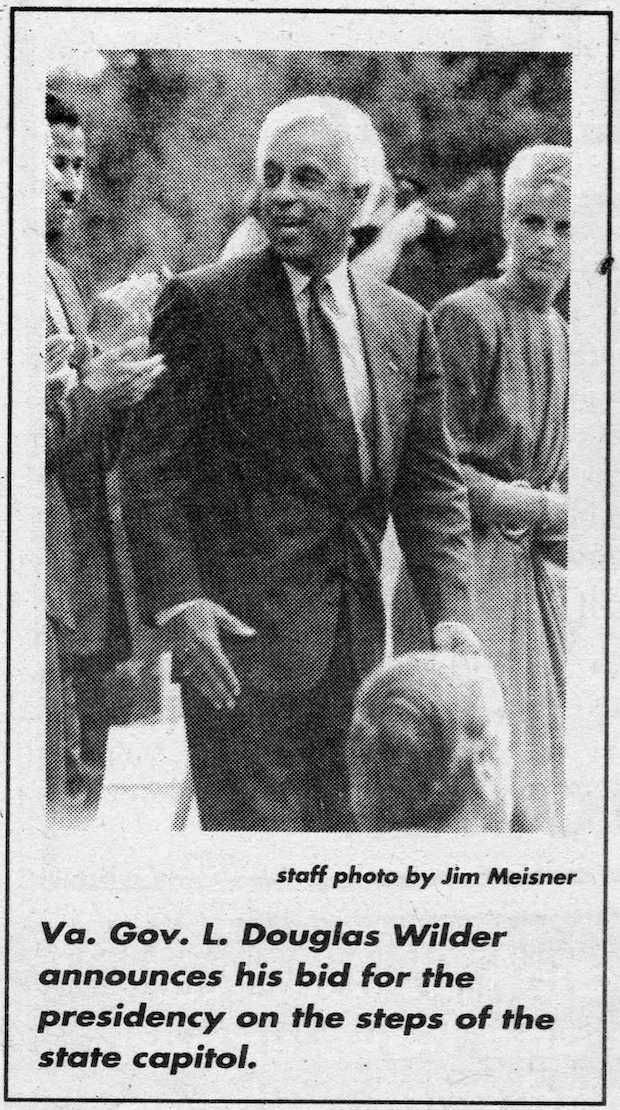
Virginia’s Doug Wilder became the nation’s first Black governor in January, 1990.
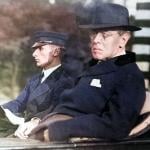
The third week of September, 1991, he announced his candidacy for president. ChatGPT doesn’t know this but I do, because I witnessed it and took this photo:
Jackson didn’t publicly campaign for Wilder’s gubernatorial race.
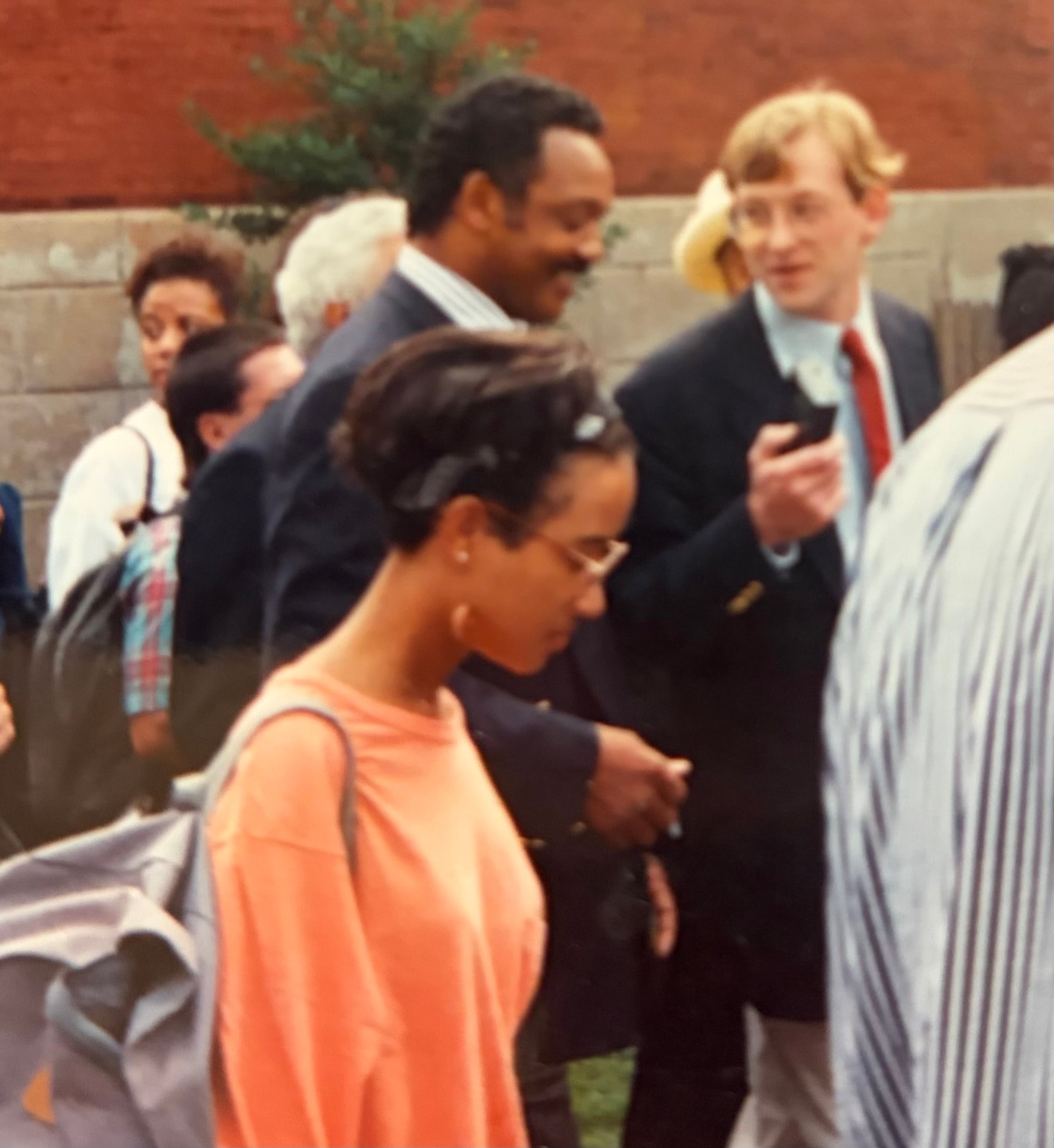
But sometime between Wilder’s announcement and either the primary or election day, Jackson visited Virginia Commonwealth University alone for a voter registration rally. I can’t find a media account of the visit, but I was there. I can’t find anything in the archives of my college paper. I know I wrote something, but I can’t find it.
After the rally in Shafer Court, Jackson led the students across campus to register to vote.
I asked him several questions that I don’t remember, but then I got specific.
“You talked about the importance of voting,” I said. “But you never specifically said, ‘vote for Wilder.’
Jackson obfuscated but didn’t address the issue.
“Why didn’t you give your clear endorsement and say, “vote for Doug?”
“Who are you with?” Jackson asked, looking me over.
“I’m on the staff of the Commonwealth Times, the college newspaper,” I said, gesturing at the building around us.
“My support of Doug Wilder is evident,” he said, ending the conversation.
Sometime later, a forgotten friend gave me the photo of the moment.
Incidentally, “tell Jesse to get the car,” were among Dr. King’s final words before he stepped outside to check the early April Memphis temperature. I think of this often. I don’t know why.
Jackson made several poor decisions in his personal life, but he was an unquestionable and important part of the Civil Rights movement and a positive force for change in the United States.
To read an encyclopedia’s biography of Jackson, follow this link:
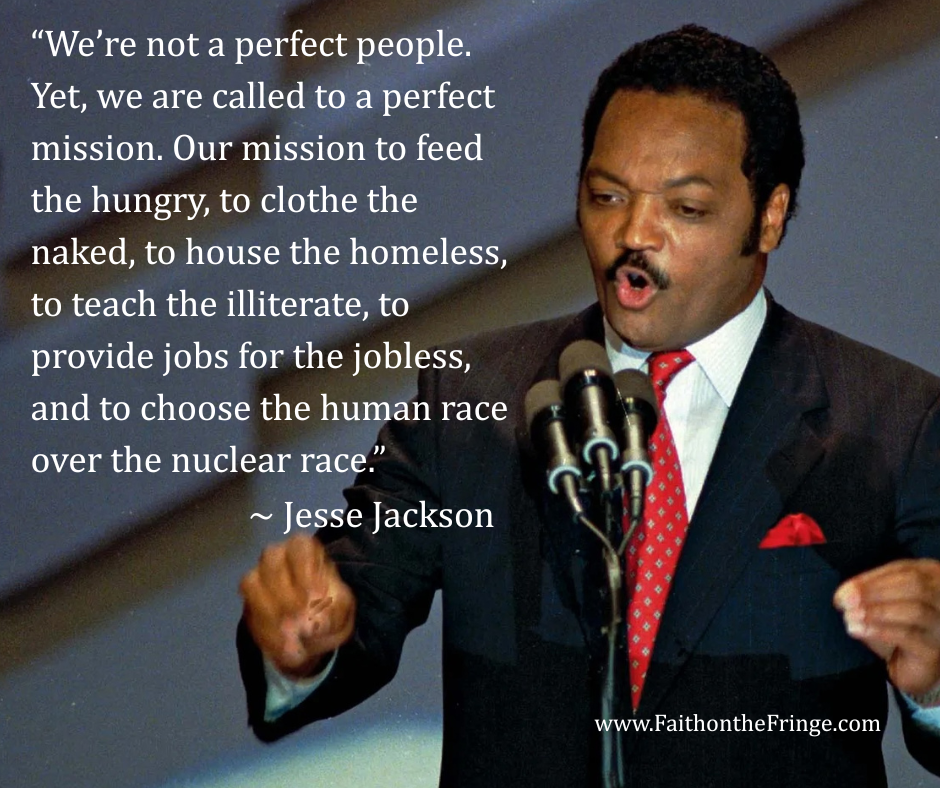
“I’m a tree shaker, not a jam maker.” —Jesse Jackson
Ω
Pastor Jim Meisner, Jr. is the author of the novel Faith, Hope, and Baseball, available on Amazon, or follow this link to order an autographed copy. He created and manages the Facebook page Faith on the Fringe.
Ω
For other articles by Jim, visit:
“We don’t want their kind here.”
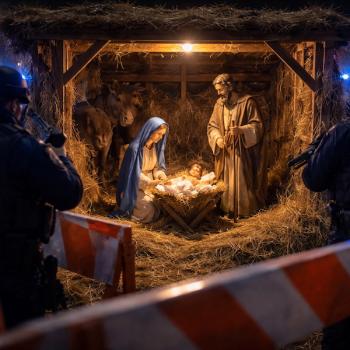
Was Jesus a refugee? Of course he was.
Why can’t Trump supporters hear the truth?
Do Christians need to be reminded that racism is immoral?
Three lessons from the early Celtic church.











 Ad-Free & Subscriber Log-In