

Last week, I took several social media apps off my phone. I felt like I had to, because what I read there was breaking my heart.
It wasn’t the posts themselves that caused despair. I’ve grown used to propaganda and spin that positions anything the Trump administration does as necessary, good, and right. And while current events, from bombing Venezuela to the horrors of nationwide ICE raids, are appalling, I didn’t erase social media sites because of that: I’m still reading the news, still informing myself about the daily assault to the rule of law and our constitution.
No, what finally broke me were the comments that followed most any social media post, and which were so filled by hatefulness and cruelty that I could no longer stand to read them, especially when some of those comments were offered from my neighbors and from childhood friends, including a good many who identify as Christian.
What has happened in our country? What has made so many people this casually cruel, so boldly small-minded and hateful? Why are those identifying as Christian often leading the charge in this malevolence?
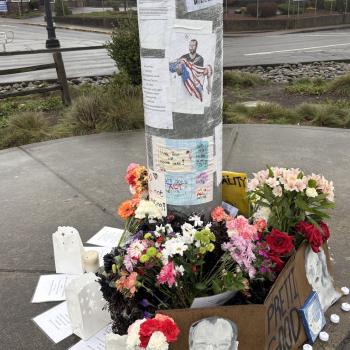
When Renee Good was killed by an Immigration Customs and Enforcement officer last week in Minneapolis, I expected a modicum of sympathy for a mother, or maybe for her children and partner, after she was shot three times by an ICE agent. While that sympathy was expressed, in spades, I also read comments from those who said she deserved to die. That she was evil. That this is what people get for not complying with federal agents.
(As The Daily Show’s Jon Stewart says, though, if lack of compliance with federal agents is a capital offense, deserving death, then the January 6 insurrection would have resulted in a thousand executions, rather than 1500 pardons from the president.)
The Heartbreak of Cheering ICE
I am especially appalled by those cheering on ICE agents and their brutality against undocumented people, brown and black United States citizens, and protestors. In countless comments in my small town’s community groups, some local residents are lauding the work of ICE in “cleansing” the town, using the language of genocide purposefully (or not—it hardly matters, since the impact is the same).
The comments are, as I said, heartbreaking. I wonder why so many people have lost an empathy for their neighbors. How folks can cheer on the suffering of others. How they can be so certain of their own safety and righteousness. How they fail to see that, were circumstances different, they also might be doing anything in their power—including immigrating—to protect those they love most.
On Sunday, I will be preaching at North Valley Friends Church about Luke 18, focusing on the story of Jesus healing a bleeding woman. As my friend Kendra Weddle points out in If Eve Only Knew, the story is not only about the healing, but about what happens afterward, when Jesus asks who has touched him, in the process calling attention to the unjust purity laws that kept the woman isolated, in pain, ashamed.
Instead of simply healing the woman and going on his way, Jesus does something far more radical: he puts a public spotlight on the woman’s presumed impurity, rather than reviling and isolating her. And then, by identifying the system that has made her a pariah, by becoming impure himself, he unmasks the entire system as being capricious and unjust.
The Power of Empathy
To me, this story reflects the value of empathy, which seems to be in such short supply right now. As Jesus models for us in this biblical passage, we are called to put ourselves into the place of others; understand their feelings and thoughts; and then act on that understanding with a love and compassion so enormous, we ourselves are changed, as are the systems that lead to oppression.

But a number of far-right Christian influences have deemed empathy itself sinful. In the past year, several books have been published about the perils of empathy: one was written by influencer Allie Beth Stuckey, and argues that empathy is toxic; another, written by theologian Joe Rigney, says that empathy is sinful, what Rigney calls “the greatest rhetorical tool of manipulation in the 21st century.” Pastor Josh McPherson, an influencer with a significant online following, also says that “Empathy is dangerous. Empathy is Toxic. Empathy will align you with hell.”
Somehow, we’ve lost the plot when we decide that empathy aligns us with hell, rather than seeing empathy as central to the Christian message. New York Times columnist David French points out that empathy is at the heart of Christianity, as Jesus comes to earth as a man and endures the human experience as a way to understand fully what it means to be human. Although Jesus’ divinity and his ability to heal others is on full display in the Gospels, it’s his empathy that makes him human and connects him to us.
Christians spewing vitriol online (and also, in real life) would probably argue that they are supporting law and order, including the federal agents who are presumably upholding immigration laws. But this story in Luke and elsewhere in scripture shows that Jesus upended unjust laws, like those establishing who was considered “pure” and who was considered worthy of isolation and shame.
I’m honestly not sure how we ever come back from a place where casual cruelty is so readily seen as acceptable discourse; or where a murdered woman practicing her first amendment rights can be deemed “worthy” of her death; or where folks decide their immigrant neighbors deserve being violently apprehended and imprisoned.
There has to be a way forward, and I will keep praying, protesting, and seeking ways to help marginalized people in my community. But I’ll no longer be reading vitriolic comments on social media, at least for now, because the casual cruelty does not deserve any oxygen, only condemnation.















 Ad-Free & Subscriber Log-In