


Who Are The Monks Walking For Peace?
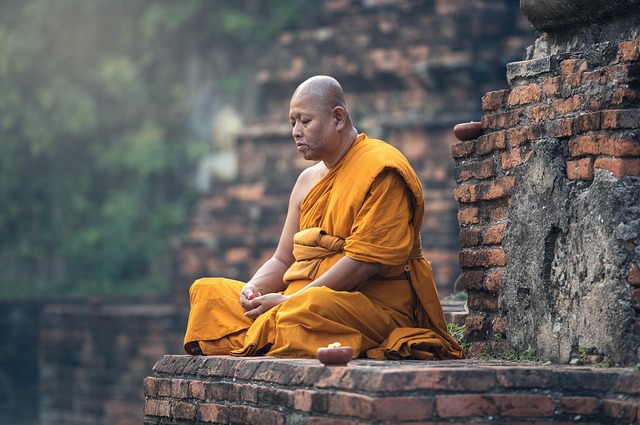
Almost two dozen Buddhist monks make up the contingent of peace walkers. Led by Bhikkhu Pannakara, they set off from the Huong Dao Vipassana Bhavana Center, a Vietnamese Buddhist temple in Fort Worth, Texas.
These religious men hail from Theravada Buddhist monasteries around the world. Theravada, or “the way of the elders,” is the oldest and most orthodox form of Buddhism. It serves as the prevalent form of Buddhism in countries such as Cambodia, Laos, Myanmar, Sri Lanka, and Thailand.
What’s A Peace Walk?
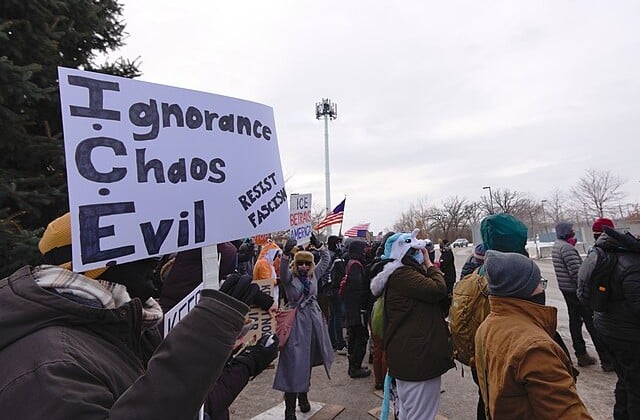
The monks currently walking did not invent the idea of a walk for peace. In fact, walking for peace is a meditative tradition common in countries of South Asia. And the ongoing peace walk lives up to its name. The focus in on helping people find peace in their lives, not converting anyone to Buddhism or railing against anything. Per the walk’s leader. Bhikkhu Pannakara, “We walk not to protest, but to awaken the peace that already lives within each of us.” The monks wish to promote compassion, national healing, and unity. This activity is especially timely given the confrontation, clashes, and divisiveness stemming from ICE activity in Minneapolis this month.
Brooke Schedneck, a religion professor at Rhodes College in Memphis, Tennessee, traces the origin of the Theravada Buddhist tradition back to the 1990s. At that time, a Cambodia monk led walks over war-torn and landmine-filled areas in his country to promote national healing after a civil war. In particular, a walk took place in 1992 when refugees from from Thai border camps were being repatriated. Thereafter, such an event became an annual tradition in Cambodia.
Itinerary For Monks’ Walk For Peace
Starting October 26th, the monks began their walk for peace. The 120-day, 2,300 mile journey is expected to end on February 12th at the White House. The destination of Washington, D.C. was a strategic decision. The press coordinator for the Walk For Peace explains, ““We are planning to go to Washington DC, because Washington DC is the heart of the nation. By reaching to the heart of the nation, we believe that we can reach to the heart of all Americans…”
This trek will take the group through ten states before arriving in the nation’s capital. Along the way, stops will be made at state capitols and historic landmarks and in local communities where the monks will share their message of peace and invite moments of reflection. An online live tracker allows the public to keep up with the group’s progress.
Public Reaction To The Walk For Peace
Communities and various religious institutions have welcomed the walking monks with open arms. The walkers frequently draw crowds of thousands of people when they stop at state capitols. Further, hundreds of supporters often line the roads to greet the walkers and watch them pass. Online, the Walk For Peace Facebook page boasts a massive following of 1.8 million.
Perhaps the most touching welcome for the monks occurred in Opelika, Alabama on Christmas night. A United Methodist congregation hosted the group, with a large and diverse crowd of about 1,000 showing up to greet them. “Anyone who is working for peace in the world in a way that is public and sacrificial is standing close to the heart of Jesus, whether or not they share our tradition,” commented the church’s pastor.
Walk For Peace Comes At A Price
While catching the public’s attention with their Walk For Peace, the monks’ activity comes at a price. Before even getting out of Texas, the group saw two of its members injured in an accident. A distracted truck driver hit the monks’ escort vehcile knocking it into two monks. As a result, one man’s leg had to be amputated. The injuries reduced the number of walkers to 18.
The lengthy walk also takes a toll on the monks physically. These men are exposed to the elements as they prefer to sleep in tents pitched outdoors. Daily pounding the pavement is brutal and affects all the walkers, particularly their leader. He walks barefoot and now sports heavily bandaged feet from having stepped glass, nails, and rocks. Two members of the group adhere to the Buddhist practice of dhutanga while on the Walk For Peace. This adherence requires them to only use one of three positions during the walk—walking, standing or sitting. They may not lie down, even to sleep. Instead they sit down in meditation position during the night to replenish their energy.
Walk For Peace Promotes Pondering Unity In Pieces
No one, even the monks on their Walk For Peace, believe this admirable activity is a quick solution to divisiveness and lack of unity in the US. But grabbing the public’s attention and causing people to think about the desirability of peace as an alternative to the current atmosphere may result. Any progress towards peace is a positive outcome. While all citizens may not share the monks’ religious views, they can agree that peace benefits everyone.
Monks Move Through Metro Atlanta











 Ad-Free & Subscriber Log-In