


I was on the road quite a bit today, so rather than reading my passage, I made an adjustment and listened to it.
I never did finish the Bible in a Year podcast with Father Mike Schmitz, so maybe I will have to start that back up next year. It was helpful today, as I found the episode where Father reads Chapters 17-19 of Luke.
As I covered Chapter 17 yesterday, I was mostly focused on Chapters 18 & 19. In them I noticed a common theme that continues to show up in many chapters of Luke. In addition to emphasizing prayer, humility, and preparing for eternity, I noticed that Luke’s Gospel talks a lot about the blind and the rich.
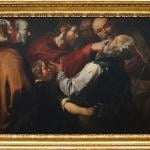
Jesus Heals the Blind and the Rich
I think the healings of the blind stand out in the gospels because they relate most closely to us today. We need to emulate their faith. They show us that even those who cannot see, believe.
Then, through their faith, they are healed.
They say “Lord have mercy” and are healed.
Jesus Doesn’t Heal Poverty
Almost every time Jesus is around the blind, he heals them. When he mentions the blind he says “they will see”. Interestingly, he is also often around and mentioning the poor. Yet, he does not heal poverty. He does say “they will inherit the Kingdom”, but He does not provide them permanent income streams.
Jesus does not “cure” poverty in the sense of ending their condition in that instant.
The opposite is true. Jesus talks of how good their condition is, that they are blessed. Rather than leading others to sin, like we discussed yesterday, the poor are an opportunity for virtue.
Jesus Heals the Rich
Rather than changing the poor, Jesus invites the rich to be healed of their condition.
In Luke 18:18-30 and Luke 19:1-10, Jesus invites two men to follow him. Father Mike in the episode I mentioned, invites us to compare their reactions.
And a ruler asked him, “Good Teacher, what shall I do to inherit eternal life?” And Jesus said to him, “Why do you call me good? No one is good but God alone. You know the commandments: ‘Do not commit adultery, Do not kill, Do not steal, Do not bear false witness, Honor your father and mother.’” And he said, “All these I have observed from my youth.” And when Jesus heard it, he said to him, “One thing you still lack. Sell all that you have and distribute to the poor, and you will have treasure in heaven; and come, follow me.” But when he heard this he became sad, for he was very rich.
This rich ruler was pursuing God but could not commit when it came time to abandon all that he had. In the next chapter, the opposite happens.
And there was a man named Zacchae′us; he was a chief tax collector, and rich. And he sought to see who Jesus was, but could not, on account of the crowd, because he was small of stature. So he ran on ahead and climbed up into a sycamore tree to see him, for he was to pass that way. And when Jesus came to the place, he looked up and said to him, “Zacchae′us, make haste and come down; for I must stay at your house today.” So he made haste and came down, and received him joyfully.
Here we know Zacchaeus is a tax collector, but when approached and invited by Jesus, he hurries with Joy to be close to Jesus. Then, without Jesus even asking him to, he feels compelled to say this:
And Zacchae′us stood and said to the Lord, “Behold, Lord, the half of my goods I give to the poor; and if I have defrauded any one of anything, I restore it fourfold.” And Jesus said to him, “Today salvation has come to this house, since he also is a son of Abraham. For the Son of man came to seek and to save the lost.”
Luke 19:8-10
It sounds like the moral is “give away half before Jesus asks you to give it all!” But Father Mike made the point in his commentary that Zacchaeus would have likely defrauded many people as a tax collector. This could mean that he is not only giving it all, but possibly even owes others by returning four times as much.
Which of these men seems healed?
If you like this reflection you can read more Formed by a Flame or Subscribe to the Newsletter!














 Ad-Free & Subscriber Log-In