

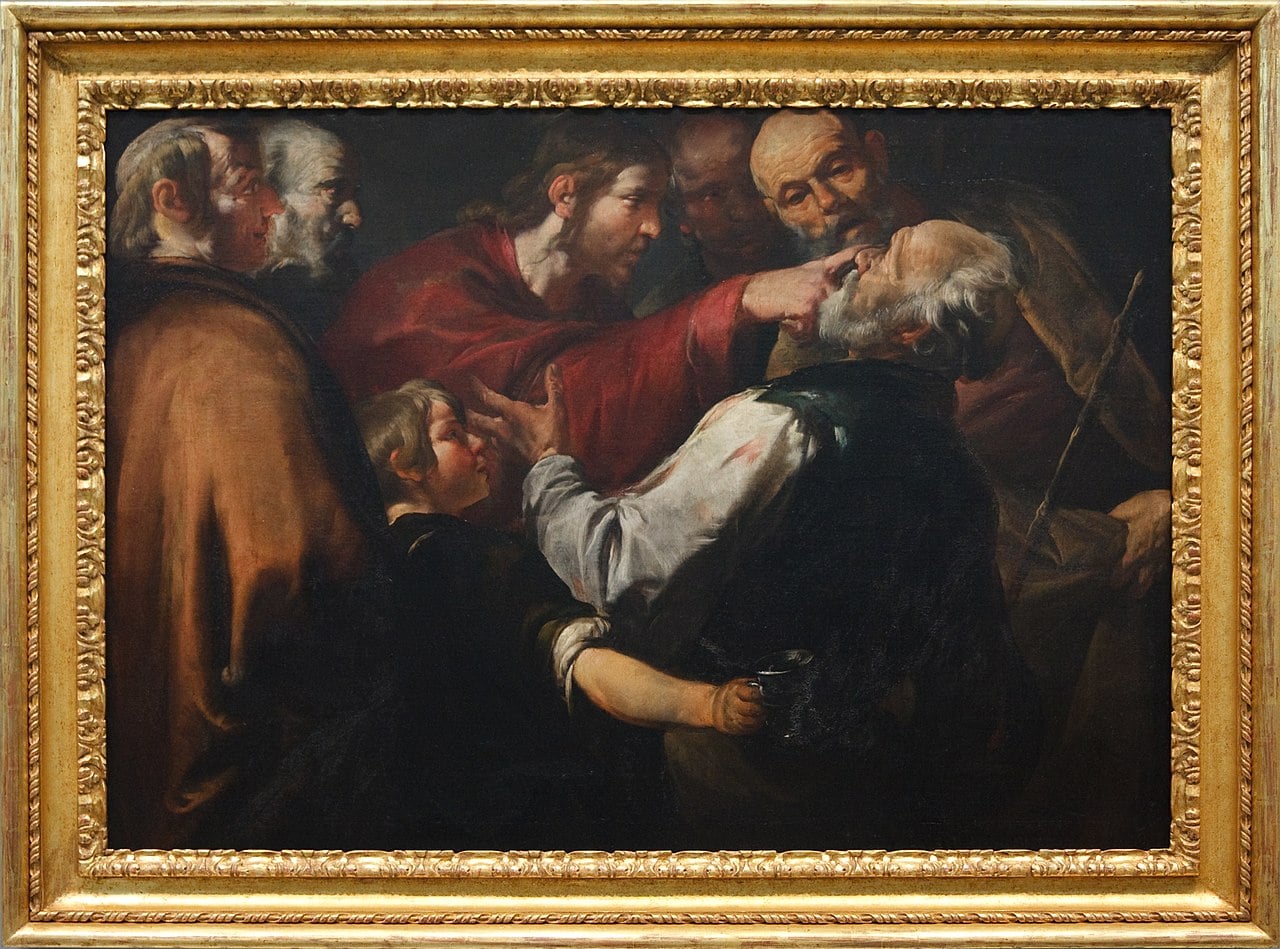
We are born with original sin, and it influences us in many ways. Though it is not sin, it weakens our ability to do or choose what is good, especially because it leaves us spiritually blind. This does not mean it renders us completely incapable of doing good. Original sin weakens us, but it does not entirely undermine or destroy our intrinsic goodness. And its effects on people are not always the same. Just as not everyone who is legally blind has lost all their eyesight, so spiritual blindness does not mean we have no spiritual perceptions. There are gradations of blindness, physical as well as spiritual. Sin, despite its attempt to disconnect us from the spiritual world, and hinder our perception of it, has not done so absolutely. Just as there is no one who is purely evil, so there is no one without some intuition, some sense, of the metaphysical reality around them. Historically, humanity has always had some awareness of the spiritual world, especially as the Holy Spirit has been at work within the world, giving it the grace it needed to prepare us for the incarnation.
Original sin ties us with, and connects us with the structures of sin all around us, strengthening them and their hold over us. While they have many ways they can and do influence us, when talking about our spiritual perceptions, we can think of them like cataracts which need to be removed for us to see properly again. These structures of sin developed before us, but they influence us and our initial development, which is why our spiritual blindness is not something which we caused, but it is something which we are merely born with.
Christ, in his death and resurrection, has overcome the fallen powers that be, the fallen powers which emerged from and developed out of the structures of sin. This means those structures do not have absolute power and authority over us. Eschatologically, they have been undermined and eliminated, even if in history, we find that, insofar as the eschaton transcends the present state of being, they continue to have influence over world history. They even continue to be built up and changed by actions of humanity. What Christ has done is made them impermanent, even as he has revealed to us through the resurrection that they have no power in the eschatological kingdom of God. Thus, while history continues, that is, while temporal existence continues to slowly come to its end, the structures of sin can still grow, but thanks to the grace of the kingdom of God unleashed into the world, they can also be resisted and put into decline. But to do that, we must take the potentiality grace renders us and activate it by our actions: we must cooperate with grace and engage the eschatological reality for ourselves, living the eschaton out the best we can in our temporal existence. If and when we do that, we become Christ’s hands and feet in history, so that through our actions, we can overcome elements of those structures of sin, anticipating their complete elimination at the end of time.
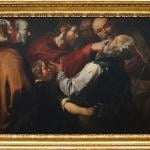
As we grow in grace, as we resist the structures of sin, deconstructing them with our actions, the less influence they will have on us, which means, we will also be able to have better spiritual perceptions, leading us to have a better understanding and experience of reality itself. In the eschaton, our spiritual eyes will be completely healed; the cataract of sin will be entirely eliminated. And this is something which the Byzantine tradition wants to understand as it presents to us the story of the man born blind and the way Christ healed him during Paschaltide. The story reveals a historical situation, one where Christ physically healed someone who needed it, but it does so in a way which we learn a spiritual truth: it shows us what Christ is doing with us, especially in relation to our spiritual blindness:
As he passed by, he saw a man blind from his birth. And his disciples asked him, “Rabbi, who sinned, this man or his parents, that he was born blind?” Jesus answered, “It was not that this man sinned, or his parents, but that the works of God might be made manifest in him. We must work the works of him who sent me, while it is day; night comes, when no one can work. As long as I am in the world, I am the light of the world” (Jn. 9:1-5 RSV).
The man’s blindness reflects our spiritual blindness. He did not do anything to be born blind, and his parent did not do anything to be punished by God so as to have him born blind. Similarly, we are born spiritually blind, and it is not the result of something which we have done, nor is it some sort of punishment for something our parent specifically did. Instead, it is the result of the world system which humanity has established, the system which creates the conditions in which we are born, conditions that are designated as original sin. God allowed humanity its freedom, and with that freedom, humanity created its own impoverished spiritual condition. God granted humanity its freedom because it is greater to give us freedom than not to give it, for freedom is a gift, a good which is better to have than not have. We know it is a good because God is also free, indeed, absolutely free, while we are only relatively free (as there are conditions to our existence). Allowing us to be free, even if it means we can sin and cause harm to ourselves and others, is ultimately a greater good, than an existence without freedom, because freedom is good; how we can understand this is true while we see the pain and sorrow our freedom has caused will be something we will be able to perceive once our spiritual vision is restored. But for that greatest good, we must come to Jesus, allowing him to heal us, removing our spiritual cataracts. That is, to have our spiritual vision healed, we must cooperate with grace, just as the man who was healed had to wash his eyes to properly see:
As he said this, he spat on the ground and made clay of the spittle and anointed the man’s eyes with the clay, saying to him, “Go, wash in the pool of Siloam” (which means Sent). So he went and washed and came back seeing (Jn. 9: 6-7 RSV).
After Jesus healed the blind man, the man had something to do for him to receive the benefits of that healing. He had to have his eyes washed. This is why, even after we have been given grace, such as in baptism, we still have something to do; we must go where Christ sends us, and do what Christ would have us do, if we want the grace given to us to be properly activated, allowing us to properly see with our newly healed spiritual eyes. It is with that grace, and our engagement of it, we will be able to perceive the kingdom of God within us, and the world all around us; we will see the reality of the immanent eschaton. However, as the kingdom is already and not yet, that is, there is a transcendent element which will be experienced only after time has come to an end. The story with the blind man indicates this in the way the man had encounter Jesus once again (cf. Jn. 9:36-37). Jesus will “come back” to the world once again at the end of time, when all of us will see him face to face, not just spiritually, but physically as well; our physical and spiritual sides were be in perfect harmony, allowing us to have a new, and greater participation in the kingdom of God, one which will take us from glory to glory as we receive grace after grace for all eternity.
Stay in touch! Like A Little Bit of Nothing on Facebook.
If you liked what you read, please consider sharing it with your friends and family!
N.B.: While I read comments to moderate them, I rarely respond to them. If I don’t respond to your comment directly, don’t assume I am unthankful for it. I appreciate it. But I want readers to feel free to ask questions, and hopefully, dialogue with each other. I have shared what I wanted to say, though some responses will get a brief reply by me, or, if I find it interesting and something I can engage fully, as the foundation for another post. I have had many posts inspired or improved upon thanks to my readers.





 Ad-Free & Subscriber Log-In