

During Advent season, John the Baptist gets a lot of play. This makes sense, since Christians view him as a forerunner of Jesus, the sort of person who should take center stage during the season that anticipates the Incarnation. In their respective gospels, Mark and John give John the Baptist center stage from the outset, beginning their narratives with John’s ministry and activities while not even bothering to mention Jesus’ birth. Mark’s version was last week’s gospel; today it’s John’s turn.
Eventually, as we know, John runs afoul of Herod Antipas and ends up in a dungeon awaiting execution until Salome gets Herod to serve John’s head to her on a platter. While in prison John had a lot of time to think and reflect back on his life—and had questions. According to Matthew’s gospel, John sends some of his disciples who are visiting him to Jesus to ask the most pressing question of all: “Are you the one who is to come, or are we to wait for another?”
This is one of the many poignant and excruciatingly human scenes in the gospels—John’s undoubtedly suspects that he will never get out of prison and will be dead soon. He is by no means the only prophet in the land—they came a dime a dozen in those days. Nor is Jesus the only Messiah candidate around—Israel is full of them. John’s question is not academic. What he really wants to know is “has my whole life been a waste?”
One year for Christmas Jeanne gave me The Good Book as a gift, a collection of essays, edited by Andrew Blaumer, in which thirty-two writers from all sorts of angles write about their favorite passages and characters from the Bible. Although the older I get the less I believe in mere coincidence, I “coincidentally” opened first to “The Womb and the Cistern Cell,” an essay by Brooks Hansen about John the Baptist. Hansen focuses his essay on John’s poignant question for Jesus.
 On one end of John’s life is a miraculous birth narrative that in my estimation rivals that of his younger cousin Jesus, and at the end of his life he finds himself in a dungeon and a state of despairing doubt. Are you the one who is to come, or are we to wait for another? These are the last words we hear from this man, the first person recorded to recognize adult Jesus for who he was. Hansen finds this remarkable, and so do I; he concludes his essay by reflecting on the intimate connection between belief and doubt.
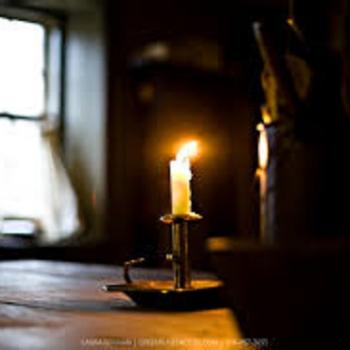
Light is born of darkness. Darkness is the necessary precondition of light. Belief, likewise, is born of doubt, which is its necessary precondition. Doubt is the soil from which faith grows. Therefore, if one is determined to imagine John the Baptist as the first and most authoritative voice to recognize Jesus as savior—the first, in other words, to believe—then John must, by that token have been the first to doubt. That, too, is Law. And if we ever encounter any teaching, or feel ourselves succumbing to any creed or system of belief, that does not admit this, and does not struggle intimately and often—in the cistern of its soul—with the fear that it is mistaken, misdirected, falsely premised, or corrupt at its heart—we should take heed: That is not faith. That, in fact, is a fairy tale.
I am reminded of a quote from Anne Lamott that I use frequently both in my writing and in the classroom: The opposite of faith is not doubt. The opposite of faith is certainty. The imprisoned John has not lost his faith—he is immersed in the middle of one of the most central features of faith.
Jesus’ reported answer to John’s question relies on John’s knowledge of the prophet Isaiah. “Go and tell John what you hear and see: the blind receive their sight, the lame walk, the lepers are cleansed, the deaf hear, the dead are raised, and the poor have good news brought to them.” Hopefully the message got back to John before he was executed by Herod. The man whom you baptized is the real deal–the Messiah has truly come. That’s what John foretold and waited for. Perhaps Jesus’ answer provided him some comfort.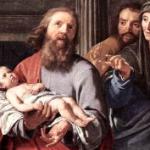
I hope that in the darkness of his dungeon cell, John remembered what I’m sure was a standard story in his family as he grew up, the story of his father Zechariah’s words spoken at John’s naming ceremony. The Song of Zechariah, the “Benedictus,” is the canticle that closes every morning prayer service in the Benedictine daily liturgy of the hours. You may remember that Zechariah had not spoken for months, struck dumb because he found it difficult to believe the angel’s announcement that his wife Elizabeth, well past child-bearing years, would bear a son.
When Zechariah and Elizabeth’s son is circumcised at eight days old, a family squabble breaks out over what the baby’s name will be. Most of the group votes for “Zechariah Junior.” But Zechariah motions for a tablet and writes “His name is John,” as the angel directed. His power of speech returns—the Benedictus follows. After a beautiful meditation on his new son’s role in the divine economy, Zechariah closes with a stunning promise.
In the tender compassion of our God
The dawn from on high shall break upon us,
To shine on those who dwell in darkness and the shadow of death,
and to guide our feet into the way of peace.
For Christians, that’s a promise worth considering and meditating on daily. How can we best walk in the light of this dawn?









 Ad-Free & Subscriber Log-In