

 There is a saying attributed to Saint Francis that I have heard frequently over more than three decades as a non-Catholic professor in Catholic higher education: Preach the Gospel—use words if necessary. If you google the statement, the items at the top of the search results are mostly attempts to establish that despite the popularity of the attribution, Francis never said this. Not only did he not say it, some deniers argue, it would be misleading and problematic if he had said it. “It is impossible to preach without words. The Gospel is inherently verbal.” Of course, it is impossible to know from a distance of eight centuries whether Francis ever suggested that preaching is more about how you live than what you say—but it certainly is compatible with many things that we know he did say. Quoting a good friend and mentor from my early years of teaching, “if he didn’t say it, he should have.”
I was taught from a very early age that “real” Christians are enthusiastic about their faith; a natural expression of this enthusiasm is to tell other people about it. “Enthusiasm” comes from two Greek words that mean “God in you” or “infused with the divine.” During the Great Awakenings of the 18th and 19th centuries in this country, “enthusiasm” in a religious sense meant speaking in tongues, being “slain in the spirit,” and any number of other unusual indications that God was in the house. In many corners of religious activity, that still holds true.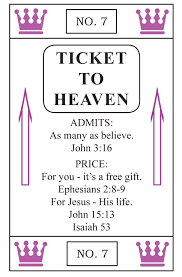
In the religious world of my youth, we called telling other people about our faith “witnessing,” letting others know that, among other things, they would be going to hell if they did not invite Jesus into their hearts as their personal Lord and Savior. Witnessing was a requirement, whether the witnessed wanted to hear about our enthusiasm or not. Our youth group would occasionally spend a Saturday morning distributing pamphlets and tracts containing our particular version of Christianity’s propaganda either in front of the grocery store downtown or in people’s mailboxes. I always opted for mailbox duty and often left my entire wad of pamphlets in the first mailbox.
I have always attributed my constitutional resistance to and hatred of witnessing to my extreme introversion—and I’m sure that played a big part in it. But over the years I have come to believe that not only is aggressive, in-your-face religion anathema to introverts, but it is also anathema to Christianity itself. Years ago, I came across the following from Annie Dillard in Holy the Firm—she could have been describing the church I grew up in.
Why do we people in churches seem like cheerful, brainless tourists on a packaged tour of the Absolute? . . . On the whole, I do not find Christians, outside of the catacombs, sufficiently sensible of conditions. Does anyone have the foggiest idea what sort of power we so blithely invoke? . . . The churches are children playing on the floor with their chemistry sets, mixing up a batch of TNT to kill a Sunday morning. It is madness to wear ladies’ straw hats and velvet hats to church; we should all be wearing crash helmets. Ushers should issue life preservers and signal flares; they should lash us to our pews. For the sleeping god may wake someday and take offense, or the waking god may draw us out to where we can never return.
Tell me about it. In My Bright Abyss, Christian Wiman observes that “the casual way that American Christians have of talking about God is not simply dispiriting, but is, for some sensibilities, actively destructive. There are times when silence is not only the highest, but the only possible, piety.” Perhaps this is what Saint Francis meant when, in the saying he never said, he advised believers to preach with their lives and rely on words as the last resort. Worth remembering the next time you are bitten by the witnessing bug.
Tomáš Halik’s Patience with God was the final text in my Faith and Doubt colloquium last srping, recommended by my teaching partner (who is a Dominican priest in the Political Science department). Halik is a Czech Roman Catholic priest, philosopher, and theologian, ordained in the “underground” Catholic church while Czechoslovakia was still under the thumb of the former Soviet Union. Not surprisingly, he was first confused, then appalled the first time he saw a mega-Christian evangelist on American television.
[I hoped] for a long time that it was just a comedy program caricaturing religion. I didn’t want to believe that someone could seriously believe that it is possible to talk about God with such vulgar matter-of-factness and propagate the Gospel as if it were some reliable brand of automobile.
Halik asks early on in his book what it takes to bring someone closer to Christ, and therefore to God. He worries that “it isn’t quite as easy as certain enthusiastic Christians believe,” simply because “truth is too fragile to be chanted on the street.”
I spent many years of my adult life hesitant to call myself a Christian in public for a number of reasons, not the least being that in our culture the word “Christian” often means something like the dog-and-pony show that Tomáš Halik watched on television, or worse, white MAGA nationalism. It wasn’t until a transformational sabbatical semester over a decade ago that I began making my faith public—this blog has been the primary vehicle for my “coming out party.”
As friends and colleagues on campus began to read my blog and listened to a couple of post-sabbatical presentations I made on campus, their reactions were interesting. “I had no idea about your background and faith,” several said, “but given what I know about you from the past many years, it makes perfect sense.” Perhaps I had been living out the advice that Saint Francis never gave—my life with my colleagues over the previous fifteen years or so was congruent with the Christian words I was now writing and saying.
Christian Wiman writes that “Nothing kills credibility like excessive enthusiasm. Nothing poisons truth so quickly as an assurance that one has found it.” Certainty is, after all, the opposite of faith. If you are inclined to “witness,” remember that you are not selling a car. You are drawing attention to a way of life.













 Ad-Free & Subscriber Log-In