

My doctor says that I am his most boring patient, because there is never anything wrong with me. I show up for my yearly appointment, my blood pressure is good, my weight fluctuates within a five pound range, my blood work is always fine—my only complaints are spring allergies, for which he says  “take Claritin,” and occasional sciatica problems, for which he suggests that I should stretch more. I have never been in a hospital overnight except when I was born, and I don’t remember that. But Jeanne has had a number of things that have needed attention over the years, including back problems. One time as she suffered with excruciating back pain, a co-worker suggested that she get in touch with his father, Peter, who runs a chiropractic/acupuncture/Eastern medicine establishment within an hour’s drive of Providence. Peter’s business card says “Japanese Body Balance Shoppe and Acupuncture Clinic.” Jeanne has always been far more adventurous when
  it comes to medical treatments than I am, so she immediately made an appointment and I went along for the ride.
Peter’s treatment was so successful in just one session that he has become our “go to” guy for just about everything. I even started getting “tune ups” with Peter after which, although I went in feeling fine, I came out feeling a lot better than fine. When I fell walking my dachshunds and jammed my shoulder badly a couple of summers ago, I am convinced that a session with Peter is what saved me from surgery. Jeanne and I revere Peter’s almost-mystical abilities so much after several years we talk about him as if he would have been a great healing partner for 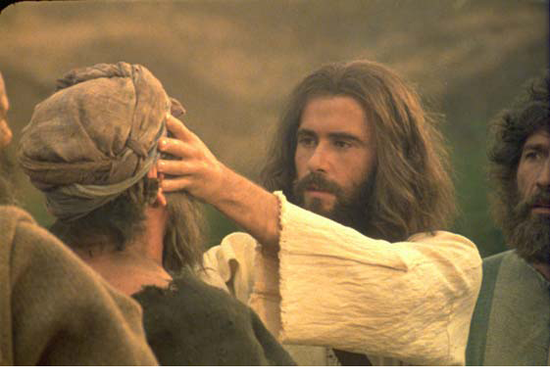 Jesus had he lived two thousand years ago.
Peter is a child of the sixties as Jeanne and I are; over time we have learned a lot of his life story, including how he as a Westerner became a trained practitioner of Eastern healing arts. He told us once of a horrible automobile accident he was in during his twenties that he barely survived, with dozens of broken bones and damaged internal organs. Skilled doctors and surgeons were able to fuse and stitch him back together, but he lived in excruciating pain until on a friend’s advice and with nothing to lose he tried some “alternative” Eastern treatments. And they worked—so well that subsequently he lived with his Japanese wife in Japan for several years training as an apprentice, t hen becoming a master of “Sotai,” a method of treatment I can only describe as a mixture of acupuncture, chiropracty, and aroma therapy. Peter puts his journey this way: “Western medicine saved my life, and Eastern medicine gave me my life back.” Western medicine fixed Peter, in other words, and Eastern medicine healed him.
This business of “healers” has been on my mind a great deal for some time, but is particularly pressing in the aftermath of the recent election. People are hurting, and for some it is difficult to even imagine how to move forward. I am reminded of a course that I team-teach regularly with a colleague from the history department–a course that we will be repeating next semester. The last time we taught the course two years ago, my teaching partner and I spent all of final exam week running half-hour oral examinations for the thirty-seven sophomores in our “Grace, Truth, and Freedom in the Nazi Era” colloquium—a marathon of conversations that both wore us out and were well worth the time and energy commitment.  I’ve often said that I can learn more in a half-hour oral exam about what a student knows and what that student will take away from the class than from reading a twenty-page final paper or two-hour written final exam. This round of oral exams was no exception.
We provided the students with four comprehensive questions ranging across topics and texts we had considered throughout the semester and told them that we would begin each oral examination conversation with the question of their choice, with the caveat that we might intersect with any or all of the remaining questions by the end of their half hour, depending on how the conversation developed. One of the questions focused on a passage toward the end of 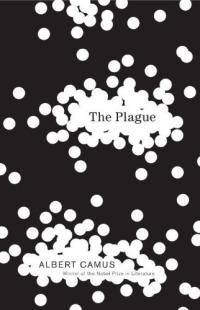 Camus’ The Plague, a conversation between two characters–Rieux and Tarrou–that we had frequently referenced throughout the semester. In this conversation, Tarrou says that
All I maintain is that on this earth there are pestilences and there are victims, and it is up to us, so far as possible, not to join forces with the pestilences . . . We should grant a third category: that of the true healers. But it’s a fact one doesn’t come across many of them, and anyhow it must be a hard vocation. . . . I can at least try to discover how one attains to the third category; in other words, to peace.
With this passage in mind, one of the four possible questions a student might choose to begin their oral exam was
Throughout this semester we have been witness to the truth of Tarrou’s words that there are only pestilences and victims, and in a few cases, healers. In your opinion, what exactly constitutes a true healer and in looking back over the materials you have read or viewed, who would you identify as a true healer and why?
Probably a dozen or so students chose this question as the starting point for their exam, and their thinking about it produced a range of fruitful and interesting possibilities. As various persons from our semester’s work—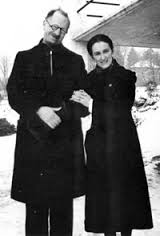 Andre and Magda Trocme, Sophie and Hans Scholl, Dietrich Bonhoeffer, Maximillian Kolbe—were mentioned as examples of healers and an informal list of characteristics shared by healers was generated, several questions were raised. What human problems or maladies are a healer’s energies directed toward? Is a person born a healer, or is “healer” something to which all of might (and should) aspire? If the latter, what might be the beginning steps in the direction of becoming a healer?
In the midst of fascinating and insightful discussions, students often focused on a personal story that my teaching colleague Ray used during one of my lectures early in the semester to illustrate the importance concept of “attention” from Simone Weil. Ray and his wife Pat are intimately involved with the  Society of Saint Vincent de Paul, a Catholic relief society whose members are described on the Society’s website as “men and women who strive to grow spiritually by offering person-to-person service to individuals in need.” Pat and Ray frequently make home visits to such individuals and families in need. Ray described to the students that the typical home visit often consisted of making the client aware of the various services the Society has that could address various needs and problems, including health care, food and clothing assistance, directing people to other agencies with needed services, and so on. With the best of intentions, such services were often offered without knowing in detail the history or story of the client and his or her family.
Then, as Ray described, after becoming aware of Simone Weil’s concept of “attention,” in which Weil says “The soul empties itself of all its own contents in order to receive into itself the being it is looking at, just as he is, in all his truth,” he and Pat tried something different on their next home visit. Instead of immediately describing what they, as representatives of the Society, could do for the person in need, Pat and Ray asked the client “What would you like to tell us? What is your story?” And for the next hour, they listened to the woman tell her story without interruption. And this completely transformed the dynamic both of that conversation and of future home visits. Through listening without interruption and projection, 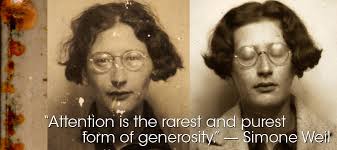 Ray and Pat had established an atmosphere of healing rather than of one of fixing.
“Attention” for Simone Weil is the skill of seeing, of attending to the reality of something other than oneself without the filters of the self being in the way. It is a task of love that requires constant practice, as illustrated by Pat and Ray in their home visit. Pat and Ray had moved from considering the woman in front of them as a problem to be solved, or something broken in need of fixing, to a healing activity of seeing her, as Weil describes, “not as a unit in a collection, or a specimen from the social category labeled ‘unfortunate,’ but as a person, exactly like us, who was one day stamped with a special mark by affliction.”
And this transforms everything, for, as Weil continues, “those who are unhappy have no need for anything in this world but people capable of giving them their attention.  The capacity to give one’s attention to a sufferer is a very rare and difficult thing; it is almost a miracle; it is a miracle.” But it is a miracle each of us can learn to perform. Being a healer begins with simply listening, for “The love of our neighbor in all its fullness simply means being able to say to him: ‘What are you going through?’” It begins not by asking “How can I solve your problem?” but rather by inviting the person in need to answer the question “Who are you?” No task is more difficult, and these days, no task is more important.











 Ad-Free & Subscriber Log-In