
 Heathen at Heart
 About this time last month, I wrote an article about how I think about and celebrate Mother’s Day as a Heathen. That was a pretty easy post – the Disir, the Matrones, whatever you want to call them, the honor of a person’s woman ancestors is well-attested throughout Germanic tribes and times. And to be honest, I was lucky enough to be born into a bit of a matriarchal family. The women keep the history, the memories, and our family story is told and traced through them.
This post will be a bit more difficult. Last summer, on the day before Father’s Day, my grandpa passed away. He was the first of my grandparents to pass, the first really impactful death I experienced. The person who was primarily caring for him didn’t tell anyone how sick he had gotten – I had just heard and was arranging a way to visit him for Father’s Day when I got the call. I was kind of a mess.
My usual go-to, hiding from everything, wasn’t really an option – I had to help lead a Midsummer ritual for my Grove the next week. I bought a bottle of Crown Royale and poured some out for him when we honored our ancestors. I cried a lot.
There were some family squabbles, and his cremation and the scattering of his ashes were delayed for a few weeks while everyone decided what would be done. Those weeks were awful, but they gave me time to process things a little better. I wanted to turn to my religion to help, to smooth this transition, but honestly I had no idea where to begin.
I honored my ancestors, I gave them offerings, but I wasn’t close with them. I didn’t sit and feel their presence, laugh at their joys and weep at their sorrows as I do with the spirits of the land. But I was close with my grandpa, this amazing man who truly loved life and lived it exactly as he wanted to. I wanted to reach out to him, to tell him I missed him and I loved him and I was so sorry I hadn’t been there when it was most important for me to be. But I didn’t know how.
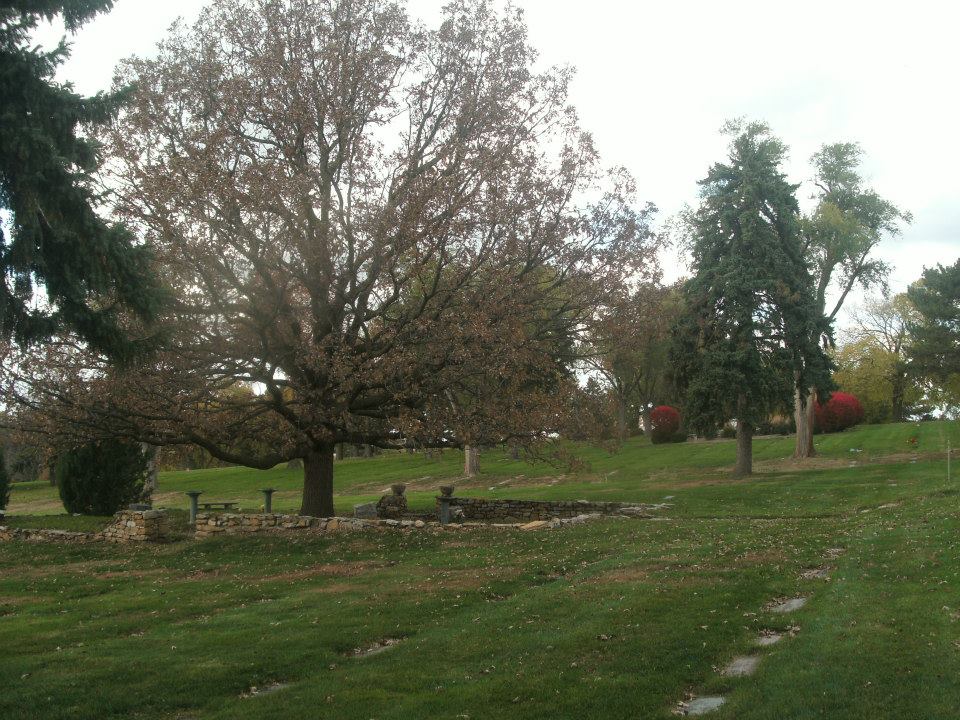
The old Norse had a custom of seeking advice and help from one’s ancestors by going and sitting out on their burial mounds. My kids and I love leaving offerings for our ancestors at cemeteries; many of the ones my family is buried in are beautiful, but I had never intentional quieting of myself that I might hear the voices of the dead.
It was finally decided that my grandpa’s ashes would be scattered on the graves of his parents, buried next to each other in a small rural cemetery. A small group of family came and bid him goodbye – his side of the family are some of my favorite people in the world, full of life and vitality and a deep joy, though many of their lives are difficult. Eventually everyone dispersed, most of them to the bar for the time-honored custom of drinking and remembering. I returned later that afternoon, my heart so heavy it felt as if I was having to drag my feet to keep them moving.
I laid my face in the grass, before the headstones of my great-grandparents, before the ashes of my dear grandpa. I cried and cried, and I told him everything I’d wanted to say – all the regret, all the pain, all the sadness I was feeling. And then I waited, quieting my voice and opening myself up to hear whatever was to be said.
I laid there for a long, long time, and I didn’t hear anything really. But I knew he was there. The grass began to smell of cigarettes and beagles, and I was so flooded with memories of him – of growing up, of birthdays and holidays, the look in his eyes when he first held my children. It was only the beginning of a long healing process, one that is still going on. But every morning when I pour out a bit of tea for my ancestors, I touch his picture and remember. I feel him with me. And every once in awhile, I’ll sneak him a bit of whiskey – I’ll be getting his favorite when I visit this Father’s Day.









 Ad-Free & Subscriber Log-In