2017-10-10T04:04:40-05:00

One of the sages of that time came to Anthony the just and said: Father, how can you endure being deprived of the comfort of books? And he said: My book, philosopher, is the nature of beings, and it is there when I want to read the words of God.[1] Evagrius, relating a story about St. Anthony, demonstrated that the wisdom and knowledge that can be had by proper exploration of the world – or oneself  — is far superior... Read more

2017-10-09T11:19:19-05:00

In the theological debates between St. Athanasius and the Arians, one of the central questions which the Arians raised was how the Logos, the Son of God, could be said to be begotten of the Father and not yet made. The Arians knew the position which Athanasius held, that which was stated in the Nicene Creed: We believe in one God, the Father Almighty, maker of heaven and earth, and of all things visible and invisible. And in one Lord... Read more

2017-10-05T05:46:37-05:00

“My son, beware of anything beyond these. Of making many books there is no end, and much study is a weariness of the flesh” (Eccl. 12:12 RSV). Likewise, the asking of questions to texts already written, there is also going to be no end; these questions are the foundation for commentaries and responses which lead to and establish more books. While much good can come from such a pursuit, we must also be cautious and not use such questions and... Read more

2017-10-09T11:16:11-05:00

Upon reading Holy Scripture, many, seeing that God is often referenced with masculine pronouns as well as described with masculine images (Father, Son), end up thinking masculinity somehow better represents the divine nature than femininity. This makes them decry any and all use of feminine representations for God: if God intended us to be able to use feminine pronouns and terms like Mother, Daughter, or Sister for God, Scripture would have already done so.[1] Needless to say, ignoring the way... Read more

2017-10-04T12:10:45-05:00

This is fundamental to all proper theology: God remains the unknown God who reveals himself to us. Read more

2017-09-29T03:22:25-05:00

Free will, as all things given to us by God, is good. When it is truly free, and follows the proper contour of its nature and where its nature leads, it will aim for and follow what is good.  Free will is a good which leads to that which is good so long as it remains true to itself. The problem of evil lies not in the will, but in its use. When it is allowed to follow through with... Read more

2017-09-28T13:22:28-05:00

And he said this, “If he is able to, a monk ought to tell his elders confidently how many steps he takes and how many drops of water he drinks in his cell, in case he is in error about it.”[1] Reading this saying for the first time, it would almost appear Anthony is being far more legalistic than normal, making unusual demands of monks to demonstrate the quality of their ascetic profession. It would seem that monks are being... Read more

2017-09-25T03:41:23-05:00

Just as truth does not contradict truth, and yet, truth separated and elevated in its importance to reject the holistic unity of the truth leads to error, so we find that the good does not contradict the good and yet partial acceptance of the good denying the fullness of the good is what leads to evil. The truth, by its nature, transcends us and our comprehension.  We can be said to know and believe in and accept the truth when... Read more

2017-09-25T11:03:21-05:00

No one does evil for the sake of being evil. Read more

2017-09-22T11:08:40-05:00

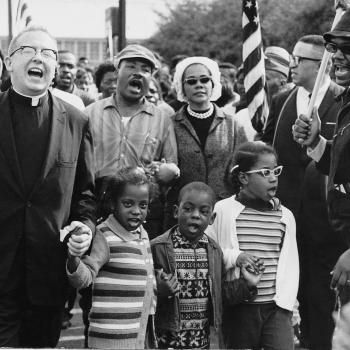
We must struggle with the racism within ourselves. We must realize it is not always outright actions of hate, such as swearing at someone at another race or beating them up just because they are different. Read more

Follow Us!


TAKE THE
Religious Wisdom Quiz

What does Paul offer to do if Onesimus owes Philemon anything?

Select your answer to see how you score.


Browse Our Archives