2022-02-16T04:04:15-05:00

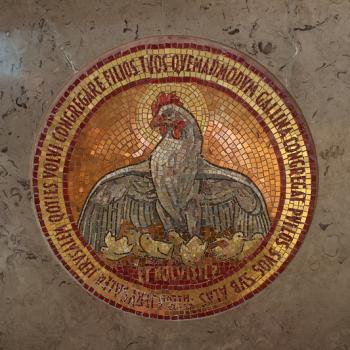
One of the most interesting images Jesus used for himself was that of a mother hen seeking to protect her brood: O Jerusalem, Jerusalem, killing the prophets and stoning those who are sent to you! How often would I have gathered your children together as a hen gathers her brood under her wings, and you would not! (Matt. 23:37 RSV). There are many elements which can be brought out of this text, each which could serve as a significant reflection... Read more

2022-02-14T03:49:05-05:00

There are many teachings proclaimed by the Christian faith. While each have their value and significance, we must not presume they are all equally important. They are not. Nor should we think that all teachings hold the same level of inspiration. Many things which are taught are derivative in nature and in value; while they are connected to greater truths, they are derived more through human reason, with all the limitations and implications connected with it. This is why such... Read more

2022-02-13T03:51:35-05:00

Paul speaks of Christian freedom, highlighting what differentiates it from other notions of freedom: Christians are to follow after the good, to seek after and engage what is helpful (to themselves as well as to others); they are not to be mere slaves to the passions, letting the passions dictate to them what they should do. This is because, though the passions can and do include various elements of the good, people get so attached to  them that they ignore... Read more

2022-02-14T06:56:41-05:00

There is a tendency among some Catholics to suggest that Catholic teaching has not developed or changed over time. If they studied history, they would know differently; indeed, if they studied the saints and major thinkers throughout the centuries, they would see how change has been incorporated within Catholic tradition and recognized as serving an important way for the Holy Spirit to direct the church. Nicholas of Cusa, an important fifteenth century theologian, philosopher, and canon lawyer, indicated that church... Read more

2022-02-09T03:49:37-05:00

St. Isaac the Syrian, like many ascetic writers, could be quite rigorous in his discussions concerning the behavior expected by monks; if one only read such appeals, he would appear to be one of many moralistic writers, offering, perhaps, some sound advice, but without the deep spiritual core needed to make such advice anything but a burden upon the listener. For that is what happens with legalist: even if they are technically correct, in so far as they go, they... Read more

2022-02-07T03:44:42-05:00

When various Christians try to engage Islam, pointing out that despite the various (and significant) differences which exists between the two faiths, they still worship the same God, other Christians quickly speak up and say it is impossible because of those very differences. It is as if they believe God is created by one’s own thoughts about God, justifying Feuerbach and others like him in saying God is created in the image of humanity instead of humanity in the image... Read more

2022-02-06T03:46:50-05:00

Jesus, throughout his temporal ministry, presented a picture of God which many, including Christians, have forgotten. God is love, and because of that, God is merciful, seeking for all to be saved. Jesus constantly presented God as being willing to forgive sins and save people when they showed a true conversion of their heart. St. Dismas, the thief on the cross next to Jesus, was welcomed into paradise, not because of any good which he might have done, but because... Read more

2022-02-03T06:17:00-05:00

Since it is commonly understood that, as Winston Churchill put it, “Those that fail to learn from history are doomed to repeat it,” it would seem that those who would have us ignore key elements of history do so in order to make sure history repeats itself. That is, those who would make sure our children do not learn the lessons of history seem to have an ulterior motive, one which is to undermine the progress of history and the... Read more

2022-02-02T03:48:52-05:00

Christians use various methods, such as ascetic discipline, as a means for them to make for peace for themselves, and through that internal peace, they will be able to work for peace in the world. To work for peace is to work for restorative justice, to promote healing grace. Restorative justice is important because it produces the harmony necessary for lasting peace. Peace is difficult, if not nearly impossible, to establish in the temporal world. There will be those who... Read more

2022-02-01T03:48:04-05:00

The body of Christ is experienced by the faithful both in relation to their communion with each other (and in this way, as the church), as well as in their reception of the eucharist. The historical, empirical manifestation of each signifies the greater reality which lies beyond what is perceived through their physical experience; that is, what is perceived is symbolic, though it must also be understood that such symbol also participates in the reality which is represented by it... Read more

Follow Us!


TAKE THE
Religious Wisdom Quiz

What is the longest book in the New Testament by word count?

Select your answer to see how you score.


Browse Our Archives