

How should we interpret Paul’s letters? One good way to read him is in accordance with his main motivations. In other words, which particular informants drive him to do what he does and say what he says as an apostle?
There are at least 3 major motivations that are at the heart of our apostle’s calling. The first is his revelational experiences, the second is his reading of Scripture, and the third is his knowledge of Jesus traditions.
When reading Paul’s letters, we should get in the habit of asking ourselves regarding these informants: “Is Paul being informed by a revelation he received?” “Which Scriptures might Paul be alluding to?” “Which events about or sayings from Jesus might Paul have in mind by what he writes?” Let’s unpack these things that make Paul tick.
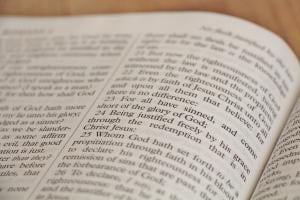
Paul’s Revelations
It should come as no surprise that Paul’s first revelational encounter with Jesus Messiah changed his life. He was transformed from a persecutor of Jesus assemblies to one of the foremost leaders of the Jesus movement. This is surely one of his major motivations behind being an apostle. We find in Paul’s letters his discussion of his earliest encounters with Jesus, his Damascus experience and calling, in Gal 1:1, 11–16, 1 Cor 1:17; 9:1, 14–18; 15:8–10; Rom 1:1; Phil 3:12; cp. 1 Tim 1:12–16. In Acts, this event is remembered in Acts 9:1–19; 22:1–16; and 26:4–18.*
Paul’s revelations do not end at Damascus. He received other revelations that are important to him, such as his revelation to go up to Jerusalem (Gal 2:1) and his third heaven experience (2 Cor 12:1–10). In Acts, his Jerusalem vision (Acts 22:17–21), call to missions (Acts 13:1–3), Macedonian call (Acts 16:9–10), and other revelational experiences are likewise important.
It is vital for interpreters of Paul, then, to study such passages. They are central to Paul’s raison d’etre, and surely prompt, inform, and compel his gospel. For example, he is able to endure his many hardships because of Jesus declaring to him during his third heaven experience, “My grace is sufficient for you, for power is made complete in weakness” (2 Cor 12:9).
Paul’s Use of Scripture
A second motivating informant for Paul is Jewish Scripture, what we call today the Old Testament. After Paul’s encounter with Christ, the interpretation of Scripture he earlier held to would have been radically shattered. He must have read the Scriptures now with a new perception of messiah and prophecies related to the messianic era. He read Scripture now in light of his new experience in Christ.
Moreover, confirmation of the importance of Scripture in relation to Christ would seem to be confirmed to him by the very traditions he was handed. The very content of the gospel he received was “according to Scripture” (1 Cor 15:3–4). From the Scriptures he would also seem to have gained further insight into who Jesus is, his significance, and so on.
With this motivation intact, we should read Paul’s letter in light of the potential Scriptures that he quotes. How does he use these Scriptures? What point is he making with them? Also, if he does not actually quote a Scripture, might he be alluding to one through what he writes? For example, when he claims that Jesus is the son of God and son of David, might he be informed by or alluding to 2 Samuel 7, Isaiah 9, Psalm 2, and other such texts? What might the contexts behind these texts say in relation to what Paul is communicating? **
Paul’s Knowledge of Jesus Traditions
A third motivation would seem to be Paul’s knowledge of Jesus traditions that were handed to him by those who were disciples of Jesus before him. When becoming a follower of Jesus, it would not be much of a stretch to suggest that Paul wanted to know more about this Jesus whom he encountered. This would include how Jesus lived, what he taught, the central beliefs about him, his significance in relation to God’s plan and Scripture.
When Paul first became a believer, there were no New Testament letters and Gospels available yet. Paul must have received his information about the narratives of Jesus from other believers, such as in Damascus. Likewise, three years after his Damascus experience, Paul claims to have met Peter and James in Jerusalem. He also stayed with Peter for 15 days (Gal 1:17–20). Doubtless, during that time, Paul probably asked Peter a lot of questions about Jesus!
We see the central importance of Jesus’ traditions in Paul based on his core gospel beliefs stated in 1 Cor 15:1–7. Likewise, Paul knows the Lord’s Supper tradition as is evident in 1 Corinthians 11:23–26. Similarly to Paul’s use of Scripture, we should keep our antennas open for allusions to Jesus traditions in Paul’s letters. ***
Conclusion
The three informants of revelation, Scripture, and Jesus traditions rest behind Paul’s central motivations as a ministry of the gospel. A wealth of insight awaits those who interpret Paul according to these motivations.
Notes
* See my upcoming book, B. J. Oropeza, Gospel of Paul (Eerdmans).
** On the use of Scripture, see B. J. Oropeza and Steve Moyise, Exploring Intertextuality, and Max J. Lee and B. J. Oropeza, Practicing Intertextuality.
*** See, e.g., David Wenham, Paul: Follower of Jesus or Founder of Christianity? Also, Michael B. Thompson, “Paul and Jesus,” in The Oxford Handbook of Pauline Studies, 389–405.












 Ad-Free & Subscriber Log-In