

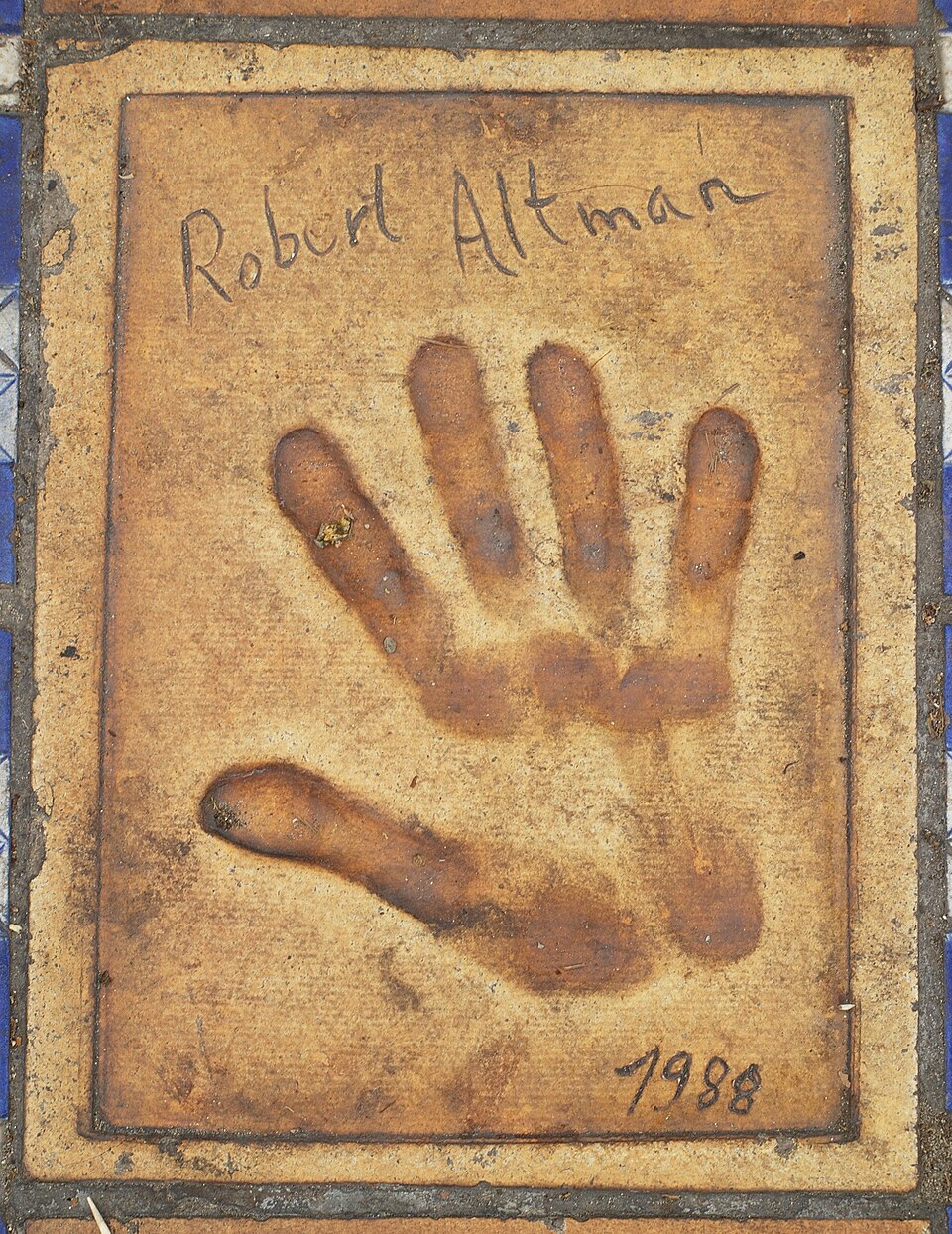
Source: Wikimedia user Marco Bernardini
License
In The Day of the Locust (1939), Nathanael West comments that the scraggly crowds of Okies and treasure-seekers have “come to California to die.” Since at least Frederick Jackson Turner, Americans have known that California is a cliff. We rush to it and plunge off because the plains are too dry, the beaches too pretty, and, most of all, because there’s nowhere else to go. Rot untended in our vast fields, become a child actor, or push your own kid down Judy Garland Lane. That’s what we’ve been left for a century and change.
Robert Altman’s 3 Women (1977) marks another chapter in our fascination with our destiny. Two women, at least, go west, both from Texas. We never learn the origin of the third. But, then again, she’s quiet, always painting scenes of antediluvian violence, and is married to an ex-stuntman and wannabe cowboy. They own a Western-themed bar together.
These three women are Pinky (Sissy Spacek), Millie (Shelley Duvall), and Willie (Janice Rule). Pinky’s birth name is Mildred, and both Millies work at the same geriatric spa, slowly leading elderly convalescents back and forth through shallow water. Pinky is childlike, blowing bubbles in her Coke through a straw. Millie constantly primps, talks about dates, and seems totally unaware that all the men in the background find her a nuisance. Willie haunts the film, floating around, painting.
The film came to Altman in a dream, ready made he suggests, for the big screen, actors and all. Bergman’s Persona (1966) casts a knowing shadow across just about every scene, especially after the film’s volta. The eponymous ladies feed into one another, reflect one another. We open in a pool. Someone leaps, hoping for death, into another. Willie’s paintings cover the bottom of the latter. To call the movie “dreamlike” (or “oneiric,” if you like) is to call the sky blue. Trivial maybe but all too true.
Downstream from the dream is the characters’ bare normality, their hopelessness. In 2025, Pinky’s childlike wonder cut with dim unawareness of the Southern California desert all around, seems quaint. But, digging past the surface, she, Millie, and Willie are types very much with us today. Willie floats through life, serving drinks at the bar, wandering quietly through a life that seems to mask and express some dark secret. Millie performs her femininity to cope with aimlessness, a life punctuated by timecard stamping and the occasional (always aborted) dinner party. Pinky’s wonder doesn’t last long in the Inland Empire.
Anyone who has worked a 9-5 knows the easy spectral quality life can take on. You go to work, chat with coworkers (are they talking behind your back?), and go home. Not everyone lives in a purple-spotted motel like these three, but their inexpressible sadness, this cloud that dogs them and hangs over the film, feels like the same miasma hovering over us. No one is clear on what to do. All they know, it’s one thing: go to California.
















 Ad-Free & Subscriber Log-In