


This post on the God’s Word (GW) Translation continues my Reading Shelf series. In the first post, I introduced why translations matter, why clarity is an act of spiritual hospitality, and why building a small collection of trusted translations can deepen our reading. I also shared five guiding truths that shape this series: the best translation is the one you actually read, every translation carries assumptions, using more than one version helps us hear the text more clearly, Scripture reading should be prayerful, and you should choose translations based on conviction rather than pressure. This series is not about settling the literal-versus-dynamic debate. It is about exploring six translations I rely on for study, teaching, and quiet reflection. This week, we turn our attention to the God’s Word Translation.
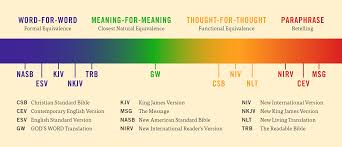
This week we are looking at the God’s Word Translation, usually known simply as the GW. The GW is a highly readable, meaning-for-meaning translation created to sound natural in everyday English. Its goal is clarity, not by flattening the text but by expressing the original meaning in language that feels fluid, conversational, and immediately understandable. It is not a Paraphrase. I believe this reality makes the God’s Word (GW) translation a tool that is especially helpful for new believers, devotional reading, and those who may find more traditional translations difficult to follow. Although its focus on simplicity means it does not always capture the nuance of more formal translations, I believe that the GW stands out as an approachable, engaging, and genuinely trustworthy yet accessible rendering of Scripture for modern readers.
How I Encountered the God’s Word (GW) Translation
I first came across the God’s Word Translation during my wandering years in my teens and twenties. I was exploring everything from the Quran to Hindu texts, and at some point, I realized I needed to give the scriptures that I grew up with a fair chance. I tried a few familiar translations, but the King James Version (KJV) felt clunky to me in that season, and the New International Version (NIV) felt too familiar. One afternoon, I walked into a Christian bookstore filled with smiling faces, rainbows, and Noah’s Ark murals (they were always decorated like this in that era), and there on the shelf was a Bible with a very pink, paint splashed cover, a very 90s-looking copy of the God’s Word Translation by Word Bible Publishers—I was not familiar with the translation or the publisher. The cover didn’t draw me in, but it was enough to make me pick it up and look at it. Then its easy-to-read approach and translation philosophy drew me in. As soon as I started reading, something clicked. Even after returning to church, landing on Jesus, and becoming part of a church that was part of Vineyard USA, the God’s Word (GW) translation became my main reading Bible. In that era, I told many about it, and I bought copies for others. Later, I moved into a season of using more literal translations, but the God’s Word (GW) had already carved out a place in my heart.
The History of the God’s Word (GW)
The God’s Word (GW) history dates back to a 1963 New Testament release, followed by the full Bible, known as AAT, in 1976. That work underwent revisions and was briefly known as the New Evangelical Translation in 1988, not to be confused with today’s New English Translation (NET) Bible. In the early 1990s, the translation team adopted what they called “closest natural equivalence,” leading to a completely fresh translation rather than another revision. In 1992, a team of full-time scholars and English reviewers began working from a new God’s Word for the Nations Bible Society headquarters, with Rev. Michael Hackbardt serving as Executive Director. By 1995, the first full edition of God’s Word in everyday English was released through Word Bible Publishers. In the 2000s, the mission took greater ownership, revisions, and by 2016, God’s Word to the Nations began handling all licensing and distribution directly.
The Translation Philosophy of God’s Word (GW)
The GW was produced using a translation approach called closest natural equivalence, which aims to communicate the meaning of the original Hebrew, Aramaic, and Greek in clear, natural English. Rather than sticking rigidly to word-for-word translation or leaning fully into thought-for-thought, the philosophy of closest natural equivalence seeks to balance accuracy and readability (theologians and English experts wrestling it out). This is an essential distinction of their philosophy. The team wanted English that sounds like English, while still preserving the original text’s imagery and style whenever possible. For example, they share that instead of the literal but confusing “outstretched arm,” or the abstract paraphrase “power and strength,” the God’s Word (GW) uses “his mighty hand and powerful arm,” which keeps the vivid picture while staying understandable to modern readers. Psalm 1 is another case, where some literal translations unintentionally suggest “not blocking sinners.” The GW clarifies the actual meaning by translating the Hebrew idiom as “does not follow the advice of wicked people,” for modern readers. Examples like these show the God’s Word (GW) commitment to accuracy that reads naturally. Some reviewers, I think Wes Huff is one of them, place it close to paraphrase, but I disagree. In practice, it sits somewhere near the NIV or NLT, though in certain passages it feels even more precise and even more literal than the NIV. The GW seeks to strike a balance between clarity and faithfulness, making the biblical text neither harder nor easier than it originally was, but as naturally understandable as possible for modern readers.
The God’s Word (GW) Translation Process
The translation process behind the GW was thorough. Though early revisions were smaller teams and more singular voices, the later redone work was shaped by a full-time team of biblical scholars and English-language experts who worked together from the beginning, producing draft after draft through a long cycle of reviews. A translator would create an initial draft using the closest natural equivalence, then an English reviewer would refine the naturalness and clarity. After that, the whole team weighed in during peer review to ensure consistency across books. Technical reviewers, pastors, and professors added further feedback, and book committees read each text aloud to confirm that it could be understood when heard, not just read. Once individual books were complete, Old and New Testament committees and a final Bible Editorial Committee examined accuracy and readability one more time. The translation also made innovative use of computer tools to check consistency, compare word choices across newspapers and magazines to avoid archaic English, and track the use of Hebrew and Greek terms across Scripture. This multi-layered process, with English experts fully embedded from start to finish, produced a translation that is both faithful to the original languages and genuinely natural for modern readers.
How I use the God’s Word (GW) Translation
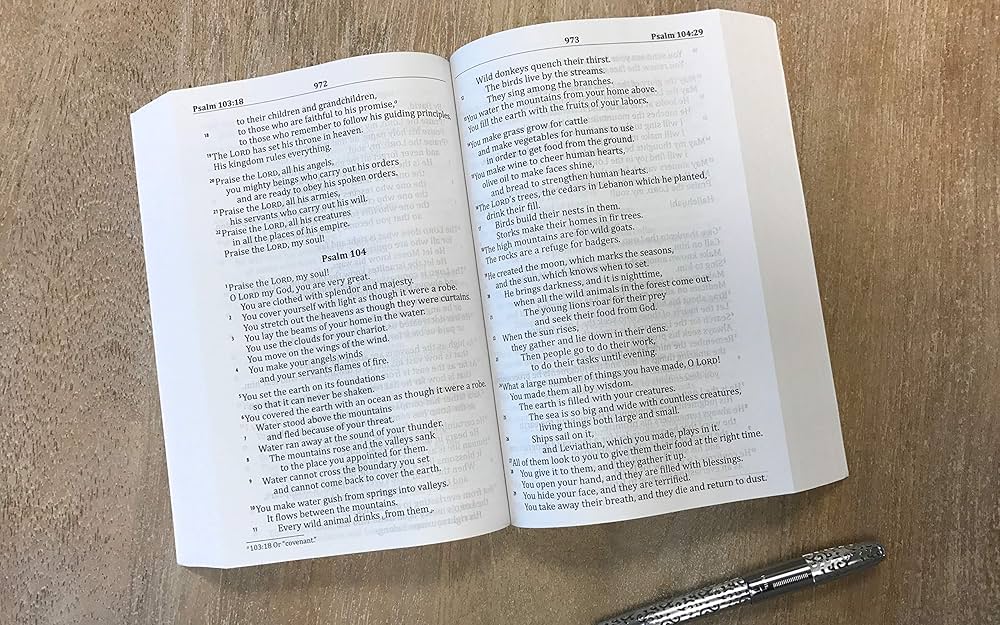
At Water Street Mission, I rely on the God’s Word Translation because it meets the practical needs of the people I serve. I need a Bible in large print, since many of our guests have poor eyesight or outdated prescriptions. I need a single-column layout, because the typical two-column format can be confusing for new or struggling readers. And I need a translation that is simple, clear, and faithful to the text. Many of our guests find the Bible difficult to understand, and the GW’s roughly third- to fourth-grade reading level helps open the scriptures in ways they can actually grasp. It strikes the balance I need: far more grounded than paraphrases like The Message or The Passion, yet more immediately understandable than many other translations, including the NLT. Affordability also matters, since we distribute 30 to 50 Bibles a year, and the GW allows us to offer a readable, durable, and accessible Bible without sacrificing quality. It has become a favorite among our guests, and I often hear how much it has helped them understand Scripture. I use the God’s Word (GW) translation in every chapel I preach. I usually read it, invite guests to reflect on it, and we push it out further, and then I will follow the reading and conversation with a mini sermon.
Recommendations
Several respected leaders have spoken highly of the God’s Word Translation and its commitment to clarity. Dr. Billy Graham once described it as “an easy-to-understand Bible… a wonderful version to give to someone who is a new believer or is not yet a believer.” Dr. Paul Muench of Concordia University noted that “GOD’S WORD consistently uses words that better translate the original meaning of the text,” and Dr. Menahem Mansoor, who served as a key technical reviewer for the Old Testament, wrote that it “strives to interpret passages for the American reader without changing the original Hebrew meaning” and that its Old Testament work “ranks among the best.” Dr. Joseph Aldrich, former president of Multnomah University, went so far as to say, “I couldn’t put GOD’S WORD down… I predict it will become a standard text.” These voices highlight what I have experienced myself: the GW is readable, faithful, and a gift to anyone who wants Scripture in clear, natural English.
Final Thoughts on the God’s Word (GW) Translation
The God’s Word (GW) also takes a measured approach to gender language. It avoids the heavy-handed inclusive strategies found in some translations, but it also steers clear of archaic or exclusionary patterns that can obscure meaning for modern readers. When the original text refers to both men and women, the God’s Word (GW) reflects that naturally (such as the NASB2020). When the biblical authors specifically refer to men, they retain that specificity. It never changes language related to God. In other words, God’s Word (GW) tries to handle gender language with clarity rather than ideology, aiming to reflect the intent of the original passage without making the English more complicated to understand. For readers who want an accessible, faithful, and easy-to-grasp Bible, especially in ministry settings where clarity is a pastoral necessity, I recommend God’s Word (GW). It may not replace your primary study Bible. Still, it is a remarkable companion for devotional reading, public reading, and for anyone who needs the Scriptures presented in natural, straightforward English. I’ve come to love using the God’s Word (GW) when I preach at Water Street Mission because its natural flow helps listeners immediately grasp what the passage is saying without getting lost in unfamiliar wording. It has also become one of my favorite translations to give to new believers and to read in my own personal study when I want a clear, conversational sense of the text that feels close to how people actually speak and think today.
Learn More at GodsWord.org and through their Translation Philosophy PDF.














 Ad-Free & Subscriber Log-In