


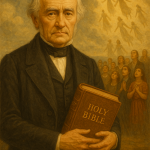
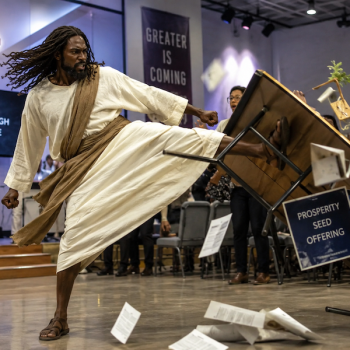
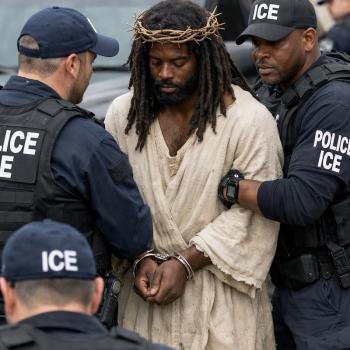
Created by Dall-E with prompts from the author
In my last blog post, I talked about why the rapture isn’t happening. This week, I’d like to share how the editors of the Bible built “Safety Valves” against the proliferation of knowledge.
Let’s get into it!
If the Bible were a piece of machinery, it would be the kind you buy off a late-night infomercial: shiny promises, cheap construction, and a whole lot of “do not return” disclaimers hidden in the fine print. One of the most fascinating features of this ancient anthology is its paranoia problem. The editors laced it with warning labels about the “last days,” like a manual trying to anticipate every possible consumer complaint.
“These end times,” the text tells us, will be marked by scoffers, false prophets, rising immorality, cosmic fireworks, and people who dare to think for themselves. The moral of the story? If you ever find yourself doubting the faith, it’s not because the Bible doesn’t hold up. It’s because you are selfish, sinful, or deceived.
That’s the genius of biblical safety valves: they were written to preempt the inevitable. The editors knew that logic, reason, and science would eventually put their ancient mythology under a microscope—and that the microscope wouldn’t be kind. So they coded in excuses. Doubt was demonized. Curiosity was criminalized. Skepticism was reframed as arrogance.
Let’s peel back the layers and see how these so-called “prophecies” are really desperate defense mechanisms against knowledge itself.
Scoffers Will Come: The Bible’s Greatest Fear is a Fact-Checker
2 Peter 3:3–4 warns:
“Scoffers will come in the last days… saying, ‘Where is this ‘coming’ he promised? Ever since our ancestors died, everything goes on as it has since the beginning.’”
This isn’t prophecy—it’s damage control. It anticipates the obvious question: if Jesus said he’d be back soon, why hasn’t he? Instead of giving an answer, the editors took a shortcut: they labeled anyone asking the question a “scoffer.”
� LOGIC CHECK: If someone promises to return in a few days and disappears for 2,000 years, the problem isn’t the scoffers—it’s the promise.
That’s not divine foresight. That’s a centuries-old “no refunds” policy.
Logic, of course, would demand evidence for a 2,000-year-old no-show. Reason would suggest that promises unfulfilled might not be trustworthy. Science would ask whether the whole “he’s coming back in the clouds” routine is even possible in a universe governed by physics instead of fairy tales. But the Bible resists all three by pre-dismissing critics as arrogant mockers.
It’s the religious version of a magician yelling “don’t blink or you’ll miss it” before pulling a rabbit out of an empty hat. When the trick fails, he shrugs: “See? You blinked.”
Lovers of Themselves: When Therapy is a Sign of the End Times
2 Timothy 3:1–5 is practically the world’s first grumpy Facebook rant:
“People will be lovers of themselves, lovers of money, boastful, proud, abusive, disobedient… lovers of pleasure rather than lovers of God.”
Translation: “When people stop hating themselves for being human, it’s over.”
� REASON’S TAKE: If loving yourself means the apocalypse, then your theology is basically allergic to mental health.
This is another brilliant safety valve. It takes the rise of individual empowerment, therapy, and joy—and rebrands them as existential threats to faith. If people stop obeying religious guilt, if they start trusting their own judgment, the whole edifice of religious authority collapses.
That’s why biblical teaching resists psychology. Therapy says, “You are worthy.” Religion says, “You are sinful.” Science explores how the brain works; the Bible tells you to stop asking questions and pray harder. Reason suggests life is short, so enjoy it. The Bible says pleasure is idolatry unless it’s stamped with God’s approval.
The editors knew: once humans learned to love themselves, the church’s leverage—fear—would evaporate.
False Prophets Will Rise: Translation, Competition is Coming
Matthew 24:11 warns:
“Many false prophets will appear and deceive many people.”
This one’s rich. It’s the ecclesiastical version of Coke saying: All sodas are poison except ours.
� SCIENCE SAYS: If a system tells you to distrust all rival claims but demands you trust it without evidence… you’re in a cult, not a truth community.
The Bible inoculated itself against scrutiny by reframing every religious rival as a “false prophet.” Logic might suggest that competing truth claims should be compared. Reason might lead one to weigh evidence and consistency. Science might check historical claims against archaeology and linguistics. But instead of opening itself up to comparison, the Bible slaps a warning label on the entire enterprise: if someone disagrees with us, they’re lying.
And here’s the delicious irony: by biblical standards, Christianity itself began with false prophecy. Jesus predicted the end of the world in his disciples’ lifetimes (Matthew 24:34). Unless the “end of the world” is code for 2,000 years of awkward silence, that makes him a false prophet. Oops.
Theology resists this conclusion with interpretive gymnastics, allegorical rewrites, and endless footnotes. Dogma insists, “You can’t say that—it’s blasphemy.” Which is another way of saying: logic, reason, and science would shred this claim, so let’s shut down the conversation.
Lawlessness Will Abound: When Disobedience = Evolution
Matthew 24:12 warns,
“Because lawlessness will increase, the love of many will grow cold.”
Sounds like chaos in the streets. But let’s translate: “People will stop obeying our rules.”
� LOGIC CHECK: If eating bacon counts as “lawlessness,” maybe the problem is your definition of crime, not humanity’s morals.
The Bible was written in a tribal society where laws kept everyone in line: don’t eat pork, don’t mix fabrics, stone your neighbor if they’re caught working on Saturday. These laws weren’t divine morality—they were Bronze Age crowd control.
Science blows this apart by explaining food safety. Reason notes that stoning someone for adultery is barbaric. Logic points out that if “God’s law” was so perfect, it shouldn’t need constant upgrades in the form of new covenants.
But theology resists by redefining “lawlessness” as sin. Dogma frames the rejection of bad rules as rebellion against God himself. In this way, even progress—abolition of slavery, women’s rights, LGBTQ equality—gets rebranded as proof that humanity is growing more wicked, not more humane.
Cosmic Signs: Science Kills the Magic Trick
Luke 21:25–26 adds flair to the apocalypse:
“There will be signs in the sun, moon, and stars. Nations will be in anguish.”
To an ancient audience, eclipses, comets, and earthquakes were terrifying. To us, they’re astronomy, geology, and plate tectonics.
� SCIENCE SAYS: Predicting “there will be earthquakes” is not prophecy—it’s weather with extra drama.
The editors thought they were bulletproof with this one: “If you see natural disasters, that’s a sign.” The problem is, disasters happen all the time. That’s not prophecy—it’s observation.
Science ruins the scare tactic. We can now predict eclipses down to the second, earthquakes by fault lines, hurricanes by radar. Logic and reason point out that “wars and famines” aren’t apocalyptic signs—they’re human history.
But theology resists, reframing ordinary events as divine theater. Dogma insists that earthquakes in Japan are evidence for Jesus, but earthquakes in the Americas are just tectonics. Pick whichever explanation keeps the faith afloat.
The Endurance Clause: Stockholm Syndrome in Scripture
Matthew 24:13 says,
“The one who endures to the end will be saved.”
� REASON’S TAKE: If your product only “works” when you refuse to quit no matter how badly it fails… you’re not selling salvation, you’re selling snake oil.
This is the ultimate safety valve: even if all else fails, even if it all looks like nonsense, don’t stop believing. Salvation is only for those who keep the faith no matter what.
Logic would say: if your belief system requires blind loyalty, it probably can’t stand on its own. Reason would suggest cutting losses and walking away. Science would ask for measurable evidence of salvation before anyone signs up.
But theology resists with emotional manipulation: quitting means eternal fire, while enduring means eternal life. Dogma doubles down with fear—hell is always hotter than your doubts.
This isn’t endurance. It’s spiritual Stockholm syndrome.
The Real Apocalypse: Knowledge
Here’s the kicker. The Bible wasn’t predicting the collapse of civilization. It was predicting the collapse of its own authority once humans got access to information.
� KNOWLEDGE SAYS: The true “end times” came with the printing press, the telescope, and Wi-Fi.
For centuries, religion survived by controlling literacy. Bibles were chained to pulpits. Translations were banned. Heretics were burned. Because once people could compare texts, fact-check claims, and study the natural world, the safety valves would start popping like popcorn.
The printing press was the first crack. Public schools blew it wider. Libraries tore down the wall. The internet bulldozed the ruins.
Science proved the world is billions of years old, not 6,000. Logic dismantled the contradictions in the resurrection accounts. Reason showed that morality doesn’t require divine surveillance—it just requires empathy.
And so the Bible resists. Theology builds fragile shields of apologetics. Dogma snarls at skeptics, rebrands doubt as rebellion, and preaches faith over evidence. The louder science speaks, the harder theology plugs its ears.
Why This Still Matters
It would be hilarious if it weren’t so harmful. These biblical safety valves aren’t just quirky relics—they’re active weapons in modern life. They tell believers that science is deceitful, reason is dangerous, and logic is arrogance.
That’s how climate denial thrives in religious communities. That’s why evolution is still controversial in classrooms. That’s why people pray for healing instead of seeking treatment. That’s why entire generations are taught to distrust critical thinking.
When biblical teaching resists logic, reason, and science, it doesn’t just protect itself—it puts humanity at risk.
Conclusion: Safety Valves Can’t Hold Back Reality
The Bible’s editors were clever. They foresaw the cracks and built in excuses. They labeled doubt as sin, curiosity as rebellion, and evidence as deception. They thought they could childproof the faith forever.
But no safety valve lasts forever. Knowledge is relentless. Logic is persistent. Reason is persuasive. Science is unstoppable.
The apocalypse came—not with fire and brimstone, but with Google, telescopes, and medical journals. The “last days” weren’t the end of the world. They were the end of ignorance.
And here’s the punchline: the very things the Bible warned against—scoffers, knowledge, lawlessness—are the proof that humanity is moving forward. The last days aren’t doom. They’re liberation. These aren’t the last days for humanity, they’re the last days for religion.
Thank logic, reason, and science for that.
I know that’s a lot to ponder—but I really want to know what you think. Share your thoughts in the comments below!
Derrick Day is the author of Deconstructing Religion, Deconstructing Religion 2, The Martial Leader, MetaSpeech, and the host of The Forward Podcast.
Follow him on Facebook, Instagram, TikTok, and YouTube











 Ad-Free & Subscriber Log-In