

Anchor Verse Acts 2:42-47
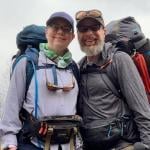
As the story goes, my wife stole me from the monastery. For two whole years, I considered priesthood and monastic orders in a process called pre formation. I was tasked with going to church every morning, praying rosary several times a day and working though the book of Psalms every month. I went on several exploratory retreats with the Redemptorists who had a presence in my hometown before leaving. I was raised around the Benedictine sisters and their peace and justice work permeated my life throughout my upbringing. I found enough resonance with them that I had correspondence with them about taking orders with the men, but their bigger influence came with my decision to become a social worker. Later, when I moved on to seminary to become a Methodist minister, I was reintroduced to the Benedictines through my Professor, Diane Lobody who helped me discover the Oblate program. Immediately, I looked this up and soon became an Oblate with the Benedictine Brothers associated with St. Vincent’s in Latrobe, PA. Later, in 2020 amidst a pandemic, I would move my membership to the Erie Benedictines at Mount Saint Benedict, returning to my spiritual home.
In almost 30 years of contemplative practice, I have learned to pray and create an intentionality for my spiritual practice, which in large, I have passed down to my children, my clients to some degree and especially to the churches I have served.
In this post, I want to discuss the lessons I have learned and how these lessons can create more intentional communities of faith amidst a desert of spiritual dryness.
The Desert Monastics
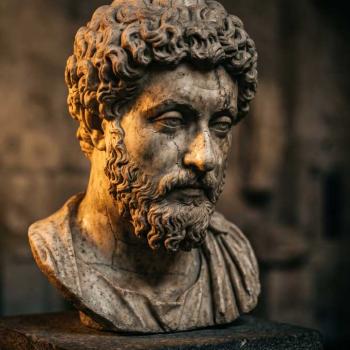
I was introduced to the desert monastics my first year of seminary when I took my first church history course. These early Christians “withdrew to the deserts of Egypt, Palestine, and Syria from the late 3rd century onward, seeking God through silence, fasting, labor, and unceasing prayer.” Their aim was to “transformation of the whole person through the practice of prayer. Not prayer as a religious duty. Prayer as the central and organizing activity of a human life.”
The early desert monastics, particularly the Desert Fathers, created a model for intentional community by forming small groups that emphasized shared spiritual practices, mutual support, and communal living. Out of the movement comes the first codified and stabilized order, the Benedictines established by Benedict of Nursia in
The early desert monastics, especially the Desert Fathers, established a template for intentional community by gathering in small groups focused on shared spiritual disciplines, mutual encouragement, and communal life. This movement eventually led to the creation of the first formal monastic order, the Benedictines, founded by Benedict of Nursia.
Goals of Intentionality
One of the many observations that I have made as a clinician over the last twenty six years is that we have lost our sense of community. I written extensively on these observations and my general observation is that in the absence of healthy, morally grounded, critical thinking communities, we have lost our direction. Specifically, our churches are dying and have largely lost the message.
Our churches need to take a step back, engage in a critical study of the Acts 2 church and reimagine themselves as communities of intention that exist to be the servants in the public square that they once were. An intentional community or commune is a voluntary residential community designed to foster a high degree of social cohesion and teamwork. Such communities typically promote shared values or beliefs, or pursue a common vision, which may be political, religious, utopian or spiritual, or are simply focused on the practical benefits of cooperation and mutual support. While some groups emphasize shared ideologies, others are centred on enhancing social connections, sharing resources, and creating meaningful relationships
To become an intentional community of faith, we must consider that we must”
- consciously cultivate a shared, Spirit-led gospel life, through diverse expressions of community.
- respond through a rhythm of action and contemplation to the needs of the world today.
- deeply honor the dignity and uniqueness of each living creature through mutual respect and kinship with all of creation.
- Practice authenticity, mutual vulnerability, and simple living.
Practices
John Wesley, the founder of Methodism, placed a significant emphasis on the importance of good works as an essential expression of Christian faith. For Wesley, good works were not a means of earning salvation—he was clear that salvation is a gift of God’s grace received through faith—but rather a natural and necessary outcome of a living faith. He believed that true faith would inevitably produce acts of love, compassion, and service toward others. Wesley often cited passages such as James 2:17, “faith by itself, if it is not accompanied by action, is dead,” to stress that a genuine relationship with God transforms a person’s heart and compels them to serve their neighbors.
In Wesley’s understanding, good works included acts of charity, kindness, justice, and mercy, as well as efforts to address social needs and alleviate suffering. He encouraged Methodists to visit the sick and imprisoned, feed the hungry, clothe the naked, and be actively involved in improving society. Wesley’s vision was for Christian communities to be intentionally engaged in the world, reflecting Christ’s love through practical acts of service. For him, good works were the fruit of a Spirit-led life and a vital part of growing in holiness and sanctification.
In the context of intentional communities of faith, as discussed above, Wesley’s teachings invite us to not only cultivate inward spiritual growth but also to be outwardly focused—practicing authenticity and mutual support, and responding to the needs of the world through concrete acts of love and justice. In this way, good works become both a sign of a transformed community and a means of witnessing to God’s presence and love in the public square.
Another aspect of practice in community is the posture we as a community take in prayer and reading. In lectio and oratio or prayer and reading, we engage in a way of engaging in written work where put aside thoughts of studying the text. This is not the time to consider the historical or theological meanings of what we are reading. We read with a willingness to enter into text in a felt sense. The purpose of this practice is to hear, in silence, the word of God, in this moment. What, through this reading, is God saying to me right now? What do I hear that helps me know what it means to walk the Christ path today? We then ask God in prayer for direction and guidance. In community then, we discuss communally the guidance and direction God is directing us towards.
To Close
In closing, if you are struggling church community that feels that it has lost it’s way and it’s numbers, I challenge you to instead lean on becoming a community of intention and use the model of the Acts 2 church as a guide. In creating an intentional space that focuses on community rather than growth, we can embrace a Spirit-led life rooted in authentic community, mutual respect, and active compassion. By integrating contemplative practices and good works, we are called to reflect Christ’s love both inwardly and outwardly—cultivating spiritual growth within ourselves while serving and honoring others. Together, we witness to God’s presence through our shared journey of faith, prayerful discernment, and genuine acts of kindness in the world. In doing so, the community around us may notice and our size will grow.









 Ad-Free & Subscriber Log-In