


If anything distinguishes ancient life from modern life—with our constant connectivity via the internet and our unrelenting barrage of news, it is the number of messages coming at us each day. Strangely, these messages simultaneously feed our arrogance and make us increasingly insecure about ourselves. How do they manage this?! Maybe the arrogance is a defense mechanism against messages rendering us less than. But God loves us even when we’re imperfect.
A Tale of Two Prayers: The Pharisee and the Tax Collector
We find something like this dichotomy in the passage in this Sunday’s lectionary. Here Jesus tells a parable of two men who go to the temple to pray. One is an elite (a Pharisee) and the other is among the most hated group in his society (a tax collector). They both exemplify a stance to God—one arrogant and one humble. While the Pharisee thanks God that he isn’t like those other guys who do terrible things, the tax collector humbles himself before God and asks for mercy. In Jesus’ interpretation of the parable, you can guess who is justified.
Seeing Ourselves in the Story
But importantly, I think in this story we, the readers, are supposed to relate to the Pharisee more than the humble tax collector. Because often, I think, we tend to be more like the Pharisee—so full of himself that he actually goes before God and prays: Thank you that I’m righteous, that I’m not like those other guys who steal and commit adultery and generally behave badly! I’m glad I’m so good and not like them! This kind of arrogance is pretty easy to find in ourselves if we are honest. It’s the honesty we struggle with.
The Beauty of Confession
In my tradition, we do something that seemed strange to me when I started attending an Episcopal service. Each week we say a prayer called “the general confession.” The point of the prayer is to look squarely at how we fail, both in our lives and in our hearts. Not because God wants us to feel ashamed or to grovel, but because being honest before God draws us more deeply into relationship. Honesty and humility always deepen our relationship with God and others. And when we reflect honestly on our lives, we cannot help but see the ways we fall short. The beauty of the prayer of confession and absolution is that we are also reminded each week of God’s forgiveness and of our ability to start again, to start afresh.

Loved in Our Imperfection
In telling the story in our reading, Jesus’ point is not to make people feel bad that they so often act like the Pharisee in the story. I think the point Jesus is making is about God’s ability to love us even in our imperfections. The most critical point of the story is that the tax collector—who, to repeat, was despised by people in his time—is exalted by God and loved by God. It’s almost like Jesus is saying, Hey, if God even loves and exalts the tax collectors, he must love all of us! We don’t have to hide our true selves and pretend we’re perfect in order for God to love us. We can be honest and humble. God loves us even when we are imperfect.
Competing Messages
Every day we encounter messages that seem designed to convince us otherwise. Messages we encounter say we must look different in order to be loved; they say we must be more successful in order to be loved; they say we must have different papers, or different careers, or a different car. In so many ways, the messages are designed to tear us down and make us want the things that will purportedly build us up. The beauty of Jesus’ way is how he takes these messages and turns them upside-down. His message says: you are beloved by God and you have infinite worth and dignity. God doesn’t care about the other measurements. In so many different ways, as in the story we read today, the teacher Jesus says: step away from the messages that assault you and demean you and come find rest in me. Come find rest and relationship in me.
The Humor and Hope of Divine Love
Maybe there is a note of humor in what Jesus is saying: Hey, even tax collectors are beloved by God. So just be yourself and be humble! You’re good! You don’t have to be perfect, you are already a child of God. God loves you in the same way loving parents love their children. If we open ourselves to it, such love is humbling and transforming.
If you liked this article, please leave me a comment below; I am interested in your perspective. To support my writing, please subscribe and share with a friend!
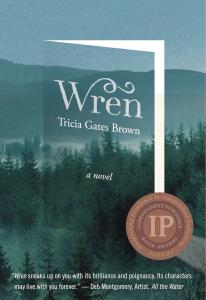
Wren, winner of a 2022 Independent Publishers Award Bronze Medal
Winner of the 2022 Independent Publisher Awards Bronze Medal for Regional Fiction; Finalist for the 2022 National Indie Excellence Awards. (2021) Paperback publication of Wren , a novel. “Insightful novel tackles questions of parenthood, marriage, and friendship with finesse and empathy … with striking descriptions of Oregon topography.” —Kirkus Reviews (2018) Audiobook publication of Wren.
















 Ad-Free & Subscriber Log-In