


Almost a month ago, I decided for this year’s Lent to dive into Spanish practice and “consciousness hygiene,” and an update on the latter seems in order.
For the sake of brevity, I’ll focus on just one area. Early in the effort to spiff up my consciousness, I realized I needed to log off Facebook and Instagram—and to do this as part of my deep dive into consciousness hygiene, rather than as Lenten “giving something up,” which is not how I practice Lent. The decision to temporarily log off of Meta also coincided with horror at Meta’s compliance with DHS requests for user data. Since Facebook and Instagram are the extent of my social media use, I didn’t need to quit other apps.
Three Weeks Without Social Media: What I’ve Noticed
Since February 18, my consciousness has been clear of social media and all short-video content and I can say it has helped. I’ve known others who have logged off of Facebook for a spell, but I had not done so since first logging on in 2008. I do miss the sight of friends I treasure and see on the app with varying frequently. They are the reason I’ve stayed on Facebook all of these years.
How Scrolling (Even a Little) Was Affecting My Nervous System
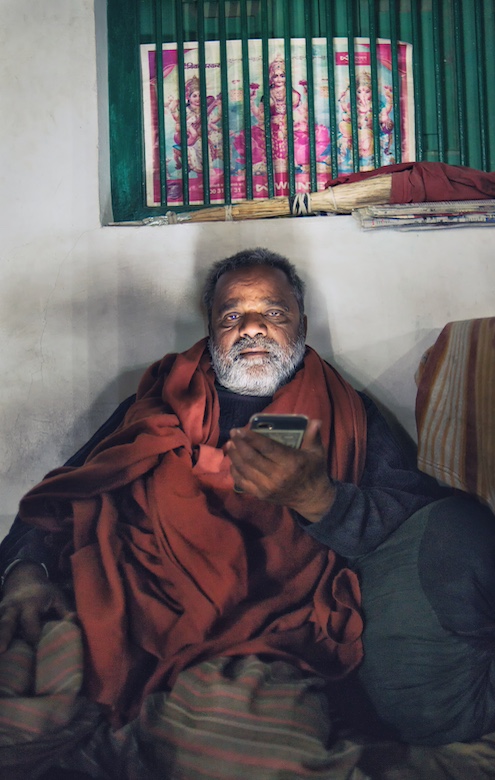
But over the past year+, I’d started to notice two things. One was how the almost-electrical “zap” of devastating news from around the world increasingly affected my nervous system. Just when I was experiencing the nervous system zap of one story—before my heart even registered what I was feeling—I was on to another. Yet until logging off I hadn’t realized just how intensely my nervous system was affected. Without Meta, I feel more steady and calm. I still follow news on NPR and the New York Times and to some degree other news outlets, so I continue to stay informed. But I’m not zapped repeatedly.
Because I care, I am impacted by the everything everywhere all at once. And I don’t believe we are built to be engaged in this way. Even journalists who delve deeply into fact-finding and reporting mostly focus on one region or continent. Because of the barrage of social media, ours is the first people-group in history to be hit by so much at once—to daily have awareness of all manner of suffering going on around the world—so many painful stories. Our nervous systems were not built for this.
The Drive Home That Made Me Cry Again
Recently, I had a conversation with a friend where I admitted I used to shed tears frequently but now rarely cry. I’d noticed how my heart felt more shut-down than in the past.
So, I was struck by an experience I had about two weeks into my social-media hiatus. I was driving home from a grocery run and passed an area where locals gather to show solidarity around different issues. (My husband and I periodically join a group there on Saturdays to protest the administration.) As I passed this area on my way home from the store, a group was standing in solidarity with Gaza. A young man stood at the edge waving a huge Palestinian flag. As I saw him and thought of how parts of Tehran were starting to look like Gaza, I was moved and my eyes overflowed with tears. Three blocks from that intersection, I saw a dead squirrel in the middle of the road. More tears. My across-the-street neighbor feeds a squirrel by hand everyday on the fence in front of his house, and I thought of him and his squirrel. Then I passed a house where a woman was holding onto a rope attached to the crown of a dead tree as her husband prepared to chainsaw it down, so she could direct it away from their house; I was moved by their cooperation and remembered times I had done this task myself. One more block, and I was passing my husband in his antique truck as he headed off to his poetry group, and we waved. By this time, I was crying. My heart felt a-jumble with sadness and beauty, brokenness and solidarity.
Why I Want to Stay Soft to the World
I know people who would prefer not to feel things strongly and not to cry. Not me. I want to feel alive enough to be affected by things that move the human heart—not only suffering, but also nature and art and acts of goodness. Yet so many things work against our soft awareness.
In my pre-Lent article, I wrote:
“Since consciousness means the thoughtful awareness of what is going on within and around us, good consciousness hygiene means keeping this awareness keen and sensitivity acute. Bad consciousness hygiene allows the window of our awareness to get so mucked up we cannot ‘see’ clearly and allows our sensitivity to get so stopped up that perception and emotion cannot flow.”
As I work at consciousness hygiene, I hope my awareness and sensitivity become more and more acute.
My Plan for Returning to Social Media After Lent
There are some advantages to being on Facebook and Instagram, and after Lent I will log on again. But I hope to find a way to do so differently. For now, my plan is to set an alarm and once each evening to get on briefly to check in with people and perhaps to share. I’ll try to avoid activities that accrue revenue for the company. Maybe I’ll let you know how it goes.
If you liked this article, please leave me a comment below; I am interested in your perspective. To support my writing, please subscribe and share with a friend!

Wren, winner of a 2022 Independent Publishers Award Bronze Medal
Winner of the 2022 Independent Publisher Awards Bronze Medal for Regional Fiction; Finalist for the 2022 National Indie Excellence Awards. (2021) Paperback publication of Wren , a novel. “Insightful novel tackles questions of parenthood, marriage, and friendship with finesse and empathy … with striking descriptions of Oregon topography.” —Kirkus Reviews (2018) Audiobook publication of Wren.














 Ad-Free & Subscriber Log-In