


Even people who are not followers of Jesus often acknowledge that he was a spiritual genius, even a healer. He had a beautiful, vivid, hopeful way of articulating God’s dream for the world. But throughout most of history, spiritual geniuses and wonder workers, those offering an alternative measure of worth, in the world haven’t fared very well with those in power. A confrontation always seems to arise between those who measure things according to a materialistic, this-life-is-all-there-is rubric, or a power rubric, and spiritual masters like Jesus who tell us our ability to see or to discern value is quite limited without divine guidance.
The gospels tell us that Jesus could see the confrontation on up ahead. But his followers couldn’t see it. Or they wanted him to powerfully stop any confrontation that might harm him. Of course they wanted this! They wouldn’t hear of him suffering, or especially, being killed.
Yet Jesus uses harsh words to rebuke Peter when he resists this predicted reality. He tells his disciples that not only will he be killed, but they too will have to deny themselves and “take up their cross” to follow him. This wasn’t literal in every case (not all of Jesus’ followers were martyred—in particular, many of the women were spared a violent death). But in a figurative or metaphorical way, we all have to take up our cross. As Jesus says, this is how we gain our life. Because once you know the truth, choosing it is the only way to be alive. When we know God’s dream for the world but we live as if we don’t know, because we don’t want to sacrifice anything, we suffer a kind of spiritual death.
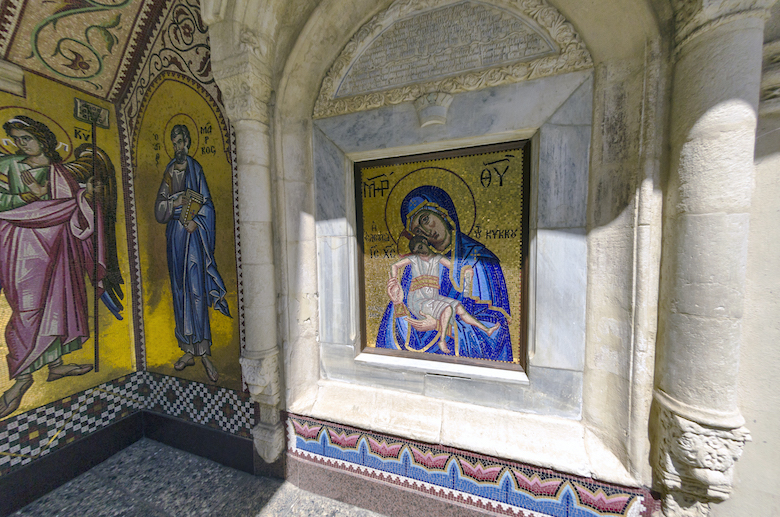
Losing your life to find it
What is remarkable is how fully Jesus’ followers did actually “take up their crosses.” These people who had walked with Jesus, learning from him and loving him as a friend—they were truly changed. Evidently for the first few hundred years after Jesus’ death, Christians lived counter-culturally, often living in community and pooling resources, sharing things amongst themselves. They also lost a great deal as they were rejected by different factions of their social circles and as they faced intense persecution within the Roman Empire. Indeed, many of them were literally killed.
In our day, it’s sometimes hard to know what it means to take up your cross. But there are ways we are challenged each day to “lose our life” for the sake of something grander than ourselves. This might look like serving others rather than living to amass money and power. In the modern western context, faithfulness to transcendent concerns can feel like a small death. We are also taught by our culture to take revenge on those who oppose us, when Jesus teaches us to love others as we love ourselves, and to forgive. Sometimes forgiveness can feel to the ego like a kind of death. In the moment we are in as Americans, “taking up your cross” can mean taking risks to speak up for and stand up for those being persecuted.
The point is, Jesus’ followers are still being challenged to take up our cross. What it means in my case, what it means in your case, will look different than it looked for Peter. But how does it look? What does it mean for you to give up your life in order to find it?
If you liked this article, please leave me a comment below; I am interested in your perspective. To support my writing, please subscribe and share with a friend!

Wren, winner of a 2022 Independent Publishers Award Bronze Medal
Winner of the 2022 Independent Publisher Awards Bronze Medal for Regional Fiction; Finalist for the 2022 National Indie Excellence Awards. (2021) Paperback publication of Wren , a novel. “Insightful novel tackles questions of parenthood, marriage, and friendship with finesse and empathy … with striking descriptions of Oregon topography.” —Kirkus Reviews (2018) Audiobook publication of Wren.
















 Ad-Free & Subscriber Log-In