

A question to which I keep returning is whether science fiction is fundamentally different than fantasy. Both have worlds very different than our own, battles between good and evil, monsters, heroes, and usually even energy weapons of some sort.
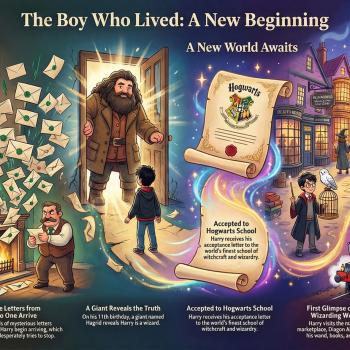
 Obviously the difference is that there is at least a pretense of scientific basis in science fiction. But if we are honest, is there anything obviously more scientific about Rose’s raising of Jack Harkness than Jesus’ raising of Lazarus? Is there anything fundamentally different between Harry Potter’s magic wand and the Doctor’s sonic screwdriver? Do the references in Star Wars Episode IV: A New Hope to Darth Vader’s “sorcerer’s ways” and Ben Kenobi as a “wizard” in fact tell us something significant?
It is possible to view sci-fi as simply a way of enjoying fantasy, classic stories of the miraculous and the supernatural, while claiming that one is wedded to a scientific, naturalistic worldview. But if we think about it, in actual fact many of the things that transpire even in the rather secular and humanistic world of Star Trek involve souls and psi and other things that are scarcely scientific. If Doctor Who were to be changed to a story about a wizard who lives in a magical box that is bigger on the inside than the outside, and can travel in it through space and time, would much have to change in the show’s details?
What does this tell us about the desire even of those who adhere to a scientific view of the world for stories that feature the fantastic? And what does the persistence of the desire for such stories tell us about ourselves?











 Ad-Free & Subscriber Log-In