

Today in my Sunday school class we continued to discuss how we as Christians might, and should, view other religious traditions. To facilitate this, the pastor and I will provide an overview about some major world religions in next week’s class.
Providentially or coincidentally, I found that I had taken along as scrap paper some notes from a talk I gave at Butler, as part of a series called “Loving Your Neighbors, Understanding Their Faiths”. In it, I presented some Biblical reasons for Christians to expect to find they can learn from other religions.
I began with John 1, which emphasizes that the Word “enlightens every human being coming into the world”. That itself should lead us to expect that God is revealed not only in Jesus, or in the Bible, but elsewhere. More than that, the concept of the Word (Logos) is itself an example of something from another religious tradition (Stoic pantheism) that Jews and then Christians found they could utilize in expressing their own faith. After Taoism came up, I also mentioned the fact that, when the Bible was translated into Chinese, the translators rendered John 1:1 as “In the beginning was the Way (Tao)”.
Acts 17 is another key text in thinking about this subject. There we see Paul disagreeing with Greek idol-worship, but we also find him depicted in terms echoing the story of Socrates. In Acts 17:28 two Greek sources are quoted: “‘For in him we live and move and have our being’. As some of your own poets have said, ‘We are his offspring.'”
Epimenides’ poem Cretica is quoted twice in the New Testament. In the poem, Minos addresses Zeus thus:
They fashioned a tomb for thee, O holy and high one—
The Cretans, always liars, evil beasts, idle bellies!
But thou art not dead: thou livest and abidest forever,
For in thee we live and move and have our being.
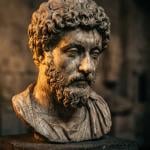
The other text quoted in Acts 17 is “We are his offspring” from the Cilician poet Aratus (c. 315-240 BC) in his “Hymn to Zeus”. And so clearly the author of Acts did not think that what was said about Zeus could not be applied to God as understood by Christians.
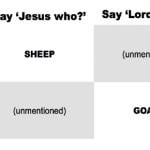
We also touched on Romans 2 and the parable of the sheep and the goats, both of which suggest that it may be more important what we do than the doctrines that we hold. Paul’s choice of Abraham as an example of saving faith points in this direction too, since Abraham probably didn’t assent to anything in the Nicene Creed beyond “We believe in one God”.
So can Christians learn from other religions? Yes, we already have, and there is no reason in principle why Christians today ought to take a more negative view of other religious traditions than the New Testament authors themselves. I hope one day to write a commentary on Romans that will unleash the power of its message for our time, a message that I understand to be addressing an exclusivistic view of salvation that I fear much contemporary Christianity resembles rather than opposes. It is time to reclaim this element of the New Testament message, that “there is no partiality with God“, and to affirm with Peter in Acts 10:34-35, “Indeed, whoever fears him and does what is right is acceptable to him in any nation.”












 Ad-Free & Subscriber Log-In