

Given the coincidence of the release of Iron Man 2 and the celebration of the Ascension in the Christian calendar, I thought I’d adapt and repost this blog post from a couple of years ago:
Someone made the above statement in a conversation we were having, and I immediately thought of something mentioned in chapter 5 of Keith Ward’s book The Big Questions in Science and Religion
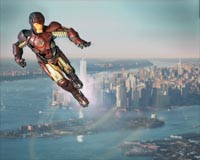
I then found myself thinking about the movie Iron Man
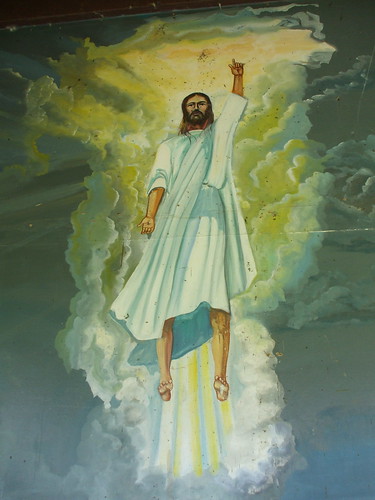
In the same chapter already mentioned, Ward writes (p.109), “Sacred space is primarily symbolic space, and it is possible that the literalization of such symbols already presages a loss of archaic religious sensibility.” The idea is that literalism, far from being a quest to preserve the past understanding of sacred texts and ancient cosmology, badly misconstrues them. Conscious literalism is always something significantly different than naive literalism, as Borg helpfully points out.
The key focus in this chapter of Ward’s book is that the language traditionally used about God and spiritual things has been explicitly acknowledged by theologians then and (for the most part) now as being metaphorical, symbolic, pointers to a reality that is infinite and indescribable. Attempts at literalism do not, therefore, simply lead to bad science and cosmology. They represent a radical departure from what religion has meant in the past, too. The irony is that those who claim to be “literal” also claim the label “conservative”, and yet the approach of fundamentalists is thoroughly modern and departs from the historic perspective of their faith tradition in important ways.
I’ll close by adding a quote from James D. G. Dunn which I’ve also shared on this blog before: “To demythologize the ascension is not to deny that Jesus “went to heaven”; it is simply to find a way of expressing this in language which takes it out of the realm of current or future space research” (James D. G. Dunn, in his article “Myth” in the Dictionary of Jesus and the Gospels














 Ad-Free & Subscriber Log-In