

Carl Jung gave modern spirituality a powerful gift. He offered a language that made myth intelligible again, that allowed symbols to speak to a generation increasingly allergic to dogma. Archetypes, the collective unconscious, the heroic journey—these ideas rescued religious imagery from the scrap heap of superstition and placed it inside the mind, the psyche–where it could be studied, respected, and even revered. But something subtle happened along the way. In translating God into an archetype, we may have saved meaning while quietly losing encounter.
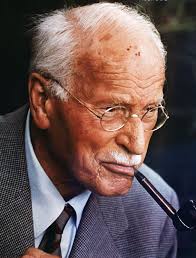
For Jung, gods were not dismissed. They were real—psychologically real at least. The divine lived in the deep structures of the psyche, expressing itself through recurring patterns and symbols across cultures. Yahweh, Christ, Dionysus, and Osiris were not illusions; they were manifestations of something universal within the human soul. This was a compassionate move, a compromise in a way, especially in an age when scientific materialism threatened to flatten everything sacred.
Yet for many spiritual seekers today, Jung’s framework has become not a bridge but a destination. God is no longer someone you meet, pray to, or wrestle with. God is something you interpret. An image. A pattern. A mirror.
The shift is subtle but profound. When God becomes an archetype, prayer becomes self-reflection. Revelation becomes insight. Grace becomes integration. Sin becomes imbalance. Salvation becomes wholeness. None of these are wrong, exactly—but they are incomplete.
Archetypes explain meaning. They do not generate presence.
There is a difference between understanding the symbol of fire and standing before a flame. One warms the intellect; the other can burn, illuminate, and transform. Traditional religious life—at its best—was built around this distinction. God was not merely meaningful. God was other. God acted, disrupted, called, demanded, and loved in ways that could not be reduced to internal psychic processes.
Jung himself seemed to sense this tension. He often spoke with awe, even fear, about the autonomy of archetypal forces. They were not inventions of the ego; they seized, overwhelmed, and possessed. In this sense, Jung did not domesticate the gods as much as relocate them. But his followers sometimes did what he would not: they turned living powers into therapeutic metaphors.
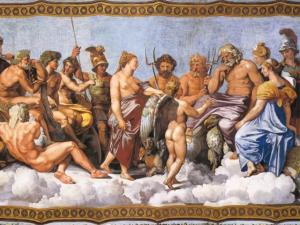
This is where something essential gets lost.
If God is only an archetype, then God cannot surprise you. God cannot contradict you. God cannot ask for anything that your psyche has not already authorized. The divine becomes safe, manageable, and ultimately subordinate to interpretation. You are never encountered; you are only decoded.
Historically, mystics across traditions insisted on the opposite. Whether in Christian, Jewish, Islamic, or Hindu contexts, the divine was described as a presence that exceeds the self. God breaks in. God wounds and heals. God is known not only through symbol but through encounter—often destabilizing, often costly.
This does not mean archetypes are useless. On the contrary, they may be essential. Symbols prepare the ground. They tune perception. They train the imagination to recognize patterns of meaning. But symbols were never meant to replace the thing they point toward. An icon is not the saint. A map is not the territory.
Perhaps the task now is not to abandon Jung, but to complete him.
What if archetypes are thresholds rather than endpoints? What if they are the language through which the soul learns to recognize realities that are not reducible to the soul itself? What if the archetype of God is not God, but a doorway through which encounter becomes possible?
In an age fluent in psychology but starving for transcendence, this distinction matters. Meaning alone is not enough. We do not only want coherence; we want communion. We do not only want to understand God; we want to meet Him.
If God is still alive, He must be more than an idea we recognize. He must be a presence that recognizes us first.
You can view this column’s accompanying video here https://youtu.be/UDe9nVzl-Xs











 Ad-Free & Subscriber Log-In