

After Jesus died, his followers faced an uncomfortable question: who was supposed to lead next? Religious movements rarely survive on inspiration alone. Eventually someone has to step forward—someone to guide the community, settle disagreements, and carry the spirit of the founder into the future.
One of the earliest Christian texts, the Gospel of Thomas, captures this tension in a way that later tradition rarely acknowledged. When the disciples asked Jesus, “We know you will leave us—who will lead us then?” his answer was straightforward: “Go to James the Just, for whose sake heaven and earth came into being.” This isn’t metaphorical language. It’s a clear answer to a clear question, naming a real person as the one to look to next.
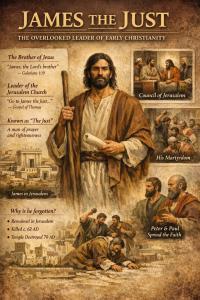
For many readers today, that line hits differently. Most of Christian history is shaped by stories of Peter, Paul, and later institutional leadership. But here, Jesus seems to point to James — not Peter — as the one tied most closely to the continuing life of the early community.
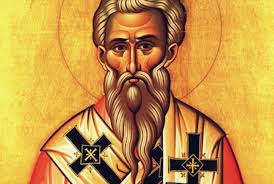
James wasn’t just another follower. According to the New Testament, he was Jesus’ brother, mentioned alongside his siblings in the Gospels and referred to directly by Paul, who called him “the Lord’s brother.” In the first century, family connections carried weight. Leadership often grew out of family reputation and the trust it engendered. James also had a reputation for integrity so pronounced that early writers called him “the Just.”
In the early years after Jesus’ death, James became the central figure in the Jerusalem community — the heart of what we now call early Jewish Christianity. Paul refers to a meeting in Jerusalem where James shared authority with Peter and John, and the book of Acts highlights James’ leading voice at the Council of Jerusalem, where the first major debate about Gentile converts was settled.
So why isn’t James a household name the way Peter and Paul are? The answer lies less in theology and more in history. James stayed in Jerusalem. He lived his life there, led there, and died there — likely in the early 60s AD during a period of political upheaval in Judea, possibly executed under the Jewish authorities.
Jerusalem itself was the center of the first Christian movement, but it did not survive intact. In 70 AD the city and its Temple were destroyed, and the heart of Jewish Christianity was scattered. Leaders whose authority was rooted in place and community — like James — saw their influence fade. Others, like Peter and Paul, whose mission carried them outward, became the faces of a growing Gentile Christianity that developed into the institutional church most are familiar with today.
James’ legacy is subtle but profound. He represents a time when early Christianity was still deeply intertwined with Jewish tradition, moral earnestness, and a tight‑knit community rooted in life in Jerusalem. His leadership was less about titles and hierarchy and more about lived example and moral grounding.
Today, few people know his name outside academic circles or liturgical calendars. But if we revisit those early moments — the decisions made, the voices that shaped them — James emerges as someone worth remembering. Not as a rival to Peter or Paul, but as a reminder that the earliest Christian leadership was far more diverse and complex than later tradition often lets on.









 Ad-Free & Subscriber Log-In