

By Hannah Limov
Parshiot Achrei Mot-Kedoshim (Leviticus 16:1-18:30, 19:1-20:27)
Dreaming is serious business.
I spent my childhood running around our California ranch land with friends building imaginary homes, fences, and societies amongst the bushes and the trees.
While we knew that these worlds of magic were all imaginary, we also argued — fiercely — about who was on which team, where the “property lines” would get drawn, and what creatures we each would be. Passionately separating This from That, feelings inevitably got hurt. Apologies were made. And then we would dive right back into playing. Hurt and Repair in the same breath as Creation.
Like any child, this process of demarcating the finest minutiae of what we were doing, how we were doing it, and with whom, was a mark of how deeply invested we were in the project of building a world that we knew was not real and would never come true.
And yet, we built that world anyways.
After the death of Nadav and Aviyu, we do not hear of Aaron’s sons again until the beginning of this week’s parasha, Achrei-Mot, when we read that “G?d spoke to Moshe after the death of the two sons of Aaron who died through their drawing close before G!d.” (Leviticus 16:1).
Grief has in the past numbed my body and my soul, making me feel like it is impossible for a new world to be created again. I find it deeply poignant, then, that six chapters after the traumatic death of Nadav and Avihu — the deaths that left Aaron speechless – the next we hear of them is as an introduction to the service that has been reinterpreted as having the power to make the world whole again.
In detail, the Torah describes the sacrificial process the grieving father Aaron must do to “make expiation” for himself, his household, and all of Israel so as not to be punished for their sins with death (Lev 16:7). The text carefully lays out what will become the basis for the Avodah Service of Yom Kippur — our day of teshuvah, of Divine At-One-Ment (atonement).
Commenting on the death of Nadav and Avihu, I am struck by what Mei HaShiloach — the Ishbitzer rebbe’s 1860 book of Hasidic commentary on the Torah – shares:
“The death of Nadav and Avihu is related to what is said in the Pirkei Avot, ‘Who is wise? He who sees what will be born in the future.’…they would bring themselves close to God, looking into the hidden depths, and wanted to stand on the refined, undressed truth of God’s conduct…Their hearts burned with such an intense love of God that they gave over their very lives.”
The Ishbitzer says that it was not alcohol or inappropriate sacrifices that caused G?d to kill Nadav and Avihu, but instead their desire to “see what will be born in the future:” intimate closeness with the Divine without boundaries or borders. Whether it was as negative punishment or positive embrace, the result of their passion was death.
From the depths of Aaron’s grief, Parshat Kedoshim then gives over a detailed account of how to re-build a future world once atonement has been enacted. We learn to leave the corners of our fields for the poor (Lev 19:10), to not insult the deaf or place a stumbling block before the blind (Lev 19:14), and, controversially, that a man should not lie with a man like he lies with a woman (Lev 20:13). However, most famously, we learn that “You will be holy, because I, your G?d, am Holy (kadosh)” (Lev 19:1).
Kadosh can mean “holy or sanctified,” but it can also mean “to separate, to demarcate.” Separation itself becomes an act of sanctification.
In opposition to Nadav and Aviyu’s desire to have unbounded closeness with G?d, Kedoshim establishes for us the specifics of sacred separation. The process of demarcating Right from Wrong, The Powerful from The Powerless. Kedoshim teaches us that to discern is to make holy.
And so I like to play with the Ishbitzer’s commentary and imagine that perhaps Nadav and Avihu thought that their passion alone could bypass the hard, painful, and beautiful work of teshuvah; of daily having to discern what will make a more whole and holy world.
Maybe knowing that this thinking was futile, the Holy One separated them from the world and took them in death.
And yet, in making another separation between Torah and Commentary, our Talmudic Rabbis spent sugya after sugya debating when someone should be punished with death for the exact reasons listed in Achrei Mot and Kedoshim; fiercely debating their values and vision to the point of making the death penalty so onerous as to never be enacted at all. In contradiction to much of this week’s parashiyot, our Rabbis chose life.
However, my teacher Matthew Hass has shared that while the Rabbis did have control over civil cases, being under Roman rule, they never had control over capital cases. Meaning our Sages spent page after page debating the death penalty out of existence, knowing that they would never be able to bring that vision of a liberated world into being.
There are days when I am exhausted by this world. When the moral injury of witnessing the erosion of our democracy, of learning of yet more neighbors being ripped from each other’s arms, of wars being done in our name, of experiencing my rights and humanity as a trans person scorned on the national stage all becomes too much.
There are times when it feels like another world is not possible.
adrienne maree brown writes that “Dreams are the foundation for what we attempt to turn into reality…every garden we find nourishing was first a dream.”
Nadav and Aviyu’s dream of Divine Unity was not sinful, but rather the process by which they hoped to achieve it. Their dream, their death, the Avodah Service, the Commandments of Kedoshim, and the resulting Commentaries remind me that the work of liberation is hard — and holy. Just like my childhood friends and I fighting fiercely for a magical world we knew would never come into being, to engage in the holy act of discernment in the face of uncertainty is Divinity incarnate.
And so in the face of the daily harms & heartbreak we are experiencing, may we be gentle with our grief, knowing it can be a crucible into a new way of being. May we take our dreaming seriously, for we do not yet know what future will be born. And may we continue fighting, detail after precious detail, for a more whole and liberated world, even and especially when we do not know if that world will ever exist.
Maybe this is what it means to be a holy people.
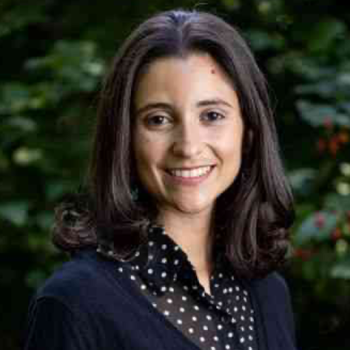
Hannah Limov (they/them) is a Shana Gimmel rabbinical student at Hebrew College. They are passionate about uplifting hidden or erased voices in our Jewish tradition; and having spent many years working in Jewish education and nature-based Jewish spaces, they believe in the power of silliness, play, and the outdoors to connect us to the deepest mysteries of Torah. Hannah holds a Master of Social Work, and in a previous lifetime primarily worked with families experiencing domestic and sexual violence. When not at school, they love to sing with friends, walk in the Arboretum, and do anything in the world for their little kitty Lily.









 Ad-Free & Subscriber Log-In