

By Alyssa Coffey
Parashat Noach Genesis 6:9-11:32
While I was blessed with a meaningful High Holy Day season this year, I must confess that, as Sukkot stretched on, I was feeling slightly less than joyful. The news out of Israel and Palestine – the return of all living hostages to Israel, the cessation of fighting in Gaza – left my heart overflowing with hope and breaking in multiple directions at once. Between Chag, Erev Chag, and Shabbat, I scarcely ever knew what day it was. A sense of malaise settled upon me like shriveled leaves. (Surely, this had nothing to do with eating my meals in a windswept hut.) The holiness of the calendar and its liturgies surrounded me, and what did I yearn for? The sanctity of routine.
And so, in some sense, it is fitting that after the excitement of beginning anew with Parashat Bereshit, in the first week of our returning to fragile routine, we read Parashat Noach, which tells of an exceptionally disorienting series of events: Divine regret, human misadventure, the selection of our title character, a flood of violent and catastrophic portions – and a slow, steady return to a ‘new normal,’ an entrance to relationship with God. I imagine the ark floating upon the receding floodwaters – bobbing gently, unaware of how long until the base of its hull will yet touch land, as Noach and his family inside contemplate the simultaneous length and brevity of daylight hours.
Before this, we are re-introduced to Noach in the first verses of our Torah portion, by the names of his sons and his most notable quality:
אֵ֚לֶּה תּוֹלְדֹ֣ת נֹ֔חַ נֹ֗חַ אִ֥ישׁ צַדִּ֛יק תָּמִ֥ים הָיָ֖ה בְּדֹֽרֹתָ֑יו אֶת־הָֽאֱלֹהִ֖ים הִֽתְהַלֶּךְ־נֹֽחַ׃
These are the generations [offspring] of Noach.
Noach was a righteous, wholehearted man in his generation;
in accord with God did Noah walk. (Gen 6:9)
Why is Noach’s name repeated? Why does the text give us a secondary clause about Noach’s righteousness in between announcing his lineage and listing his children in the next verse? Upon the (seemingly) extraneous mention of his name, a midrash offers the following:
אֵלֶּה תּוֹלְדֹת נֹחַ נֹחַ, אֶתְמָהָא, לָא הֲוָה צָרִיךְ קְרָא לְמֵימַר אֶלָּא אֵלֶּה תּוֹלְדוֹת נֹחַ שֵׁם, אֶלָּא נְיָחָא לוֹ, נְיָחָא לָעוֹלָם, נְיָחָא לָאָבוֹת, נְיָחָא לַבָּנִים, נְיָחָא לָעֶלְיוֹנִים, נְיָחָא לַתַּחְתּוֹנִים, נְיָחָא בָּעוֹלָם הַזֶּה, נְיָחָא לָעוֹלָם הַבָּא
“These are the offspring of Noach; Noach” [Gen 6:6] – this is surprising! Should it not have said: “These are the offspring of Noach: Shem…?” The second occurrence of his name is, rather, [alluding to the idea that Noach brought] a relief [neyakḥa]. “Noach, Noach” is interpreted as “neyakḥa, neyakḥa” – double relief: [this is why Noach’s name appears twice.] To signify relief for himself, a relief for the whole world; a relief for the ancestors, a relief for their descendants; a relief for the heavenly, a relief for the earthly; a relief in this world, a relief in the World to Come. (Bereshit Rabbah 30:5)
This midrash emphasizes the phonetic resonance between the word for relief (neyakha) and the consonants in Noach’s name. In an interpretive move, the repetition becomes a message of relief and total respite for all, in both the World As it Is and in the World to Come. Where is this relief? Is neyakha the flood itself – the dramatic disruption of normalcy and routine – or its aftermath, the establishment of a new, unfamiliar yet regulated, way of being?
Rabbi Isaac Luria, the 16th century rabbi and early Jewish mystic teaching out of Sefad, offers the following commentary on this midrash, emphasizing the significance of God’s own spiritual rest:
נייחא. היפך “ויתעצב אל לבו” תחלה (ואותיות נח הוא נייחא) וע”י היה נייחא לכביכול מהעצבון. כמ”ש וירח ה’ את ריח הניחוח. שהוא לשון נחת רוח
“Neyakha – Relief”
This is the opposite of “and God had sorrow in His heart,” written above (Gen. 6:6). The letters of Noach’s name are contained in the word neyakha/comfort. On account of Noach, there was respite and relief for God from God’s sorrows. Elsewhere it is written “and God smelled the pleasant aroma (re’akh ni’khoach; Gen 8:21). This is the language of nachat ruach: contentment or satisfaction, spiritual rest [which also contains the letters of Noach’s name.]
Luria explains neyakha with reference to two other verses which precede and follow it in Genesis. Neyakha, Luria suggests, is the opposite of God’s sorrow (6:6); and it is further connected to the pleasing smell of Noach’s offerings to God upon his exit from the ark, after which God promises not to bring similar destruction upon the world again (8:21). Both God’s sorrow and God’s promise are extremes: how can we find respite and balance between the two?
Freshly out of the High Holy Day season, this spiritual rest (nachat ruach) reminds me of a famous piece of liturgy. In the U’ntaneh Tokef prayer, about the power of these Awesome Days, we assert God’s knowledge of “mi yihyeh u’mi yamut – who shall live and who shall die; mi ba’eish u’mi ba’mayyim – who by fire and who by water… mi yanuakh u’mi yanu’a: who shall have rest and who shall wander.”
We enter the month of Marcheshvan on the tails of a season of extreme statements and ultimate questions – the seriousness of Yom Kippur next to the joy of Sukkot, the joy of Simchat Torah next to the heaviness of the world – a season where all hangs in the balance. At this time, it is helpful to recall that it is precisely this balance which can help us stay alert to God’s world. Like a sukkah in the wind, the key to stability is not constancy in the environment, but having firm foundation and basis so we are able to be flexible as our surroundings change. Similarly, it is this sense of readiness – of attuneness and awakeness – that might help us merit rest and routine in the days and weeks ahead.
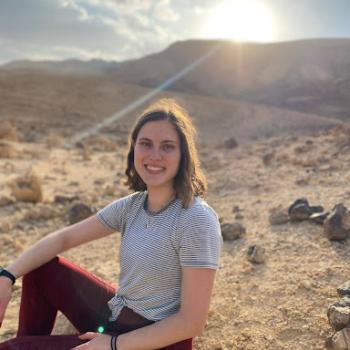
Alyssa Coffey (she/her) is a rabbinical student at Hebrew College, where she also serves as Editor of the 70 Faces of Torah blog. Prior to rabbinical school, she studied religion and history at Hampshire College, worked at a Jewish social service organization in Chicago, and spent two years studying in Jerusalem at Pardes. When not learning Torah, Alyssa is often knitting, spinning yarn, or solving puzzles.












 Ad-Free & Subscriber Log-In