

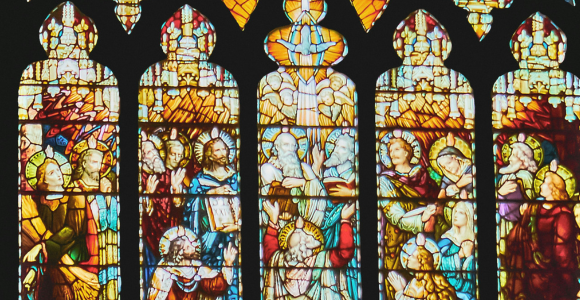
Today, we could interpret the dramatic arrival of the Spirit in our reading, like a rushing wind, as a disruptive force that challenges the status quo. Justice often emerges in moments that unsettle comfort and expose inequality. The wind filling the entire house could symbolize how movements for justice cannot remain contained but spread, reaching into every corner of society and demanding attention.
Welcome Readers! Please subscribe to Social Jesus Here.
This is Part 2 of the series Lessons from Pentecost
(Read this series from its beginning here.)
The image of “divided tongues, as of fire” resting on each person is also especially meaningful in this context. Each individual receives the same Spirit, affirming their equal worth and shared empowerment. This speaks to the idea that no one is excluded from the capacity to speak, act, and lead. Power is not centralized but distributed among the people. Yet in our time, the major sectors of Christianity still fail in this area. Whether by not granting women the same access to ministry as men, or in excluding those of faith who also identify as LGBTQ, Christians fail to grasp the full imagery and lessons of Pentecost.
Perhaps the most striking detail in our story is the ability that these followers received to speak in different languages. This reflects a radical inclusivity: people are not required to conform to a single dominant culture or voice. Instead, their differences are honored and made intelligible to one another. This story calls for listening across barriers, whether linguistic, cultural, and social, so that marginalized voices are not erased but amplified.
Ultimately, Pentecost reveals a vision of unity that does not erase diversity. It models a community where differences become strengths and collective empowerment leads to transformation. In this way, the passage challenges us to build a more just world grounded in equity, participation, and the courage to embrace our human diversity.
Debates over diversity, equity, and inclusion (DEI) often reveal a tension between fear of change and the hope for a more just community. Critics sometimes object to DEI by arguing that it disrupts tradition, lowers standards, or creates division by emphasizing differences. Beneath these objections, thought, there is often a deeper concern: uncertainty about shifting cultural norms and a perceived loss of familiarity or control. Diversity, equity, and inclusion, however, are not division, but efforts to ensure that people of different backgrounds are seen, heard, and treated fairly.
A striking parallel appears in our Pentecost narrative this week. We’ll pick up here in Part 3.
Begin each day being inspired toward love, compassion, justice and action. Free.
Sign up at HERE.












 Ad-Free & Subscriber Log-In