

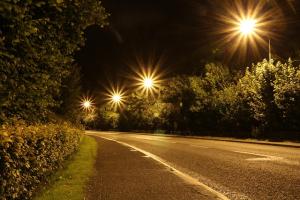
I met a new friend at nearly midnight, last weekend.
Michael had just gotten off a late shift. It was quite dark and chilly. One of his regular customers was still in the restaurant as he ate his dinner after a twelve hour shift. The customer was on the phone, arguing loudly with a cab company.
I suppose that Steubenville is the only place on earth where you can’t get an Uber or a Lyft. Back when I didn’t have a car, I couldn’t afford a smartphone either, but anyone who tried to use those apps here said they’d never get a rideshare no matter how long they waited. As for me, I’d walk or take the bus. If I had to get somewhere where the small Steubenville bus route didn’t go, I had to ask a friend to take me. And if a friend couldn’t, I didn’t get to go. I am sure many people can manage just walking or taking buses, if they live in great big cities with lots of transit. Steubenville is a town of eighteen thousand people, up and down the sides of the foothills of Northern Appalachia. The small towns surrounding Steubenville are miles down the freeway or a breakneck country road. There’s simply no easy way to get anywhere, from here, without a car. I can’t describe how exhausting and isolating it is when you don’t have your own transportation.
This lady was arguing with a rather notorious cab company. This company only has a few drivers and tends to make you wait for hours, so you have to call them far ahead of time if you’re depending on a ride. Michael overheard that the lady had waited much longer than usual, for her ride back to Pottery Addition. They were about to close the restaurant, and her groceries she carried with her were in danger of spoiling.
Pottery Addition is four miles away as the crow flies, around a tricky bend in the Ohio: it takes ten minutes to drive there, but four hours to walk. The cops will give you a ticket if they catch you hiking on the berm of the freeway, but that’s the only possibly way you can walk to Pottery Addition. There isn’t a walking trail.
Michael quietly explained the situation to me. Then he approached the lady.
Next thing I knew, she was packing grocery bags and a great big bale of paper towels into my trunk.
The lady was thankful and relieved. She was also quite angry at the cab company, who’d kept her waiting for hours and was now insisting that they’d already dispatched a driver, which meant she was obligated to pay the whole fare. She tried to protest that there’s no way they sent a driver. The cab dispatcher hung up on her. She called again and yelled at their voicemail for a bit while I made my way down the main arterial of Steubenville, which is called Sunset Boulevard when it passes the middle school and Washington Street when you get downtown. She was still arguing as I made my way onto Route Seven by the river, heading north.
That stretch of the freeway isn’t well lit. I don’t think I was supposed to have my brights on, but I still couldn’t see too well even with them. To the right of me was the Ohio, the most polluted river in the entire United States, a ribbon of wine-dark industrial waste that eventually joins up with the Mississippi. I could barely see it: the moon glinting off the poisonous water, a streak of quicksilver dancing on a slick of black. To the left of me, across the southbound lane, were the shale cliffs that went up and up forever. To the right, to the east, was the rotting steel mill town of Weirton which I couldn’t quite see, and further east beyond the shale hills was Pittsburgh which was invisible. To the left, west of me, set high on top of those shale cliffs, was Franciscan University with all its pomps and works and empty promises. I’d never have ended up stranded here in Steubenville, if I hadn’t attempted to get my degree there and ruined my life. Far, far west, beyond Steubenville, up where the shale hills give way to plains, was Columbus, where I grew up, and where I don’t belong.
This fall, I will have been in Steubenville twenty years. I was not quite twenty-one when I came to Steubenville. I have been here half my life, and I don’t really hate it anymore.
I do wish they would get better lights on the freeway, though.
The lady hung up the phone and apologized for the yelling. She narrated the dispatcher’s side of the conversation, while I tut-tutted about how ridiculous they were to expect money for no work. At one point I thought I’d missed the exit in the dark, but the lady said that everybody who goes to Pottery Addition thinks that and they’re always wrong. Just stay in the right lane, and take the sign that says “East Liverpool.” East Liverpool is a town of ten thousand people. Pottery Addition has only about three hundred. There aren’t many signs showing the way to Pottery Addition, because hardly anybody goes there.
We chatted as the lady directed me to her house, in a tiny narrow street in a tiny little neighborhood in a town so small it’s barely a dot on a map. We talked about all kinds of things: the high prices of everything, how hard it is to get around without a car, the time she left her purse on a shelf at the grocery store and some good-for-nothing stole her wallet. She insisted on paying me for gas as Michael brought her groceries up to her porch. I didn’t like to take the cash, but things being what they are, I needed it.
I thought it would be confusing to zigzag through that neighborhood again and find the way home, but it wasn’t any trouble. Pretty soon we were on Route Seven again. To the left of me was the Ohio, a black ribbon of ooze with a quicksilver sparkle. To the right were the shale cliffs that go up forever.
It’s not an important story. It’s just what I did this weekend.
None of my stories are important. They’re just me.
Life is a patchwork of thousands and thousands of unimportant adventures like this one.
Or else, life is a series of vitally important events, strung together so closely that you may be tempted to think none of them are important at all.
I’m inclined to think each moment is important.
I’m inclined to think the Kingdom of Heaven is here.
Mary Pezzulo is the author of Meditations on the Way of the Cross, The Sorrows and Joys of Mary, and Stumbling into Grace: How We Meet God in Tiny Works of Mercy.










 Ad-Free & Subscriber Log-In