

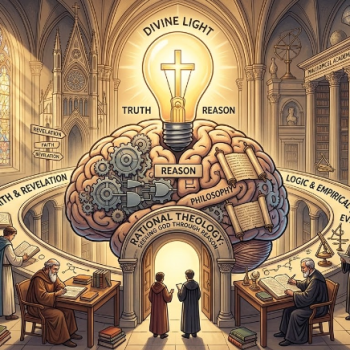
Theology has long been considered the “queen of the sciences.” Modernity is likely to scoff at such a label if it even considers theology a science at all. However, prior to the Enlightenment, science (scientia or knowledge) was considered to encompass theoretical subjects, such as philosophy and theology, as well as empirical subjects, such as the “hard” sciences.
If one accepts (as most of human history has) God as the source of knowledge, it is understandable that the study of God (theology) would be considered of paramount importance, certainly superior to the natural sciences.
In this essay, I will suggest a three-fold division of theology as it pertains to the Catholic Tradition. Schematically, Catholic theology can be conceived of as a structure supported by three pillars: Tradition, Scripture, and the Magisterium.
Sacred Tradition
One may question why I placed tradition as the first pillar of theology. After all, is not the Bible paramount? The reason is that Sacred Tradition is the efficient cause of Sacred Scripture, while Sacred Scripture is the final cause of tradition. That is to say that Sacred Tradition is the agent or cause of the Bible, while the Bible is the purpose or end goal of Sacred Tradition.
The word tradition refers to a handing on of beliefs and practices from one generation to the next. In this way, traditions help to connect the old with the young. Additionally, they also provide a kind of institutional memory for cultures. Similarly, Sacred Tradition refers to the important beliefs and practices passed down through the centuries from one generation to the next.
The New Testament sheds light on the relationship between Sacred Tradition and Scripture. Saint Paul writes, “Therefore, brothers, stand firm and hold fast to the traditions that you were taught, either by an oral statement or by a letter of ours.” (2 Thessalonians 2:15). As is evident from the passage, the early Church teachings combined Tradition (oral statement) and Scripture (letter of ours).
The Second Vatican Council’s Dogmatic Constitution on Divine Revelation observes, “It is not from Sacred Scripture alone that the Church draws her certainty about everything which has been revealed. Therefore, both Sacred Tradition and Sacred Scripture are to be accepted and reverenced with the same sense of devotion. Sacred Tradition and Sacred Scripture form one sacred deposit of the word of God, which is committed to the Church.”
From this, it is clear that the Catholic Church considers both Scripture and Sacred Tradition necessary for the practice of the faith. There are two essential ways in which Sacred Tradition affects Catholic theology. In the first way, it is synonymous with the oral tradition that would eventually be codified as Scripture. When one is cognizant of the fact that the Bible itself – as a compilation of seventy-three books – is a product of an ancient oral tradition, then the significance of this aspect of sacred tradition becomes evident.
The second manner in which sacred tradition affects Catholic theology is “post-Scripture,” so to speak. In this manner, driven by the Holy Spirit, the apostolic teaching becomes the teachings, liturgy, and practices of the modern Church, along with the work of the Magisterium.
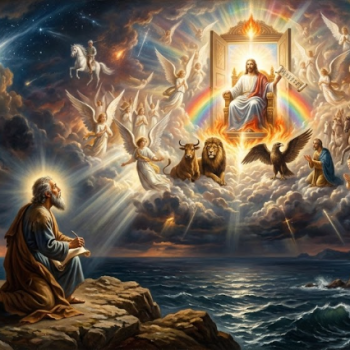
Moreover, it is Sacred Tradition in concert with the Bible that provides the beliefs and practices of Catholics. Nevertheless, there are aspects of the faith that draw almost exclusively from Sacred Tradition. With no discernible antecedent in Scripture (the possible exception being Revelation 11:19-12:1), the Church teaches that Mary was assumed into heaven. Despite the lack of Spiritual support, the Assumption of Mary remained an important belief in the early Church, and it has been passed down through the generations as part of Sacred Tradition. (In his work De Gloria Martyrum (Glory of the Martyrs), Saint Gregory of Tours records the apostles’ account of the Lord transferring Mary’s body to heaven).
Ultimately, Sacred Tradition makes Sacred Scripture possible.
Sacred Scripture
A note about language: technically, the term Scripture refers to any text considered sacred. As such, texts such as the Quran or the Hindu Vedas are considered sacred by their adherents. For simplicity’s sake, the use of Sacred Scripture in this essay is synonymous with the Bible.
If Sacred Tradition is the cause, or at least the environment, from which the Bible sprang, then the Bible is the ultimate goal or telos of that Sacred Tradition. The Bible, as the fruit of Sacred Tradition, is a collection of writings that the Catholic Church has recognized as inspired by God, though written by human beings. In 393 AD, at the Council of Hippo, the Catholic Church decided which sacred books then in circulation should be admitted to the Canon of the New Testament (the term for the 73 books of the Bible).
There is an obvious division when engaging with the Bible: the Old and New Testaments. The Catholic Church inherited from the ancient Israelites the 46 books of the Old Testament, to which it added the 27 books of the New Testament.
In one respect, therefore, the Bible is twofold literature, made up of two distinct collections that correspond to two successive periods in the history of man. The older of these collections, mostly written in Hebrew, corresponds with the many centuries during which the Jewish people enjoyed a national existence, and forms the Hebrew, or Old Testament, literature.
The more recent collection of writings, composed of Greek texts and beginning shortly after Christ’s ascension, is the New Testament literature. However, in another and deeper respect, the Biblical literature is preeminently one. Its two sets of writings are most closely connected in their revealed doctrines, recorded facts, described customs, and even the expressions used.
Above all, both testaments share the same religious purpose and the same inspired character. They form the two parts of a great organic whole, the center of which is the person and mission of Christ.
Catholicism asserts that the Holy Spirit guided the authors of the Bible, as well as guided the Church in her decision regarding the Canon of the New Testament. The work of the Holy Spirit in guiding the Church continues today as God informs the Magisterium’s work. (Article Two of the Catechism of the Catholic Church).
Magisterium
From the Latin word for “teacher,” Magisterium refers to the Catholic Church’s responsibility to protect the deposit of faith (the truths necessary for salvation), its authority and role in authentically interpreting God’s Word (Scripture and Tradition), and its guiding the faithful in matters of faith and morals, ensuring continuity with the Apostles’ teachings.
Three uses of the term “Magisterium” are frequently employed in theology. In the first sense, Magisterium refers to the teaching authority which Christ has given to the Catholic Church. (Matthew 16:18; John 20:23). In this context, the term is used abstractly to refer to the authority itself, not to the Pope or Bishops.
Second, the term refers to those who exercise this teaching authority. Here, Magisterium refers collectively to the Pope and the Bishops, who teach in union with him.
Lastly, the term can refer to a particular body of teachings that has been authoritatively proclaimed. This usage appears in statements like, “Humanae Vitae belongs to the magisterium of St. Paul VI.”
In addition to the three senses of the term, Magisterium can also refer to the ordinary and extraordinary Magisterium. Ordinary Magisterium involves the standard “day-to-day” teaching conducted by the Pope and Bishops. However, on occasion, the Pope must infallibly define a truth of the faith. In this context, the extraordinary Magisterium is synonymous with ex-cathedra (from the chair of Saint Peter). The Extraordinary Magisterium also refers to ecumenical councils, which are gatherings of the Catholic bishops of the world, along with the Pope, to decide on matters of the Church.
All of the above is intended to show that the Magisterium is the “living, teaching office” of the Church. Its job is not to be superior to Scripture, but rather to serve the word of God by teaching. It provides the definitive interpretation of both Scripture and Tradition, ensuring that the Gospel message is faithfully transmitted.
Conclusion
In this paper, I have suggested that the theology of the Catholic Church rests upon three pillars: Sacred Tradition, Sacred Scripture, and the Magisterium. While distinct in themselves, the three pillars cannot be separated if one is to come to a comprehensive understanding of the Church’s theology and teachings.
It is only Sacred Tradition together with Scripture, and interpreted and taught by the Magisterium, that contains the fullness of the deposit of faith.








 Ad-Free & Subscriber Log-In