


Excerpt from the book Copyright © 2025 by Karl Forehand
Shouldn’t Communication Be Better?
“You can tell whether a man is clever by his answers.
You can tell whether a man is wise by his questions.”
– Naguib Mahfouz
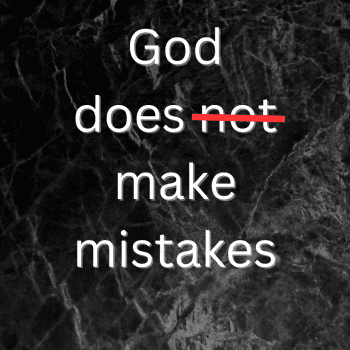
In the Bible, John refers to Jesus as the Word of God (logos, Gr.). Some Christians refer to the Bible, which was compiled hundreds of years later, as the Word of God. Discussing this with a Christian can be confusing, especially if they believe it is perfect or without error. If Jesus and the Scriptures were God’s primary communication with us, shouldn’t they have conveyed the message more effectively?
Vocabulary.com gives us this definition of logos, a Greek term John used that predates Christianity. “Philosophers have used the term logos since ancient times. Aristotle was the first to define the word ‘reasoned discourse’ and considered it one of the major forms of persuasion. Christians adopted logos to mean ‘the word of God,’ and Jungian psychology labels the rational part of the human mind as logos. Logos is a Greek word meaning ‘word, discourse, or reason,’ and it’s the root of logic.”
Some concepts, like Love Your Neighbor and the Golden Rule, are straightforward. My issue is that if Jesus is the logos, the reasoning of God, then His message should be much more precise. I assumed that Jesus conveyed a simple, clear message, but it was our fault for misunderstanding and not grasping what He was saying. As a Christian, I naturally defended myself by dismissing anything complicated to understand as my smallness compared to God’s greatness—how could I possibly grasp that?
While I agree that we have added elements to Jesus’ message and complicated our spirituality through organized religion, I no longer feel that way. If God exists and Jesus is His “reasoned discourse,” they could have communicated more effectively. Jesus never wrote anything down, rarely answered questions, and spoke in riddles and parables. If the Bible is God’s guide, word, or message to us, it should be more precise and documented when it occurred, not decades later. The canonization of the scriptures took 400 years to complete, which means it was open to interpretation and reinterpretation by those in power during that time.
Albert Einstein said, “If you can’t explain it simply, you don’t understand it well enough.” I agree with Einstein; this is how I approached my deconstruction. I sought simple, stated truths that felt powerful in their simplicity. I found some of these in Christianity, along with extra material surrounding these simple truths. I discovered the same powerful truths in other traditions as well. I am grateful to people like Thich Nhat Hanh, who simplify their traditions and offer reasonable, validating, and helpful comparisons. One outcome of my deconstruction is learning to appreciate nature and what it reveals—or you might say, reasons—about the universe. Nature is almost like a drumbeat or a rhythm that echoes its history, expressing its intentions and communicating with other parts of the whole. The fact that it cannot write books or deliver a compelling speech doesn’t prevent it from showing us what is true about our universe.
I sometimes say that I have learned more from nature than my theology books. I don’t see myself as a Christian anymore, and I know enough to realize that I can’t be definitive about God or the afterlife. I also don’t want to dictate to someone else what to do with their own journey. However, I firmly assert that one of the worst ways to learn more about the universe, or even God, is to go to a building and listen to someone pontificate about an imperfect book and an imperfect Messiah who struggled to communicate effectively. I’m not claiming that Jesus wasn’t good, but the literature his church endorses doesn’t seem to meet the standard of effective communication.
I’m not the greatest speaker in the world, but I’ve worked hard to transform from the kid who hid under the coffee table when people came over into a competent preacher. I quickly become frustrated with ineffective communicators, and few things thrill me more than a great speech or a well-written song. Both can convey profound truths through simple messages. I hoped for that when I started studying the Bible intensely, but it only led to an increasing disappointment in a system where I couldn’t express my concerns.
If the Bible benefits you and you can overlook its inconsistencies and errors, I won’t suggest you stop. However, if you’re like me and clinging to a single piece of literature only leads to confusion or reminds you of its misuses, I encourage you to set it aside until reading it no longer causes you anxiety.
It’s an important piece of literature, but not the only one!
If there is a Word of God (logos) in the universe, I hope I can hear and understand it. However, I’m confident it won’t be where I initially expected it. I’m still uncertain why we have trouble finding it if it exists, but I make reasonable and pure discoveries when I ask good questions.
Discourse and reason are good things. I believe the adventurous will find this inclination of the universe to communicate if we open up and stop trying to put a new spin on our old theology. We must remove our idols from our immediate gaze to see what we have missed; for most Christians, the Bible is their biggest idol.
Questions About Questions
What belief(s) did you inherit concerning this question?
How is your response to this question changing?
Learn to be Where You Are (Presence)
Learn to be Who You Are (Authenticity)
Finding Regulating and Somatic Healing
Are you genuinely committed to deconstruction and seeking more profound answers?
If that’s the case, this book was created for you. As a former pastor, I made the mistake of deconstructing a bit and then trying to start something new, as I was trained to do. The problem with that approach is that I wasn’t ready to begin something new.

I hadn’t delved deeply enough or asked enough questions. The first stage of deconstruction typically includes assessing our beliefs regarding hell and the afterlife, supporting queer individuals and women in their fight for equality, and achieving a better understanding of racism and privilege.
Many people in deconstruction communities expend significant effort criticizing Evangelicals and attempting to gain a following. While I believe they deserve intense criticism, this strategy fails to effectively tackle the problem because they generally don’t listen to us!
Our tendency to punish our former organizations sometimes overlooks the challenging process of healing and growth. It is the same trap we fell into in our former associations.

Campfires occupy a special spot in the mosaic of history. They act as communal hubs across different cultures and faiths. The campfire’s circular design fosters equal participation within the collective group. The flames at the center draw our focus and encourage face-to-face interactions as we exchange experiences, wisdom, and insights about the world beyond. It is where legendary myths and tales are born.
Order Now – Study Questions in each chapter!
This book is named Campfires in the Desert as it stems from nearly 400 discussions we held with individuals on our podcast, The Desert Sanctuary, and our aspiration to improve.
Available now!
Thanks for considering us, autographed copies are $20
Karl Forehand Campfires in the Desert – A Soft Book Release. Karl Forehand is a former pastor, podcaster, and award-winning author. His books include Out into the Desert, Leaning Forward, Apparent Faith: What Fatherhood Taught Me About the Father’s Heart, The Tea Shop, and Being: A Journey Toward Presence and Authenticity. He is the creator of The Desert Sanctuary podcast and community. He has been married to his wife Laura for 35 years and has one dog named Winston. His three children are grown and are beginning to multiply! You can read more about the author here.


















 Ad-Free & Subscriber Log-In